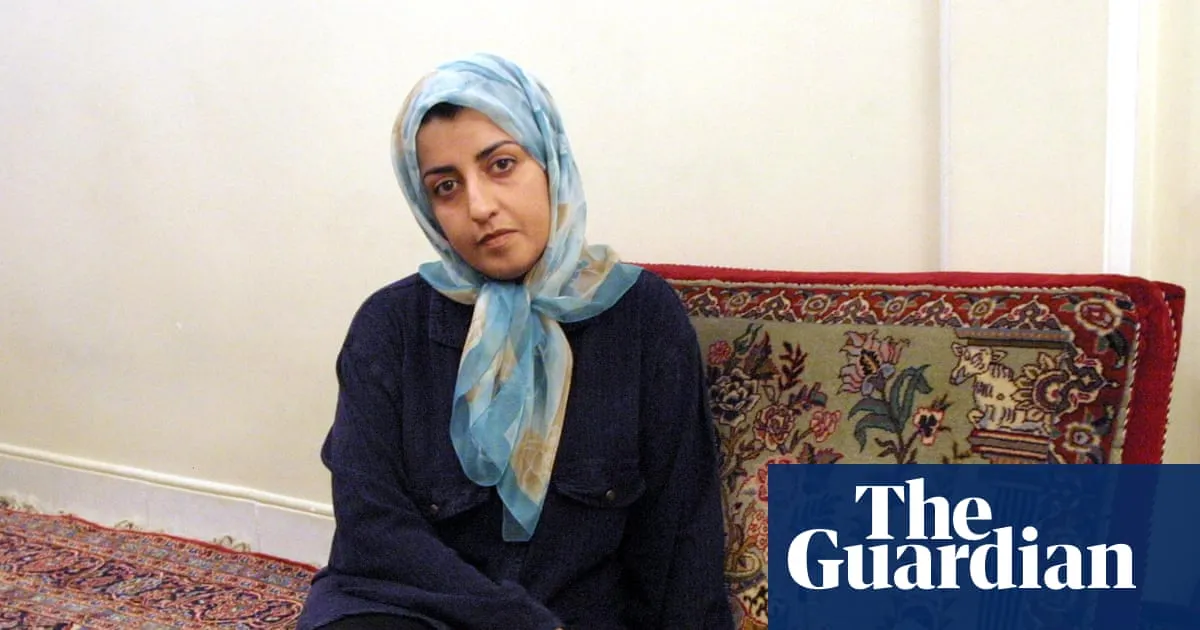
In an exclusive extract of writing smuggled from prison in Iran, the Nobel peace prize laureate Narges Mohammadi has described the “torture” of solitary confinement, and her systematic medical neglect by the prison system.The writing from the past decade will be part of a soon to be published memoir that gives a rare and alarming insight into the treatment of Mohammadi, who is in critical condition. It details beatings, constant interrogations, deprivation of medical care and long stretches in solitary confinement during her numerous imprisonments.“There is no hardship worse than illness combined with imprisonment,” she wrote. “Authoritarian regimes do not always need an executioner’s rope. Sometimes, they simply wait for the human body to fail.”After those words were written and she was rearrested, Mohammadi’s health hit another crisis point this year, with her weight dropping by more than 20kg. She was found unconscious in her cell after an apparent heart attack in March. Requests by her family and doctors for her to receive proper medical treatment from her team of surgeons in Tehran were repeatedly denied. She is now being held at a small regional hospital in Zanjan, in a critical condition.Her family have said her ongoing detention and the refusal of proper medical care constitute a “slow execution”.Mohammadi wrote of how her stretches in prison have caused significant damage to her health. She has suffered a pulmonary embolism, seizures, multiple infections, chest pain and other life-threatening medical events in prison, and describes the agonising wait for often inadequate medical care.The writings were smuggled out by fellow prisoners and visitors during Mohammadi’s time in Iran’s notorious Evin, Qarchak and Zanjan prisons, at considerable risk to their own safety. They had to be rewritten several times over the past decade, after pages or notebooks were discovered and destroyed by prison guards.The memoir, A Woman Never Stops Fighting, will be published in September. It covers Mohammadi’s early life, the way her parents helped inspire her political convictions, her path into activism, and the many years she spent in prison for public protest.Mohammadi has been arrested 14 times for her activism on advancing women’s rights in Iran, improving the conditions of prisoners and ending the regime’s use of the death penalty.She has been sentenced to a total of 44 years in prison and 154 lashes across a number of convictions. The campaigner was awarded the Nobel peace prize while in prison in 2023, during the Women, Life, Freedom protests.In December 2024, she was released on a temporary sentence suspension after a series of health events, but was violently rearrested a year later and sentenced to years’ more prison time in February this year.
SRCThe Guardian - World News
LANGEN
LEANCenter-Left
WORDS440
ENT7
SUN · 2026-05-10 · 10:00 GMTBRIEF NSR-2026-0510-75066
NSR-2026-0510-75066News Report·EN·Human Rights
Nobel laureate’s smuggled memoir details beatings and neglect in Iranian prisons
Nobel Peace Prize laureate Narges Mohammadi's smuggled memoir details her experiences in Iranian prisons over the past decade. The writings, set to be published in September, describe torture through solitary confinement, systematic medical neglect, beatings, and constant interrogations.
Tess McClureThe Guardian - World NewsFiled 2026-05-10 · 10:00 GMTLean · Center-LeftRead · 2 min
The Guardian - World NewsFIG 01
Reading time
2min
Word count
440words
Sources cited
2cited
Entities identified
7entities
Quality score
100%
§ 01
Briefing Summary
AI-generatedNEWSAR · AI
Nobel Peace Prize laureate Narges Mohammadi's smuggled memoir details her experiences in Iranian prisons over the past decade. The writings, set to be published in September, describe torture through solitary confinement, systematic medical neglect, beatings, and constant interrogations. Mohammadi's health has severely deteriorated, including a recent apparent heart attack and significant weight loss, with her family stating her detention and denial of proper medical care constitute a "slow execution." The memoir, titled "A Woman Never Stops Fighting," also covers her activism for women's rights and prison reform, for which she has faced numerous arrests and lengthy sentences. The writings were smuggled out by fellow prisoners and visitors at great personal risk.
Confidence 0.90Sources 2Claims 5Entities 7
§ 02
Article analysis
Model · rule-basedFraming
Human Rights
Human Interest
Tone
Mixed Tone
AI-assessed
CalmNeutralAlarmist
Factuality
0.70 / 1.00
Factual
LowHigh
Sources cited
2
Limited
FewMany
§ 03
Key claims
5 extracted01
Mohammadi was awarded the Nobel Peace Prize in 2023 while imprisoned.
factualArticle
Confidence
1.00
02
Family states ongoing detention and denial of proper medical care constitute a 'slow execution'.
quoteMohammadi's family
Confidence
1.00
03
Nobel laureate Narges Mohammadi describes torture of solitary confinement and systematic medical neglect in Iranian prisons.
quoteNarges Mohammadi
Confidence
1.00
04
Mohammadi has been arrested 14 times and sentenced to 44 years in prison and 154 lashes for activism.
statisticArticle
Confidence
0.90
05
Mohammadi's health crisis this year led to a 20kg weight loss and an unconscious state after an apparent heart attack.
factualArticle
Confidence
0.90
§ 04
Full report
2 min read · 440 words§ 05
Entities
7 identifiedKey playerOppositionContextPositiveNeutralNegative
Locations5
§ 06
Keywords & salience
10 termsnarges mohammadi
1.00
iranian prisons
1.00
medical neglect
0.90
solitary confinement
0.80
human rights
0.70
women's rights
0.60
activism
0.60
torture
0.50
memoir
0.50
political convictions
0.40
§ 07
Topic connections
Interactive graph No topic relationship data available yet. This graph will appear once topic relationships have been computed.