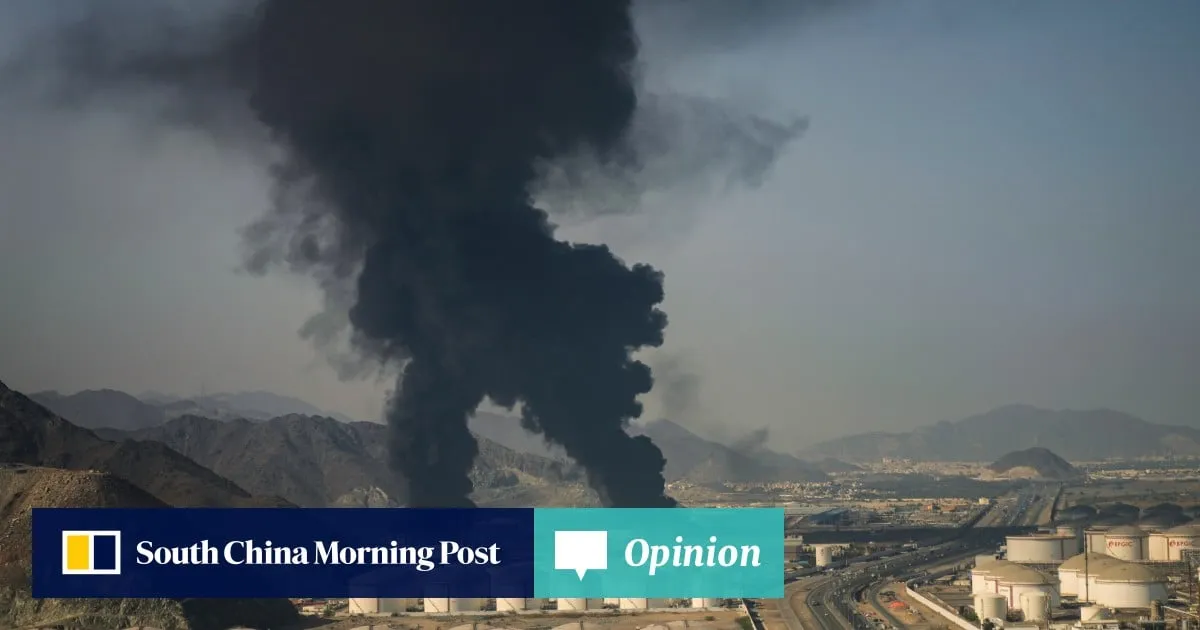
Dr Asad Ullah is a postdoctoral researcher in international politics at Shandong University, specialising in Middle East conflict, diplomacy and geopolitical strategy.On April 28, the United Arab Emirates informed the Organisation of Petroleum Exporting Countries (Opec) it was leaving. Three days’ notice. No call to Riyadh beforehand, apparently. The grievance about production quotas was years old: Abu Dhabi had threatened to quit in 2021. What’s changed has nothing to do with the barrel count. It is about who underwrites Abu Dhabi’s security when it acts on a decision Riyadh opposes.After Iran struck UAE infrastructure, Abu Dhabi sent only a foreign minister to the Gulf Cooperation Council’s emergency session. Instead, it leaned on the US-Israel axis built quietly since the Abraham Accords. That realignment produced a moment without precedent: Israel deployed an Iron Dome system to defend Emirati airspace, a first for a foreign nation that is not the United States. It rendered obsolete the assumption that Gulf producers share a threat environment that makes collective discipline rational. They no longer do.The Opec exit made visible what the shift had made possible. Security architecture, not quota arithmetic, is what holds a cartel together.
SRCSouth China Morning Post
LANGEN
LEANCenter-Right
WORDS192
ENT11
SUN · 2026-05-10 · 21:30 GMTBRIEF NSR-2026-0510-75157
NSR-2026-0510-75157Analysis·EN·Diplomatic
Why the UAE’s Opec exit spells the beginning of the end of Gulf unity
The United Arab Emirates announced its departure from OPEC on April 28th, after years of disputes over production quotas. However, the article argues that the decision is driven by a shift in security alliances rather than oil production figures.
Asad UllahSouth China Morning PostFiled 2026-05-10 · 21:30 GMTLean · Center-RightRead · 1 min
South China Morning PostFIG 01
Reading time
1min
Word count
192words
Sources cited
1cited
Entities identified
11entities
Quality score
100%
§ 01
Briefing Summary
AI-generatedNEWSAR · AI
The United Arab Emirates announced its departure from OPEC on April 28th, after years of disputes over production quotas. However, the article argues that the decision is driven by a shift in security alliances rather than oil production figures. Following an Iranian attack on UAE infrastructure, Abu Dhabi sought security guarantees from the US-Israel axis, exemplified by Israel deploying its Iron Dome system to defend Emirati airspace. This development suggests that the UAE no longer perceives a shared threat environment with other Gulf producers, undermining the collective security assumptions that previously underpinned Gulf cooperation and OPEC unity. The article posits that this security realignment, rather than production quotas, is the true catalyst for the UAE's exit and signals a potential fragmentation of Gulf unity.
Confidence 0.90Sources 1Claims 5Entities 11
§ 02
Article analysis
Model · rule-basedFraming
Diplomatic
Political Strategy
Tone
Measured
AI-assessed
CalmNeutralAlarmist
Factuality
0.40 / 1.00
Mixed
LowHigh
Sources cited
1
Limited
FewMany
§ 03
Key claims
5 extracted01
The United Arab Emirates informed the Organisation of Petroleum Exporting Countries (Opec) it was leaving on April 28.
factualarticle
Confidence
1.00
02
Israel deployed an Iron Dome system to defend Emirati airspace, a first for a foreign nation other than the United States.
factualarticle
Confidence
0.90
03
The UAE's grievance about production quotas was years old and they had threatened to quit in 2021.
factualarticle
Confidence
0.90
04
The UAE no longer shares a threat environment with other Gulf producers that makes collective discipline rational.
factualarticle
Confidence
0.80
05
The UAE's exit from Opec signifies a shift where security architecture, not quota arithmetic, holds a cartel together.
factualarticle
Confidence
0.80
§ 04
Full report
1 min read · 192 words§ 05
Entities
11 identifiedKey playerOppositionContextPositiveNeutralNegative
Organizations3
Locations6
§ 06
Keywords & salience
8 termsopec exit
1.00
gulf unity
0.90
security architecture
0.80
us-israel axis
0.70
abraham accords
0.60
production quotas
0.50
emirati airspace
0.40
collective discipline
0.40
§ 07
Topic connections
Interactive graph Network visualization showing 51 related topics
View Full Graph Person Organization Location Event|Click node to navigate|Edge numbers = shared articles