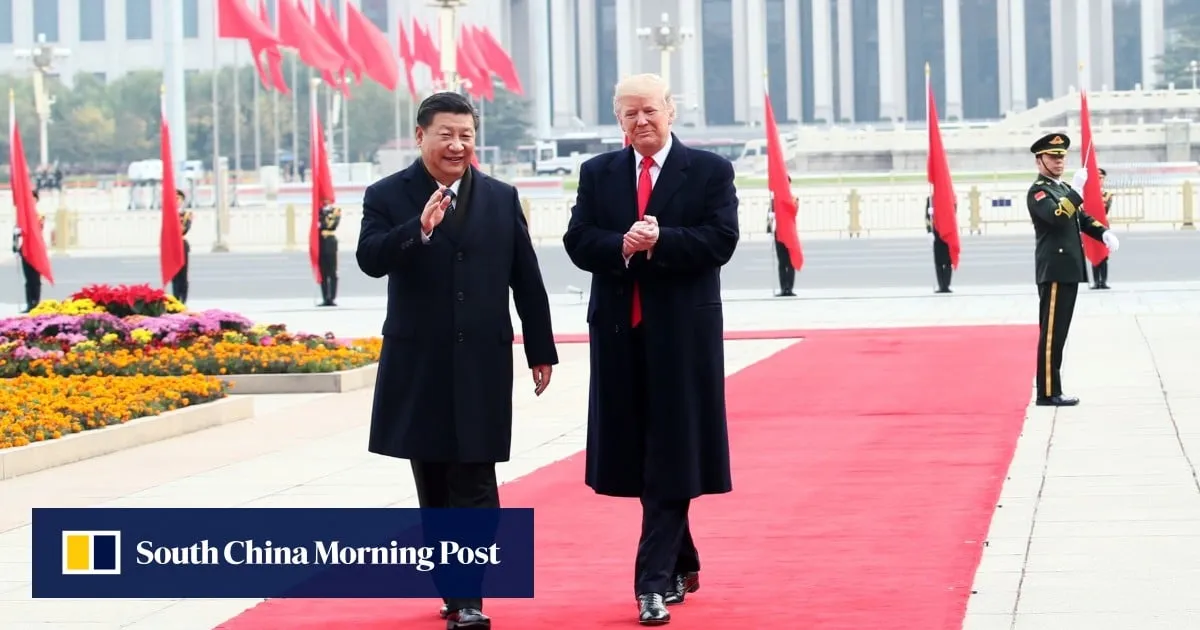
Nine years after his lavish first visit to China as US president, Donald Trump is scheduled to head back to Beijing on May 13-15. With tensions over tariffs, Taiwan and tech rivalry still simmering, the summit will test whether the world’s two biggest powers can stabilise their fractious relationship.What to expectPragmatic deals over grand resetsDon’t look for a historic breakthrough. The focus is expected to be on extending the trade truce, locking in fresh Chinese purchases of American goods, and keeping tensions from boiling over.Big-ticket items on the tableWatch for announcements on Boeing jets, agricultural products, energy deals, rare earth supply stability, and cooperation on fentanyl.Tough talks on TaiwanBeijing is pushing Washington to move away from “strategic ambiguity” towards explicitly opposing Taiwan independence and supporting reunification, according to sources. Tensions rose in February last year when the US removed language opposing Taiwanese independence from an official fact sheet. While some see Trump’s recent delays in arms sales to Taiwan as encouraging, analysts doubt he will make major concessions.Other thorny issuesThrough sanctions and public calls, the US is pressing China to use its influence on Iran to end the crisis in the Middle East. However, Beijing blames the US and Israel for the conflict and is resisting the sanctions. This mutual mistrust risks turning the Iran issue into a fresh source of friction during the summit. Other thorny geopolitical issues might include North Korea and the China-sea" class="entity-link entity-location" data-entity-id="8346" data-entity-type="location">South China Sea.The bottom lineShort-term wins for US exporters are likely, but deeper structural problems, such as AI and other technological competition, supply chain security, and the Taiwan issue, are unlikely to be solved in one visit.Pageantry meets personal chemistryAnticipate the full red-carpet treatment, grand banquets and plenty of Trump handshakes with Chinese President Xi Jinping. Trump is likely to highlight his “great relationship” with Xi, again.Melania Trump's fashion diplomacy during her China visitMelania Trump's fashion diplomacy during her China visitFlashback to 2017: the glamorous first visitTrump was offered a “state visit-plus” reception on his November 2017 trip. He and Melania were treated to a private tour of the Forbidden City – including a Peking opera performance – as well as a lavish state dinner alongside Xi and first lady Peng Liyuan. Trump openly praised Xi as a “very special man” and China as a “great country”. The two leaders have maintained a personal rapport in the years since, even as ties between Washington and Beijing have soured.The trip produced headline-grabbing business deals worth more than US$250 billion, covering everything from energy projects and Boeing aircraft to agricultural products. Many involved letters of intent rather than firm contracts, but they gave Trump the “wins” he wanted to showcase back home.Post 2017: a deteriorating relationship2018 trade warIn the second half of 2018, less than a year after the visit, Trump slapped tariffs on hundreds of billions of US dollars of Chinese goods. Beijing hit back with tariffs of its own. The goodwill of 2017 quickly evaporated.Covid-19 falloutThe emergence of Covid-19 in Wuhan, in late 2019, and the resulting global pandemic supercharged mistrust between the two nations. Trump’s attacks on Beijing’s handling of the outbreak – and his repeated use of the term “China virus” – deepened the divide.2020 consulate showdownA person receives a Covid-19 test in New York in early 2022. The pandemic marked a low point in US-China relations during the years between Trump’s two Beijing visits. Photo: AFPNancy Pelosi’s 2022 Taiwan tripUS House speaker Nancy Pelosi’s high-profile visit to Taipei in August 2022 triggered Beijing’s fury, prompting large-scale People’s Liberation Army drills around Taiwan and the suspension of key bilateral dialogues.2023 balloon dramaIn February 2023, the US Air Force shot down a high-altitude Chinese balloon that had been drifting across the US mainland. While Beijing claimed it was a civilian weather balloon blown off course, Washington characterised the balloon as surveillance equipment.‘America first’In his second term, Trump launched his aggressive “America first” approach, imposing steep tariffs on Chinese goods, while citing trade imbalances, fentanyl flows and national security concerns. China retaliated with its own duties, and the tit-for-tat spiral pushed US tariffs to a peak of 145 per cent in April 2025.
SRCSouth China Morning Post
LANGEN
LEANCenter-Right
WORDS688
ENT10
MON · 2026-05-11 · 01:00 GMTBRIEF NSR-2026-0511-75181
NSR-2026-0511-75181Analysis·EN·Diplomatic
Trump’s China return: what’s changed since his ‘friendly’ 2017 visit
Donald Trump is scheduled to visit Beijing from May 13-15, nine years after his initial state visit. The summit aims to stabilize the relationship between the US and China amidst ongoing tensions over tariffs, Taiwan, and technological competition.
Jane CaiSouth China Morning PostFiled 2026-05-11 · 01:00 GMTLean · Center-RightRead · 3 min
South China Morning PostFIG 01
Reading time
3min
Word count
688words
Sources cited
3cited
Entities identified
10entities
Quality score
100%
§ 01
Briefing Summary
AI-generatedNEWSAR · AI
Donald Trump is scheduled to visit Beijing from May 13-15, nine years after his initial state visit. The summit aims to stabilize the relationship between the US and China amidst ongoing tensions over tariffs, Taiwan, and technological competition. Expectations are for pragmatic trade deals, potentially including purchases of American goods by China, rather than major breakthroughs. Key discussion points are likely to involve Boeing jets, agricultural products, energy, rare earth supplies, and fentanyl cooperation. The US will also press China on its influence regarding the Iran crisis and address issues like Taiwan, North Korea, and the South China Sea. While short-term gains for US exporters are possible, deeper structural issues are unlikely to be resolved.
Confidence 0.90Sources 3Claims 5Entities 10
§ 02
Article analysis
Model · rule-basedFraming
Diplomatic
Economic Impact
Tone
Measured
AI-assessed
CalmNeutralAlarmist
Factuality
0.60 / 1.00
Mixed
LowHigh
Sources cited
3
Well sourced
FewMany
§ 03
Key claims
5 extracted01
Donald Trump is scheduled to return to Beijing for a visit on May 13-15.
factual
Confidence
1.00
02
The summit will test whether the world’s two biggest powers can stabilize their fractious relationship amidst tensions over tariffs, Taiwan, and tech rivalry.
factual
Confidence
0.90
03
Short-term wins for US exporters are likely, but deeper structural problems are unlikely to be solved in one visit.
prediction
Confidence
0.80
04
Announcements on Boeing jets, agricultural products, energy deals, rare earth supply stability, and cooperation on fentanyl are expected.
prediction
Confidence
0.80
05
Beijing is pushing Washington to move away from “strategic ambiguity” towards explicitly opposing Taiwan independence and supporting reunification.
factualsources
Confidence
0.70
§ 04
Full report
3 min read · 688 words§ 05
Entities
10 identifiedKey playerOppositionContextPositiveNeutralNegative
People4
§ 06
Keywords & salience
10 termsus-china relations
1.00
taiwan
0.90
trade truce
0.80
tech rivalry
0.70
iran crisis
0.60
xi jinping
0.50
donald trump
0.50
rare earth
0.40
fentanyl
0.40
supply chain security
0.40
§ 07
Topic connections
Interactive graph Network visualization showing 51 related topics
View Full Graph Person Organization Location Event|Click node to navigate|Edge numbers = shared articles