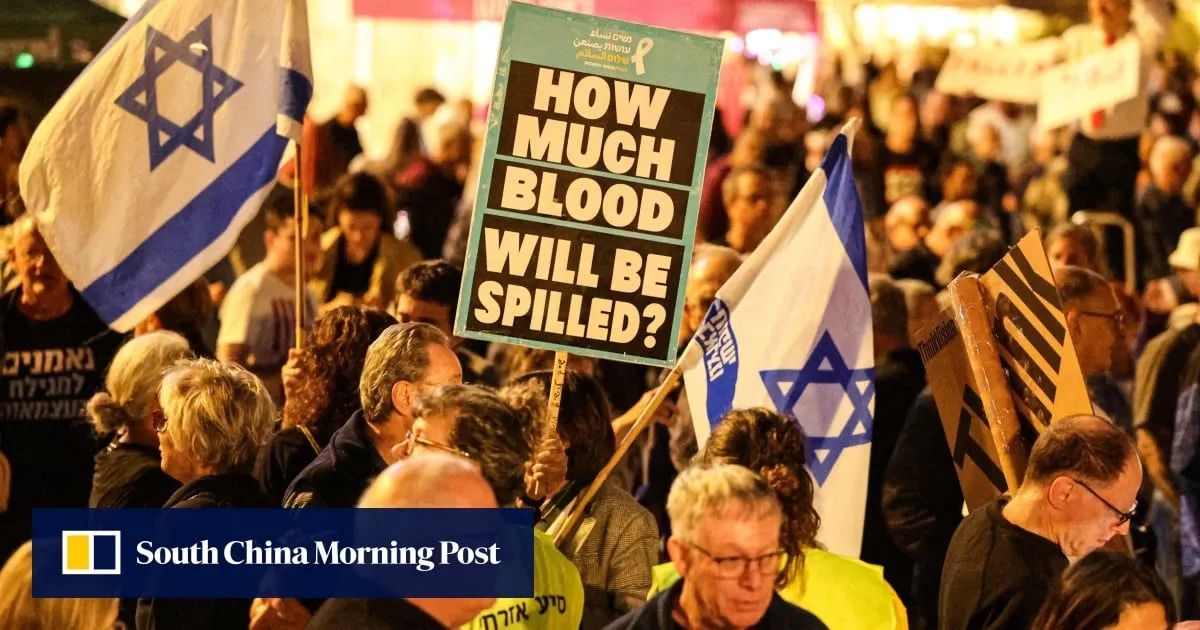
Israel’s next election campaign is well under way, with political defections, fractious coalition-building and naked appeals to ethnic exclusion marking its opening salvoes as a crowded field of challengers queues up to try Benjamin Netanyahu for the security catastrophe of October 7, 2023 and the wars that followed.The vote, constitutionally set for this October, is shaping up as a referendum on the prime minister’s central claim to power: that only he can keep Israel safe.But after two and a half years of grinding warfare across Gaza, Lebanon and Iran, that claim has worn thin. The Israel-defence-forces" class="entity-link entity-organization" data-entity-id="113408" data-entity-type="organization">Israel Defence Forces (IDF) are overstretched, Iranian missiles have repeatedly struck the country and much of its north near the Lebanese border is now largely uninhabitable.
SRCSouth China Morning Post
LANGEN
LEANCenter-Right
WORDS121
ENT7
MON · 2026-05-11 · 00:00 GMTBRIEF NSR-2026-0511-75184
NSR-2026-0511-75184Analysis·EN·Political Strategy
Israel’s election may end the Netanyahu era but not the ‘forever wars’
Israel's upcoming election, constitutionally scheduled for October, is shaping up as a referendum on Prime Minister Benjamin Netanyahu's leadership following the security failures of October 7, 2023, and the subsequent prolonged conflicts. A crowded field of challengers is emerging, with political defections and appeals to ethnic exclusion marking the early campaign.
Tom HussainSouth China Morning PostFiled 2026-05-11 · 00:00 GMTLean · Center-RightRead · 1 min
South China Morning PostFIG 01
Reading time
1min
Word count
121words
Sources cited
0cited
Entities identified
7entities
Quality score
100%
§ 01
Briefing Summary
AI-generatedNEWSAR · AI
Israel's upcoming election, constitutionally scheduled for October, is shaping up as a referendum on Prime Minister Benjamin Netanyahu's leadership following the security failures of October 7, 2023, and the subsequent prolonged conflicts. A crowded field of challengers is emerging, with political defections and appeals to ethnic exclusion marking the early campaign. The ongoing wars in Gaza, Lebanon, and against Iran have strained the Israel Defense Forces and impacted northern Israel, weakening Netanyahu's central argument of being the sole protector of the nation's security. The election will determine if this period marks the end of Netanyahu's long tenure, though the article suggests the "forever wars" will likely continue regardless of the outcome.
Confidence 0.85Claims 5Entities 7
§ 02
Article analysis
Model · rule-basedFraming
Political Strategy
Conflict
Tone
Mixed Tone
AI-assessed
CalmNeutralAlarmist
Factuality
0.60 / 1.00
Mixed
LowHigh
Sources cited
0
No named sources
FewMany
§ 03
Key claims
5 extracted01
The upcoming vote is shaping up as a referendum on Prime Minister Netanyahu's claim that only he can keep Israel safe.
factual
Confidence
0.95
02
Israel's next election campaign is under way, marked by political defections and appeals to ethnic exclusion.
factual
Confidence
0.90
03
Much of Israel's north near the Lebanese border is now largely uninhabitable.
factual
Confidence
0.85
04
The Israel Defence Forces (IDF) are overstretched.
factual
Confidence
0.85
05
After two and a half years of warfare, Netanyahu's claim to keeping Israel safe has worn thin.
factual
Confidence
0.80
§ 04
Full report
1 min read · 121 words§ 05
Entities
7 identifiedKey playerOppositionContextPositiveNeutralNegative
Organizations1
Locations4
§ 06
Keywords & salience
10 termsforever wars
1.00
netanyahu era
1.00
israel election
0.90
october 7, 2023
0.80
security catastrophe
0.70
iran
0.60
lebanon
0.60
gaza
0.60
israel defence forces
0.50
prime minister
0.40
§ 07
Topic connections
Interactive graph Network visualization showing 51 related topics
View Full Graph Person Organization Location Event|Click node to navigate|Edge numbers = shared articles