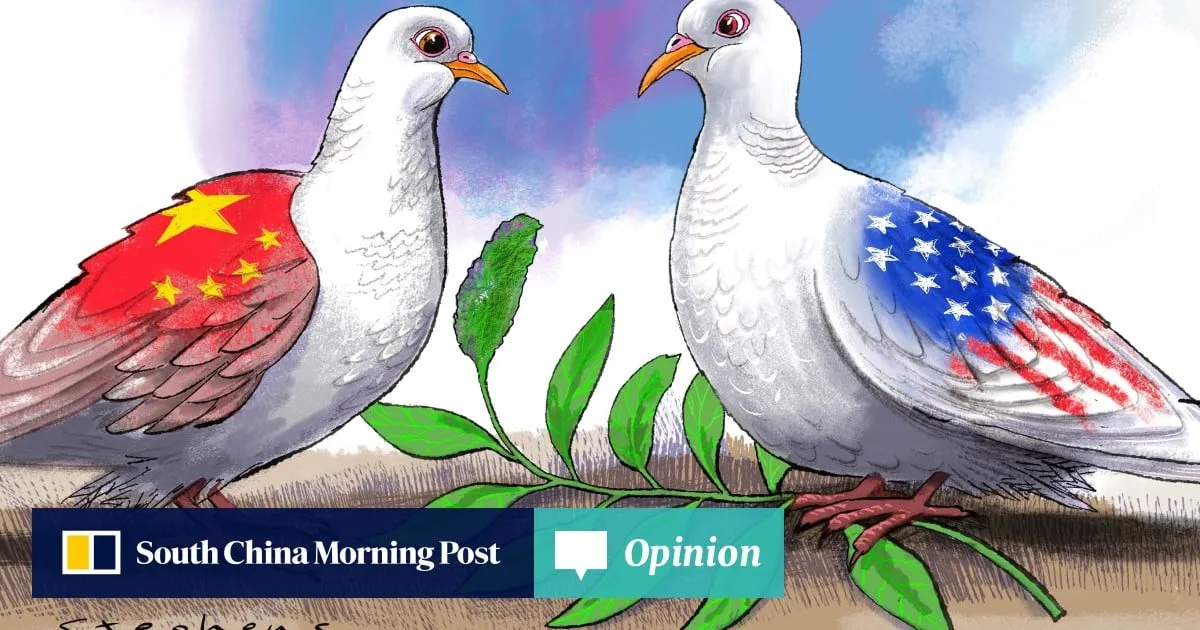
As US President Donald Trump prepares to visit China, Taiwan is again one of the most sensitive issues in US-China relations. For Washington, this is not only a question about the Taiwan-strait" class="entity-link entity-location" data-entity-id="5508" data-entity-type="location">Taiwan Strait. It is a strategic choice that bears on whether the United States can avoid a comprehensive conflict with China, stabilise markets and secure Chinese cooperation on trade, artificial intelligence (AI), Iran and the wider Middle East.This could be the moment when a clear US stance against Taiwan independence would carry the lowest cost and yield the highest return.Taiwan concerns China’s core national interests. Beijing’s position on national reunification and opposition to secession will not change. In recent years, US arms sales, higher-level exchanges and congressional signalling have been read in Beijing as encouragement to separatist forces on the island. These moves might bring short-term political gains in Washington, but they also increase the risk of miscalculation.
SRCSouth China Morning Post
LANGEN
LEANCenter-Right
WORDS149
ENT8
TUE · 2026-05-12 · 12:30 GMTBRIEF NSR-2026-0512-75637
NSR-2026-0512-75637Opinion·EN·Political Strategy
Opposing Taiwan independence is in America’s own interest
The article argues that the United States' opposition to Taiwan independence is strategically beneficial for America, particularly as President Trump prepares to visit China. It posits that a clear US stance against independence now could minimize costs and maximize returns.
Shen YiSouth China Morning PostFiled 2026-05-12 · 12:30 GMTLean · Center-RightRead · 1 min
South China Morning PostFIG 01
Reading time
1min
Word count
149words
Sources cited
0cited
Entities identified
8entities
Quality score
100%
§ 01
Briefing Summary
AI-generatedNEWSAR · AI
The article argues that the United States' opposition to Taiwan independence is strategically beneficial for America, particularly as President Trump prepares to visit China. It posits that a clear US stance against independence now could minimize costs and maximize returns. The author states that Taiwan is a core national interest for China, and Beijing's position on reunification and opposition to secession is unlikely to change. Recent US actions, such as arms sales and congressional signaling, are perceived by Beijing as encouragement to separatist forces on Taiwan, increasing the risk of miscalculation. The article suggests that such moves, while potentially offering short-term political gains in Washington, ultimately jeopardize US interests in avoiding conflict with China, stabilizing markets, and securing cooperation on critical global issues.
Confidence 0.85Claims 4Entities 8
§ 02
Article analysis
Model · rule-basedFraming
Political Strategy
Conflict
Tone
Mixed Tone
AI-assessed
CalmNeutralAlarmist
Factuality
0.30 / 1.00
Opinion-Heavy
LowHigh
Sources cited
0
No named sources
FewMany
§ 03
Key claims
4 extracted01
Taiwan concerns China’s core national interests.
factual
Confidence
0.90
02
Opposing Taiwan independence is in America’s own interest.
factual
Confidence
0.80
03
US arms sales, higher-level exchanges and congressional signalling have been read in Beijing as encouragement to separatist forces on the island.
factual
Confidence
0.70
04
A clear US stance against Taiwan independence would carry the lowest cost and yield the highest return.
prediction
Confidence
0.60
§ 04
Full report
1 min read · 149 words§ 05
Entities
8 identifiedKey playerOppositionContextPositiveNeutralNegative
§ 06
Keywords & salience
10 termstaiwan independence
1.00
us-china relations
0.90
strategic choice
0.80
comprehensive conflict
0.70
national interests
0.60
national reunification
0.60
separatist forces
0.50
us arms sales
0.50
risk of miscalculation
0.40
artificial intelligence
0.40
§ 07
Topic connections
Interactive graph Network visualization showing 51 related topics
View Full Graph Person Organization Location Event|Click node to navigate|Edge numbers = shared articles