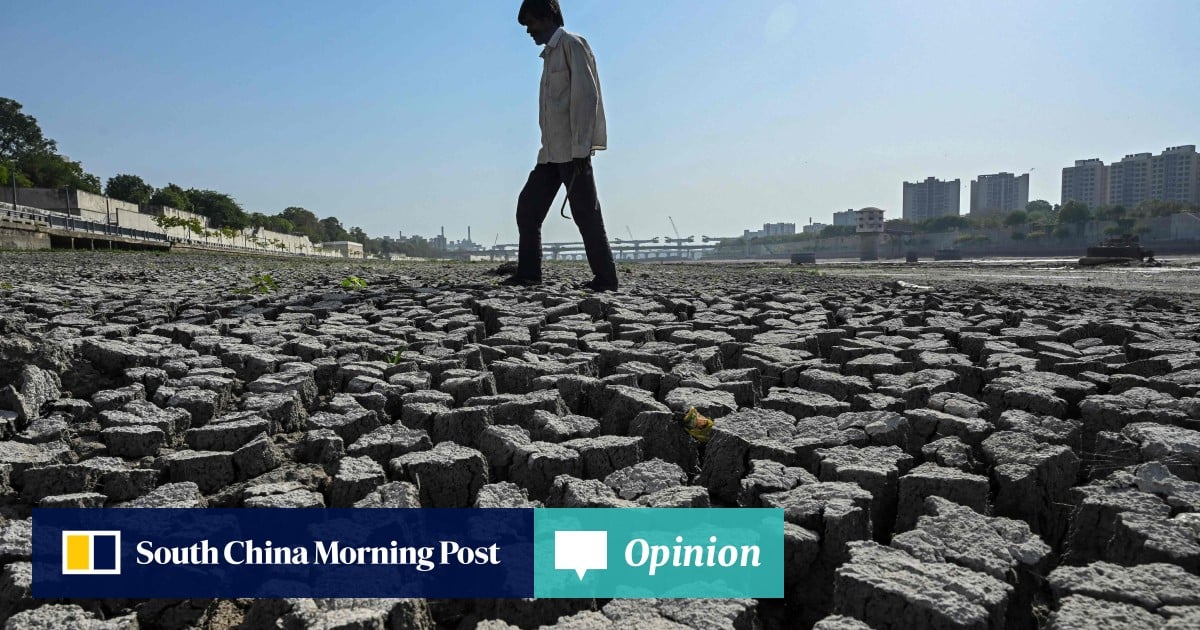
Summer hit South Asia early this year. April saw above average temperatures and the mercury is expected to reach unbearable highs this month. We are also bracing for a “super El Nino”, where a combination of increased heatwaves and highly variable weather patterns are expected to push urban zones, agricultural systems and public health to their limits.South Asia, especially parts of Pakistan, India and Nepal, is likely to receive below average monsoon rainfall during the summer months of June-August. For countries that are heavily dependent on the monsoon for agricultural output, a deadly combination of low rainfall and high heat has several cascading risks.Such risks can often get embroiled in political rhetoric that prompts countries to look outward for solutions and blame their neighbours. It’s usually an easy domestic political victory. However, South Asia’s water crisis is as much an internal issue as it is external. While collaborative solutions might remain a distant dream, countries must still aim for workable internal solutions.
SRCSouth China Morning Post
LANGEN
LEANCenter-Right
WORDS162
ENT5
WED · 2026-05-13 · 12:30 GMTBRIEF NSR-2026-0513-75923
NSR-2026-0513-75923Opinion·EN·Environmental
South Asia must make water a top priority
South Asia is facing an early and intense summer, with above-average temperatures and the expectation of a "super El Nino" exacerbating heatwaves and weather variability. This is particularly concerning for Pakistan, India, and Nepal, which are predicted to experience below-average monsoon rainfall from June to August.
Ambika VishwanathSouth China Morning PostFiled 2026-05-13 · 12:30 GMTLean · Center-RightRead · 1 min
South China Morning PostFIG 01
Reading time
1min
Word count
162words
Sources cited
0cited
Entities identified
5entities
Quality score
100%
§ 01
Briefing Summary
AI-generatedNEWSAR · AI
South Asia is facing an early and intense summer, with above-average temperatures and the expectation of a "super El Nino" exacerbating heatwaves and weather variability. This is particularly concerning for Pakistan, India, and Nepal, which are predicted to experience below-average monsoon rainfall from June to August. This combination of low rainfall and high heat poses significant risks to urban areas, agriculture, and public health in these monsoon-dependent nations. While political disputes often arise over water issues, the article emphasizes that South Asia's water crisis is both an internal and external challenge. Despite the difficulty of achieving collaborative solutions, individual countries must prioritize developing effective internal strategies to address these escalating water-related risks.
Confidence 0.90Claims 5Entities 5
§ 02
Article analysis
Model · rule-basedFraming
Environmental
Political Strategy
Tone
Measured
AI-assessed
CalmNeutralAlarmist
Factuality
0.40 / 1.00
Mixed
LowHigh
Sources cited
0
No named sources
FewMany
§ 03
Key claims
5 extracted01
South Asia's water crisis is both an internal and external issue, requiring internal solutions.
factual
Confidence
0.95
02
Low rainfall combined with high heat poses cascading risks to urban zones, agriculture, and public health.
factual
Confidence
0.90
03
South Asia is experiencing an early and intense summer with above-average temperatures.
factual
Confidence
0.90
04
South Asia, including Pakistan, India, and Nepal, is likely to receive below-average monsoon rainfall.
prediction
Confidence
0.85
05
A 'super El Nino' is expected, leading to increased heatwaves and variable weather.
prediction
Confidence
0.80
§ 04
Full report
1 min read · 162 words§ 05
Entities
5 identifiedKey playerOppositionContextPositiveNeutralNegative
Locations4
Events1
§ 06
Keywords & salience
8 termswater crisis
1.00
south asia
0.90
monsoon rainfall
0.80
heatwaves
0.70
el nino
0.60
agricultural output
0.50
climate
0.40
weather patterns
0.40
§ 07
Topic connections
Interactive graph No topic relationship data available yet. This graph will appear once topic relationships have been computed.