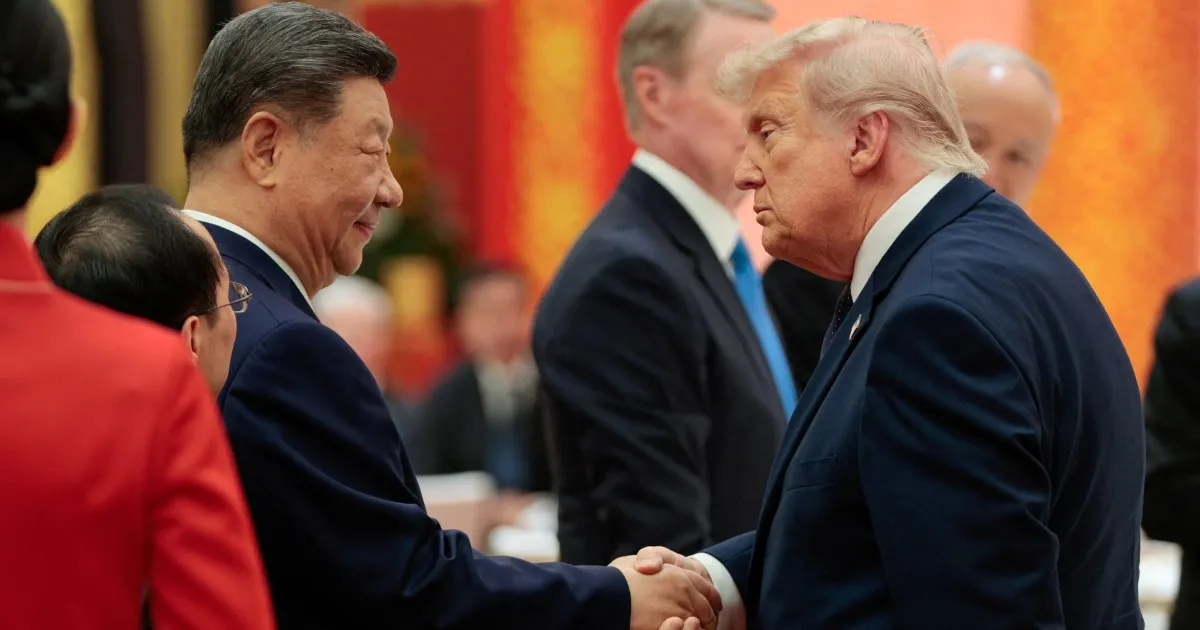
The White House says the two leaders agree that the strait ‘must remain open to support the free flow of energy’.United States President Donald Trump has discussed the Strait of Hormuz and the Iran" class="entity-link entity-event" data-entity-id="38678" data-entity-type="event">US-Israel war on Iran during his meeting with China’s Xi Jinping as negotiations to end the conflict and open the waterway are stalled.According to the White House, Trump and Xi had a “good” meeting on Thursday and agreed that the Strait of Hormuz “must remain open to support the free flow of energy”.Recommended Stories list of 3 itemslist 1 of 3Three Republicans break ranks, but Senate fails to curb Trump’s war powerslist 2 of 3Crowds gather in Tehran to send off Iran’s World Cup teamlist 3 of 3US-China summit: Why Beijing may have the advantageend of list“President Xi also made clear China’s opposition to the militarisation of the strait and any effort to charge a toll for its use,” the White House said.In a separate interview, US Treasury Secretary Scott Bessent said he believed Beijing would “do what they can” to open the waterway, which he said was “very much in their interest”.Since the US-Israeli war on Iran began at the end of February, Tehran has all but closed the strait, causing disruptions to global energy supplies and raising fuel prices as oil tankers remain unable to pass.But under special agreements, Iran has let some carriers sail through the waterway.On Wednesday, a Chinese tanker transited through the strait, according to shipping data seen by the Reuters news agency. Iran’s Fars News Agency also reported on Thursday that there was an agreement to allow some Chinese ships to pass.Moreover, Iran’s state broadcaster IRIB reported that about 30 vessels had transited through the strait since Wednesday evening.Meanwhile, the US said on Thursday that it had so far redirected 70 vessels and disabled four others to enforce Trump’s blockade on ships travelling to or from Iranian ports through the Strait of Hormuz.
SRCAl Jazeera
LANGEN
LEANCenter
WORDS322
ENT12
THU · 2026-05-14 · 14:23 GMTBRIEF NSR-2026-0514-76270
NSR-2026-0514-76270News Report·EN·Diplomatic
Trump, Xi discuss Strait of Hormuz as Chinese vessels transit key waterway
During a meeting on Thursday, US President Donald Trump and Chinese President Xi Jinping discussed the Strait of Hormuz, agreeing that the waterway "must remain open to support the free flow of energy." The White House stated that Xi also conveyed China's opposition to the militarization of the strait or any tolls for its use. This discussion comes as negotiations to end the conflict and reopen the strait, which Iran has largely closed since late February, are stalled.
Edna MohamedAl JazeeraFiled 2026-05-14 · 14:23 GMTLean · CenterRead · 2 min
Al JazeeraFIG 01
Reading time
2min
Word count
322words
Sources cited
4cited
Entities identified
12entities
Quality score
100%
§ 01
Briefing Summary
AI-generatedNEWSAR · AI
During a meeting on Thursday, US President Donald Trump and Chinese President Xi Jinping discussed the Strait of Hormuz, agreeing that the waterway "must remain open to support the free flow of energy." The White House stated that Xi also conveyed China's opposition to the militarization of the strait or any tolls for its use. This discussion comes as negotiations to end the conflict and reopen the strait, which Iran has largely closed since late February, are stalled. Despite disruptions to global energy supplies, some vessels, including a Chinese tanker, have recently transited the strait under special agreements. The US has been enforcing a blockade on ships traveling to or from Iranian ports through the Strait of Hormuz.
Confidence 0.90Sources 4Claims 5Entities 12
§ 02
Article analysis
Model · rule-basedFraming
Diplomatic
Economic Impact
Tone
Measured
AI-assessed
CalmNeutralAlarmist
Factuality
0.80 / 1.00
Factual
LowHigh
Sources cited
4
Well sourced
FewMany
§ 03
Key claims
5 extracted01
President Xi made clear China’s opposition to the militarisation of the strait and any effort to charge a toll for its use.
quoteWhite House
Confidence
1.00
02
Trump and Xi agreed that the Strait of Hormuz must remain open to support the free flow of energy.
quoteWhite House
Confidence
1.00
03
The US has redirected 70 vessels and disabled four others to enforce a blockade on ships travelling to or from Iranian ports through the Strait of Hormuz.
factualUS (statement)
Confidence
0.90
04
A Chinese tanker transited through the Strait of Hormuz on Wednesday.
factualReuters
Confidence
0.90
05
Since the US-Israeli war on Iran began, Tehran has all but closed the strait, causing disruptions to global energy supplies and raising fuel prices.
factualArticle
Confidence
0.80
§ 04
Full report
2 min read · 322 words§ 05
Entities
12 identifiedKey playerOppositionContextPositiveNeutralNegative
People3
Locations5
§ 06
Keywords & salience
9 termsstrait of hormuz
1.00
free flow of energy
0.90
us-china relations
0.80
iran
0.70
xi jinping
0.60
donald trump
0.60
waterway transit
0.50
global energy supplies
0.50
blockade
0.40
§ 07
Topic connections
Interactive graph Network visualization showing 51 related topics
View Full Graph Person Organization Location Event|Click node to navigate|Edge numbers = shared articles