NEWSAR
Multi-perspective news intelligence
SRCAssociated Press (AP)
LANGEN
LEANCenter
WORDS2 195
ENT10
FRI · 2026-05-15 · 17:23 GMTBRIEF NSR-2026-0515-76605
News/Takeaways from Trump’s trip to China: Ta/Takeaways from Trump’s trip to China: Taiwan, a new framewor…
NSR-2026-0515-76605News Report·EN·Diplomatic

Takeaways from Trump’s trip to China: Taiwan, a new framework for relationship and flattery for Xi

During a three-day visit to China, President Donald Trump's discussions with President Xi Jinping unexpectedly centered on Taiwan and a potential new framework for U.S.-China relations. Xi warned of conflict if Washington mishandled its relations with Taiwan, prompting Trump to suggest on his return flight that he might reconsider a planned U.S.

Associated Press (AP)Filed 2026-05-15 · 17:23 GMTLean · CenterRead · 9 min
Takeaways from Trump’s trip to China: Taiwan, a new framework for relationship and flattery for Xi
Associated Press (AP)FIG 01
Reading time
9min
Word count
2 195words
Sources cited
1cited
Entities identified
10entities
Quality score
100%
§ 01

Briefing Summary

AI-generated
NEWSAR · AI

During a three-day visit to China, President Donald Trump's discussions with President Xi Jinping unexpectedly centered on Taiwan and a potential new framework for U.S.-China relations. Xi warned of conflict if Washington mishandled its relations with Taiwan, prompting Trump to suggest on his return flight that he might reconsider a planned U.S. arms sale to Taipei. While in Beijing, Trump remained publicly silent on Taiwan and focused on flattering Xi, while also discussing trade and the U.S.-led conflict in Iran. China characterized the meetings as agreeing to a "constructive" vision for managing their relationship, aiming for "strategic stability." Trump also indicated that major trade deals were struck, including a potential large order for Boeing aircraft, though concrete details were not immediately announced.

Confidence 0.90Sources 1Claims 5Entities 10
§ 02

Article analysis

Model · rule-based
Framing
Diplomatic
Political Strategy
Tone
Measured
AI-assessed
CalmNeutralAlarmist
Factuality
0.70 / 1.00
Factual
LowHigh
Sources cited
1
Limited
FewMany
§ 03

Key claims

5 extracted
01

Chinese President Xi Jinping warned that mishandling relations with Taiwan could lead to conflict between the U.S. and China.

quoteXi Jinping
Confidence
1.00
02

Trump did not publicly push back on China's characterization of an agreement on a 'constructive' new vision for U.S.-China relations.

factual
Confidence
0.90
03

President Donald Trump's trip to China was unexpectedly dominated by discussions about Taiwan and a new framework for managing U.S.-China relations.

factual
Confidence
0.90
04

Trump spent the trip overtly flattering Xi Jinping, despite Xi not reciprocating.

factual
Confidence
0.80
05

Trump suggested Xi's opposition to a planned U.S. arms sale to Taipei might make him rethink the sale.

factual
Confidence
0.80
§ 04

Full report

9 min read · 2 195 words
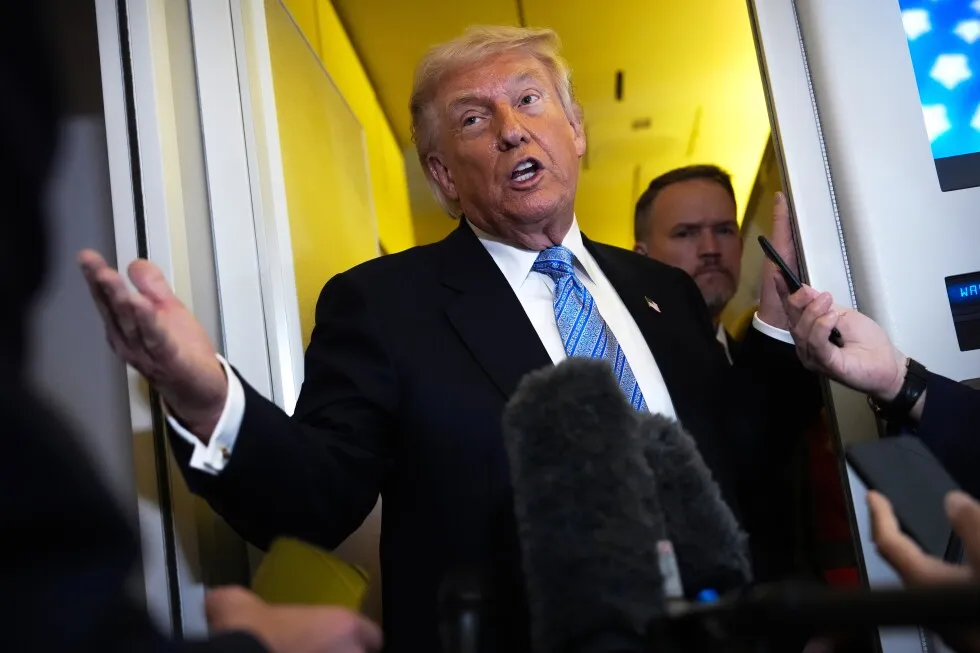
President Donald Trump speaks to reporters aboard Air Force One, Friday, May 15, 2026, as he returns from a trip to Beijing, China. (AP Photo/Mark Schiefelbein) 2026-05-15T17:00:12Z Beijing (AP) — For three days in China, President Donald Trump was unusually quiet, not speaking to reporters much and even mostly staying off social media. Then he got on his plane home and unloaded. Trump’s trip was unexpectedly dominated by discussions about Taiwan and the notion that Washington and Beijing could adopt a new framework for managing their complicated relationship. Chinese President Xi Jinping kicked off the whirlwind visit with a warning: If Washington mishandles its relations with the self-governing island of Taiwan, the U.S. and China could end up clashing or even in open conflict . Trump did not respond publicly, refraining from mentioning Taiwan while in Beijing. But he suggested aboard Air Force One on his way home that Xi’s staunch opposition might make him rethink a planned U.S. arms sale to Taipei. Among the other topics of discussion were trade and the U.S. and Israel’s war in Iran , which had been expected to take up most of the attention. Trump spent the trip overtly flattering China’s leader, despite Xi not reciprocating. freestar.queue.push(function () { window.fsAdCount = window.fsAdCount + 1 || 0; let customChannel = '/dynamic_' + fsAdCount; let adList = document.querySelectorAll(".fs-feed-ad") let thisAd = adList[fsAdCount]; let randId = Math.random().toString(36).slice(2); thisAd.id = randId; let thisPlacement = fsAdCount == 0 ? "apnews_story_feed" : "apnews_story_feed_dynamic"; freestar.newAdSlots({ placementName: thisPlacement, slotId: randId }, customChannel); }); And the president did not push back publicly on China’s characterization that he and Xi had agreed to a “constructive” new vision for dealing with their relationship issues. Here are key takeaways from Trump’s trip: Trump held his tongue on Taiwan — until he was headed home Before the trip, Trump demonstrated greater ambivalence toward Taiwan in his second term, raising questions about whether he might be open to dialing back support for the island democracy that Beijing views as its breakaway province. Secretary of State Marco Rubio insisted there was no change in the U.S. approach to Taiwan. But there was always a risk that Trump — not known for diplomatic nuance — might make an off-the-cuff remark that could have mammoth ramifications for Taiwan. In the end, Trump said nothing publicly about Taiwan, even as his Chinese counterpart suggested the island was the most important aspect of U.S.-China relations. /* Desktop-first: fully collapse by default */ #AP-readmore-embed { display: none; margin: 0; padding: 0; height: 0; min-height: 0; overflow: hidden; text-align: center; position: relative; z-index: 2; } /* Only show on mobile */ @media (max-width: 767px) { #AP-readmore-embed { display: block; margin: 28px 0; height: auto; overflow: visible; } } #AP-readmore-embed .AP-readmore-btn { appearance: none; -webkit-appearance: none; border: 0; background: #000; color: #fff; cursor: pointer; display: inline-flex; align-items: center; justify-content: center; gap: 10px; padding: 14px 22px; border-radius: 999px; font-family: inherit, "AP Sans", -apple-system, BlinkMacSystemFont, "Helvetica Neue", Arial, sans-serif; font-weight: 700; font-size: 16px; letter-spacing: 0.2px; line-height: 1; box-shadow: 0 10px 18px rgba(0,0,0,0.12); transition: transform 120ms ease, box-shadow 120ms ease, opacity 120ms ease; touch-action: manipulation; -webkit-tap-highlight-color: transparent; position: relative; z-index: 3; } #AP-readmore-embed .AP-readmore-btn:hover { transform: translateY(-1px); box-shadow: 0 14px 22px rgba(0,0,0,0.16); } #AP-readmore-embed .AP-readmore-btn:active { transform: translateY(0); box-shadow: 0 10px 18px rgba(0,0,0,0.12); opacity: 0.95; } #AP-readmore-embed .AP-readmore-btn:focus-visible { outline: 3px solid rgba(228, 0, 43, 0.35); outline-offset: 3px; } #AP-readmore-embed .AP-readmore-icon { width: 10px; height: 10px; border-right: 2px solid currentColor; border-bottom: 2px solid currentColor; transform: rotate(45deg); margin-top: -2px; } #AP-readmore-embed .AP-readmore-fade { display: none; height: 48px; margin-top: -48px; pointer-events: none; background: linear-gradient(to bottom, rgba(255,255,255,0), rgba(255,255,255,1)); } Read More (function () { var APRM_EMBED_ID = "AP-readmore-embed"; var APRM_MOBILE_MQ = "(max-width: 767px)"; function APRM_onReady(fn) { if (document.readyState === "loading") { document.addEventListener("DOMContentLoaded", fn); } else { fn(); } } APRM_onReady(function () { var APRM_embedEl = document.getElementById(APRM_EMBED_ID); if (!APRM_embedEl) return; // 🚨 DESKTOP: remove entire module wrapper and bail early if (!window.matchMedia(APRM_MOBILE_MQ).matches) { var APRM_rootModule = APRM_embedEl.closest(".HTMLModuleEnhancement") || APRM_embedEl.closest(".HtmlModule"); if (APRM_rootModule && APRM_rootModule.parentNode) { APRM_rootModule.parentNode.removeChild(APRM_rootModule); } else if (APRM_embedEl.parentNode) { APRM_embedEl.parentNode.removeChild(APRM_embedEl); } return; // stop the rest of the script from running } }); })(); (function () { var EMBED_ID = "AP-readmore-embed"; var BTN_ID = "apReadMoreBtn"; var FADE_ID = "apReadMoreFade"; var STOP_SELECTOR = ".Page-below"; var SIGN_IN_GATE_SELECTOR = ".sign-in-gate-content"; var HIDDEN_ATTR = "data-AP-readmore-hidden"; var MOBILE_MQ = "(max-width: 767px)"; function ready(fn) { if (document.readyState === "loading") { document.addEventListener("DOMContentLoaded", fn); } else { fn(); } } function isElementNode(n) { return n && n.nodeType === 1; } function cancelEvent(e) { if (!e) return; if (typeof e.preventDefault === "function") e.preventDefault(); if (typeof e.stopPropagation === "function") e.stopPropagation(); if (typeof e.stopImmediatePropagation === "function") e.stopImmediatePropagation(); e.cancelBubble = true; e.returnValue = false; } function collapseDesktopEmbed(embed) { if (!embed) return true; if (!window.matchMedia(MOBILE_MQ).matches) { var maybeWrappers = [ embed.parentElement, embed.closest(".html-embed"), embed.closest("[data-type='htmlembed']"), embed.closest("[class*='embed']"), embed.closest("[class*='Embed']") ].filter(Boolean); embed.style.display = "none"; embed.style.margin = "0"; embed.style.padding = "0"; embed.style.height = "0"; embed.style.minHeight = "0"; embed.style.overflow = "hidden"; maybeWrappers.forEach(function (el) { el.style.margin = "0"; el.style.padding = "0"; el.style.height = "0"; el.style.minHeight = "0"; el.style.overflow = "hidden"; }); if (embed.parentNode) { embed.parentNode.removeChild(embed); } return true; } return false; } ready(function () { var embed = document.getElementById(EMBED_ID); var btn = document.getElementById(BTN_ID); var fade = document.getElementById(FADE_ID); if (!embed || !btn) return; if (collapseDesktopEmbed(embed)) return; var signInGate = document.querySelector(SIGN_IN_GATE_SELECTOR); if (signInGate) { embed.innerHTML = ""; return; } // — Analytics: impression when embed enters viewport — if ("IntersectionObserver" in window) { var io = new IntersectionObserver(function (entries, observer) { if (entries[0].isIntersecting) { window.dataLayer = window.dataLayer || []; window.dataLayer.push({ event: "ap_readmore_impression" }); observer.disconnect(); } }, { threshold: 0 }); io.observe(btn); } var stopEl = document.querySelector(STOP_SELECTOR); if (!stopEl) return; var rootCandidates = [ embed.closest(".Page"), embed.closest("article"), embed.closest("main"), document.body ].filter(Boolean); var root = rootCandidates.find(function (c) { return c.contains(stopEl); }) || document.body; var all = root.getElementsByTagName("*"); var hidden = []; for (var i = 0; i But then, pressed by reporters after leaving China, Trump said he had not yet made a decision on whether to carry through with a major arms package sale he previously approved for Taiwan after hearing Xi’s objections. freestar.queue.push(function () { window.fsAdCount = window.fsAdCount + 1 || 0; let customChannel = '/dynamic_' + fsAdCount; let adList = document.querySelectorAll(".fs-feed-ad") let thisAd = adList[fsAdCount]; let randId = Math.random().toString(36).slice(2); thisAd.id = randId; let thisPlacement = fsAdCount == 0 ? "apnews_story_feed" : "apnews_story_feed_dynamic"; freestar.newAdSlots({ placementName: thisPlacement, slotId: randId }, customChannel); }); Trump’s Republican administration in December authorized an $11 billion weapons package for Taipei, but it has yet to move forward. Lawmakers also approved a $14 billion arms sale to Taiwan in January, but the sale cannot advance until Trump formally sends it to Congress. “President Xi and I talked a lot about Taiwan,” Trump told reporters on the presidential plane. He said China’s leader “does not want to see a fight for independence because that would be a very strong confrontation.” “I heard him out,” Trump said. But “I didn’t make a comment.” Trump appeared to struggle to recall the name of Taiwanese President Lai Ching-te and noted of Washington’s policy toward the island, “The last thing we need right now is a war that’s 9,500 miles away.” Asked if he would consider intervening militarily if China were to attack Taiwan, Trump said he did not want to say — a nonanswer that is consistent with long-standing U.S. policy that has become known as strategic ambiguity. The policy says the U.S. has agreed to ensure Taiwan has the resources to defend itself if China attempts to force a unilateral change, but it does not expressly say how far Washington will go militarily to counter Beijing, should it come to that. freestar.queue.push(function () { window.fsAdCount = window.fsAdCount + 1 || 0; let customChannel = '/dynamic_' + fsAdCount; let adList = document.querySelectorAll(".fs-feed-ad") let thisAd = adList[fsAdCount]; let randId = Math.random().toString(36).slice(2); thisAd.id = randId; let thisPlacement = fsAdCount == 0 ? "apnews_story_feed" : "apnews_story_feed_dynamic"; freestar.newAdSlots({ placementName: thisPlacement, slotId: randId }, customChannel); }); Trump and Xi still talked about Iran It appears the leaders had substantive talks about the U.S.-spurred conflict in Iran that has led to a surge in global oil prices and that — if extended — could push the world toward recession. Trump said Xi agrees with him that a nuclear-armed Iran is a bad idea and that the Strait of Hormuz must be reopened. He said Xi even offered to help find an endgame to the war. Xi and Chinese officials have not confirmed that such an offer was made. China has publicly said the solution should “take into account the concerns of all parties on the Iran nuclear issue.” In Trump’s view, China should be more involved in the resolution to the conflict , given its dependence on oil and liquefied natural gas coming from the Middle East. If Trump successfully persuaded Xi to get more engaged, that could be significant for the U.S. effort to find a credible exit from the Iran war. freestar.queue.push(function () { window.fsAdCount = window.fsAdCount + 1 || 0; let customChannel = '/dynamic_' + fsAdCount; let adList = document.querySelectorAll(".fs-feed-ad") let thisAd = adList[fsAdCount]; let randId = Math.random().toString(36).slice(2); thisAd.id = randId; let thisPlacement = fsAdCount == 0 ? "apnews_story_feed" : "apnews_story_feed_dynamic"; freestar.newAdSlots({ placementName: thisPlacement, slotId: randId }, customChannel); }); Xi hailed a new relationship status: strategic stability China, meanwhile, said the two leaders agreed to a new vision for “a constructive China-U.S. relationship of strategic stability.” The Chinese Foreign Ministry said the framework would shape ties for at least three years — the rest of Trump’s term — and focus on cooperation, competition within limits and managing differences. The idea is “to keep the relationship on an even keel,” said Helena Legarda of the Mercator Institute for China Studies in Berlin. George Chen, a partner at The Asia Group consultancy, said the approach can be seen as progress following the era of Trump’s Democratic predecessor, Joe Biden, when the relationship was framed as a strategic competition. freestar.queue.push(function () { window.fsAdCount = window.fsAdCount + 1 || 0; let customChannel = '/dynamic_' + fsAdCount; let adList = document.querySelectorAll(".fs-feed-ad") let thisAd = adList[fsAdCount]; let randId = Math.random().toString(36).slice(2); thisAd.id = randId; let thisPlacement = fsAdCount == 0 ? "apnews_story_feed" : "apnews_story_feed_dynamic"; freestar.newAdSlots({ placementName: thisPlacement, slotId: randId }, customChannel); }); Trump says big trade deals are coming but offers few details Trump brought a large group of top CEOs with him to China, including the head of aircraft maker Boeing; Jensen Huang, chief of semiconductor giant Nvidia ; and Elon Musk , the SpaceX boss who once led Trump’s effort to slash the federal workforce . Trump said major deals had been struck and that China could buy some 200 planes from Boeing , but he left Beijing without announcing anything concrete. Previous suggestions that Xi would commit to big orders of U.S. soybeans and beef were also pending. Speaking to reporters on Air Force One, Trump suggested that China could eventually buy as many as 750 planes from Boeing if the initial order goes well, and that 450 engines produced by General Electric would be included in such a future purchase if it happens. More details on trade agreements might emerge eventually, but as with all major bilateral accords, the fine print is what matters. During his first term, Trump used an elaborate signing ceremony before leaving Beijing to cement dozens of deals worth around $250 billion. But not all of what was pledged came to fruition. Trump repeatedly praised Xi From the moment Trump opened his mouth in Beijing, he offered nothing but praise for Xi. And it sometimes felt a bit over the top, considering that Xi said nothing similar in return. Trump called Xi a “great leader” and said they were going to have a “fantastic future together.” It was an “honor” to be with Xi and to be his friend, Trump said, describing his counterpart as “warm.” China’s president isn’t known for effusiveness. Trump himself said in a Fox News interview that Xi is “all business.” Xi did say Trump’s “landmark visit” had deepened mutual trust. But he found more subtle ways to charm Trump. He promised to send seeds to grow roses at the White House like the ones in the garden at Xi’s residence where Trump had tea on Friday. Xi said he hosted Trump there to reciprocate the hospitality Trump showed him when he visited Trump’s Mar-a-Lago estate in Florida in 2017. ___ Leung reported from Hong Kong, Mistreanu and Wu from Bangkok, and Superville from Washington. WILL WEISSERT Weissert covers the White House for The Associated Press. He is based in Washington. twitter mailto AAMER MADHANI Madhani covers the White House for The Associated Press. He is based in Washington. twitter mailto KANIS LEUNG Leung covers Hong Kong, Macao and mainland China for The Associated Press. She is based in Hong Kong. twitter SIMINA MISTREANU Mistreanu is a Greater China reporter for The Associated Press, based in Taipei, Taiwan. She has reported on China since 2015. twitter mailto DARLENE SUPERVILLE Superville covers the White House for The Associated Press, with a special emphasis on first ladies and first families. HUIZHONG WU Wu covers Chinese culture, society, and politics for The Associated Press, as well as the country’s growing overseas influence from Bangkok. She was previously based in Taiwan and China. twitter
§ 05

Entities

10 identified
§ 06

Keywords & salience

10 terms
us-china relations
1.00
taiwan
1.00
xi jinping
0.90
donald trump
0.90
new framework
0.80
arms sale
0.70
beijing
0.60
trade
0.50
war in iran
0.40
flattery
0.40
§ 07

Topic connections

Interactive graph
Network visualization showing 49 related topics
View Full Graph
Person Organization Location Event|Click node to navigate|Edge numbers = shared articles