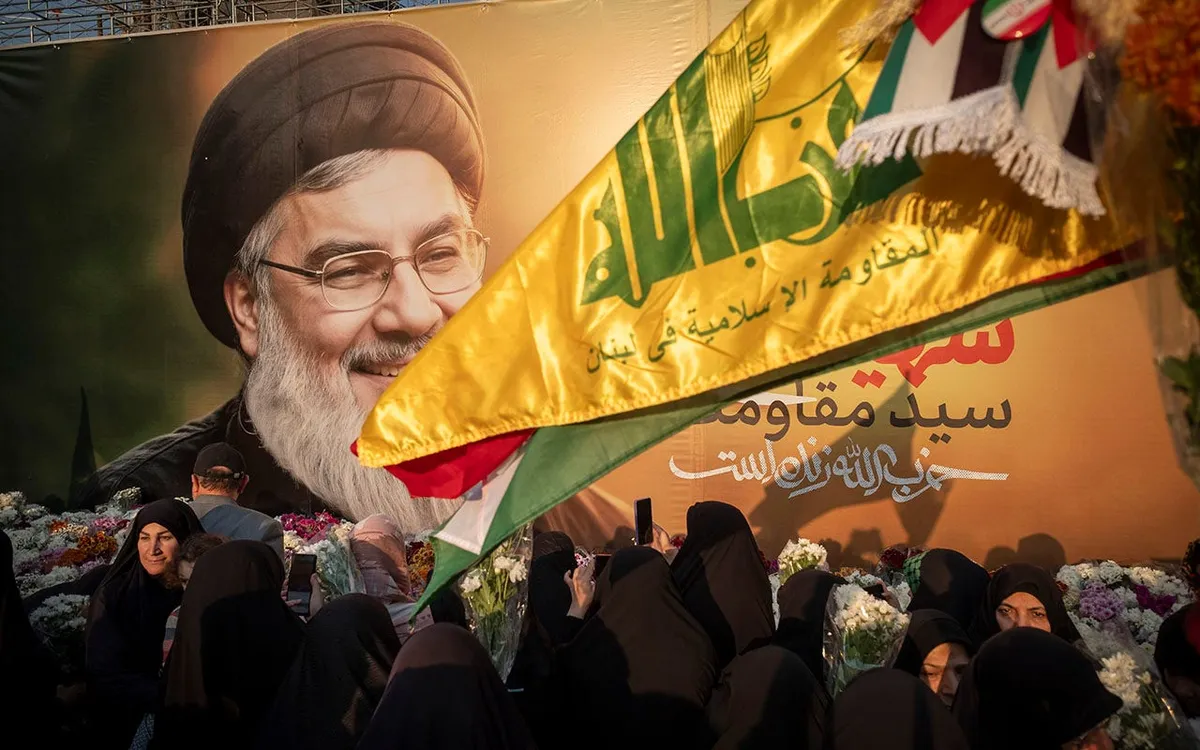
close Video Israeli forces strike Hezbollah launchers in Lebanon The Israel Defense Forces released footage on Saturday, May 9, showing strikes on "two loaded and ready-to-use launchers in southern Lebanon." (Credit: IDF) NEWYou can now listen to Fox News articles! Hören Sie sich diesen Artikel an 4 Min The Lebanese government filed a sharply worded complaint with the United Nations arguing that the Islamic Republic of Iran has abused diplomatic immunity by refusing to recall its ambassador after Beirut demanded his expulsion and to stop alleged terrorist activities on its soil, according to a recently surfaced letter from late April. The disclosure of the letter, which is reportedly a precedent-setting move by Lebanon, comes amid a second day of talks in Washington between Israel and Lebanon to normalize relations (the countries are in a state of war) and dismantle the Iranian-regime-backed Hezbollah terrorist movement in Lebanon. A U.S. State Department spokesperson told Fox News Digital on Friday that "The United States facilitated talks between Israel and Lebanon have resumed today and are ongoing. The atmosphere of talks has been very positive, even exceeding expectations." FAMILY OF AMERICAN HOSTAGE TORTURED IN Lebanon WINS LANDMARK CASE AGAINST Iran A mourner holds a portrait of Iran's supreme leader Ayatollah Ali Khamenei during a funeral procession on March 5, 2026, for members of Iraq's pro-Iran paramilitary group Hezbollah" class="entity-link entity-organization" data-entity-id="44040" data-entity-type="organization">Kataeb Hezbollah killed in a strike in Baghdad the previous day. (Ahmed Al-Rubaye/AFP via Getty Images) State Department spokesman Tommy Pigott wrote on X on Friday that "On May 14 and 15, the United States hosted two days of highly-productive talks between Israel and Lebanon. The April 16 cessation of hostilities will be extended by 45 days to enable further progress. The State Department will reconvene the political track of negotiations on June 2 and June 3." He added that, "In addition, a security track will be launched at the Pentagon on May 29 with military delegations from both countries. We hope these discussions will advance lasting peace between the two countries, full recognition of each other’s sovereignty and territorial integrity, and establishing genuine security along their shared border." As the sides report back to their capitals, the potentially game-changing letter in which Lebanese ambassador to the U.N. Ahmad Arafa, slammed Iran for inserting alleged terrorists from Iran’s Islamic Revolutionary Guard Corps (IRGC) into Lebanon "under the guise of diplomatic activity," has given hope to critics of Iran and Hezbollah. Arafa said, according to the letter, that Iran committed "unlawful acts in blatant defiance of the decisions of the Government of Lebanon." He continued, "This Iranian conduct constitutes direct and blatant interference in the internal affairs of Lebanon and drags the country into a war it did not choose to become involved in." Michael Needham, counselor for the U.S. Department of State, U.S. Ambassador to the United Nations Mike Waltz, Secretary of State Marco Rubio, U.S. Ambassador to Lebanon Michel Issa, Lebanese Ambassador to the U.S. Nada Hamadeh Moawad, and Israeli Ambassador to the U.S. Yechiel Leiter pose for a photo before a meeting at the State Department in Washington, D.C., on April 14, 2026. (Jacquelyn Martin/AP) The U.S. and the European Union have classified the IRGC as a terrorist entity. The letter took the Iranian Ambassador to Beirut, Mohammad Reza Sheibani, to task for "blatant interference" in Lebanon. According to Lebanon’s U.N. letter, Beirut argued that Iran is violating the 1961 Vienna Convention on Diplomatic Relations and interfering in Lebanon’s state of affairs. IDF SOLDIERS ACCUSE UN PEACEKEEPERS OF ENABLING Hezbollah TERRORISTS AMID INCREASING CEASE-FIRE VIOLATIONS Iranian protesters carry flowers in front of a large banner of Hezbollah Secretary General Hassan Nasrallah during a protest in Tehran on Sept. 30, 2024, condemning an Israeli air strike on Hezbollah's Beirut headquarters and the killing of Nasrallah and IRGC Quds Force commander General Abbas Nilforoushan. (Morteza Nikoubazl/NurPhoto) When asked about the details of the letter, a spokesperson for Lebanon’s ambassador to the U.S. declined to comment. The spokesperson also declined to weigh in on the current talks with Israel in Washington. Walid Phares, a leading U.S. expert on Lebanon and the Mideast, told Fox News Digital that "Many have considered the Lebanese memo to the U.N. as the start of the Lebanese government change of attitude towards Iran and a sign of escalation by Beirut. While the tone of the letter and its narrative make people feel that there is a government resistance to Iran and Hezbollah reality is still lesser." He added that "The subject of the last quarrel is a legal change of status regarding the presence of Iranians on Lebanese soil. The Lebanese government has decided not to grant Iranians, government, and private citizens an automatic visa waiver, which upset Iran and Hezbollah. Besides, Tehran is furious at the fact that the Lebanese government has not been helpful in dealing with the elimination of a number of IRGC members killed in Lebanon by Israel. Tehran blames the foreign ministry of Lebanon, particularly foreign minister Youssef Raggi, for the ‘lessening of solidarity with Iran."' Smoke rises from Israeli airstrikes in Dahiyeh, a southern suburb of Beirut, Lebanon, on April 5, 2026. (Emilio Morenatti/AP) According to Phares, "Raggi represents a Lebanese Christian bloc in the parliament, who is not sympathetic to the regime. However, the actual talks in D.C. are designed by the Lebanese government to show the Trump administration that the ‘state wants to talk’ but not to reach an agreement that would trigger Hezbollah's wrath. The leaders of the Lebanese state are not yet where the U.S. and Israel expect them to be." A regional official well-versed in the U.N. dispute told Fox News Digital that Lebanon "argued that Iran had not given the Lebanese foreign ministry the list of all Iranians and the details about their place of stay. And that’s why Israel targeted that hotel in Lebanon in which six were killed, which is true." The official said that "Iran had not told the foreign ministry of Lebanon about those six people." Benjamin Weinthal reports on Israel, Iran, Syria, Turkey and Europe. You can follow Benjamin on Twitter @BenWeinthal, and email him at benjamin.weinthal@fox.com Fox News' Antisemitism Exposed" newsletter brings you stories on the rising anti-Jewish prejudice across the U.S. and the world." By entering your email and clicking the Subscribe button, you agree to the Fox News and Terms of Use, and agree to receive content and promotional communications from Fox News. You understand that you can opt-out at any time. You've successfully subscribed to this newsletter!
SRCFox News - World
LANGEN
LEANCenter-Right
WORDS1 085
ENT11
FRI · 2026-05-15 · 21:14 GMTBRIEF NSR-2026-0515-76636
NSR-2026-0515-76636News Report·EN·Conflict
Lebanon accuses Iran of inserting IRGC terrorists into country 'under guise of diplomatic activity'
Lebanon has filed a complaint with the United Nations accusing Iran of abusing diplomatic immunity by allegedly inserting Islamic Revolutionary Guard Corps (IRGC) terrorists into the country under the guise of diplomatic activity. The Lebanese government demanded the expulsion of Iran's ambassador and an end to these alleged activities, citing violations of the Vienna Convention on Diplomatic Relations and interference in Lebanon's internal affairs.
Fox News - WorldFiled 2026-05-15 · 21:14 GMTLean · Center-RightRead · 5 min
Fox News - WorldFIG 01
Reading time
5min
Word count
1 085words
Sources cited
3cited
Entities identified
11entities
Quality score
100%
§ 01
Briefing Summary
AI-generatedNEWSAR · AI
Lebanon has filed a complaint with the United Nations accusing Iran of abusing diplomatic immunity by allegedly inserting Islamic Revolutionary Guard Corps (IRGC) terrorists into the country under the guise of diplomatic activity. The Lebanese government demanded the expulsion of Iran's ambassador and an end to these alleged activities, citing violations of the Vienna Convention on Diplomatic Relations and interference in Lebanon's internal affairs. This complaint surfaced amid ongoing US-facilitated talks between Lebanon and Israel aimed at normalizing relations and dismantling Hezbollah. The US State Department described the talks as "highly-productive" and noted an extension of the cessation of hostilities to allow for further progress. Experts suggest the Lebanese memo signifies a shift in Beirut's stance towards Iran, though the extent of government resistance remains debated.
Confidence 0.90Sources 3Claims 5Entities 11
§ 02
Article analysis
Model · rule-basedFraming
Conflict
Diplomatic
Tone
Mixed Tone
AI-assessed
CalmNeutralAlarmist
Factuality
0.70 / 1.00
Factual
LowHigh
Sources cited
3
Well sourced
FewMany
§ 03
Key claims
5 extracted01
The April 16 cessation of hostilities will be extended by 45 days to enable further progress in US-facilitated talks.
factualTommy Pigott (State Department spokesman)
Confidence
0.95
02
The US facilitated talks between Israel and Lebanon have resumed and are ongoing with a positive atmosphere.
factualU.S. State Department spokesperson
Confidence
0.95
03
Iran's conduct constitutes direct and blatant interference in Lebanon's internal affairs and drags the country into an unwanted war.
factualLebanese ambassador to the U.N. Ahmad Arafa
Confidence
0.90
04
Iran is accused of inserting IRGC terrorists into Lebanon under the guise of diplomatic activity.
factualLebanese ambassador to the U.N. Ahmad Arafa
Confidence
0.90
05
Lebanon filed a complaint with the UN accusing Iran of abusing diplomatic immunity and engaging in alleged terrorist activities.
factualLebanese government
Confidence
0.90
§ 04
Full report
5 min read · 1 085 words§ 05
Entities
11 identifiedKey playerOppositionContextPositiveNeutralNegative
Organizations4
§ 06
Keywords & salience
10 termsirgc terrorists
1.00
lebanon iran relations
0.90
diplomatic immunity
0.80
hezbollah
0.70
united nations complaint
0.70
israel lebanon talks
0.60
normalization of relations
0.50
sovereignty
0.40
territorial integrity
0.40
security
0.40
§ 07
Topic connections
Interactive graph Network visualization showing 51 related topics
View Full Graph Person Organization Location Event|Click node to navigate|Edge numbers = shared articles