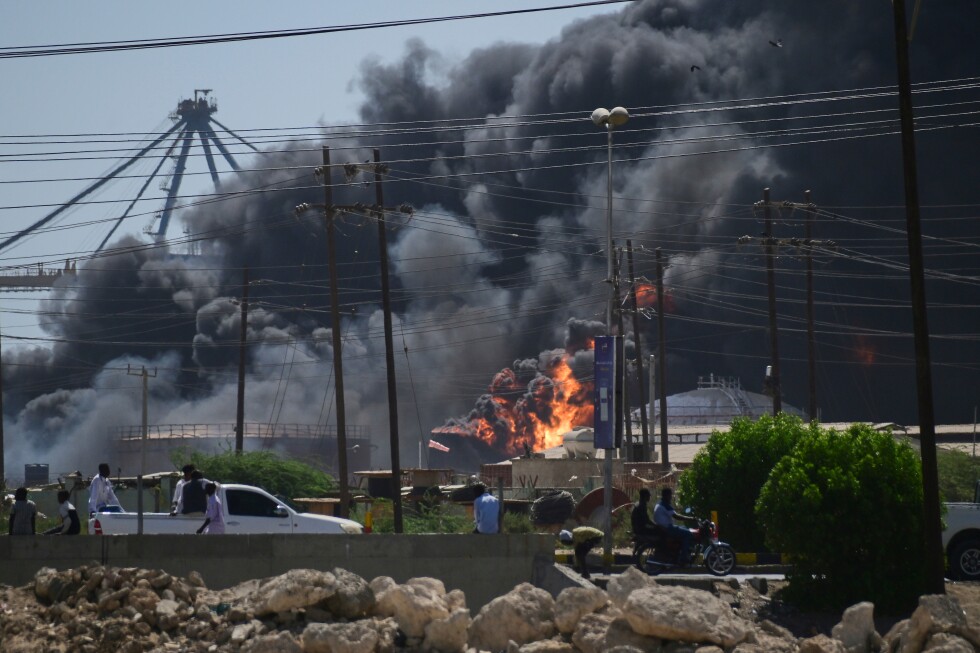
Smoke billows after drone strikes by the paramilitary Rapid Support Forces (RSF) targeted the northern port in the Red Sea city of Sudan" class="entity-link entity-location" data-entity-id="9948" data-entity-type="location">Port Sudan, Sudan, May 6, 2025. (AP Photo, File) 2026-05-16T04:59:37Z CAIRO (AP) — drone warfare has become the deadliest threat to civilians in Sudan ‘s conflict and both the military and the rival paramilitary Rapid Support Forces are being supplied by a number of countries in the Middle East and beyond, experts say. “Armed drones have now become by far and away the leading cause of civilian deaths,” or over 80% of conflict-related deaths, United Nations human rights chief Volker Türk said this week, calling for measures to prevent their transfer to Sudan. Drones killed at least 880 civilians between January and April. The war in Sudan began in April 2023 and has killed at least 59,000 people , displaced some 13 million and pushed parts of the country into famine . In recent weeks, the RSF has carried out drone attacks on Khartoum International Airport and other areas near the capital, which the army seized control of last year. Analysts say foreign-supplied advanced drone technology enables the warring parties to expand strikes on densely populated areas, complicating peace efforts and raising fears of a broader proxy conflict. freestar.queue.push(function () { window.fsAdCount = window.fsAdCount + 1 || 0; let customChannel = '/dynamic_' + fsAdCount; let adList = document.querySelectorAll(".fs-feed-ad") let thisAd = adList[fsAdCount]; let randId = Math.random().toString(36).slice(2); thisAd.id = randId; let thisPlacement = fsAdCount == 0 ? "apnews_story_feed" : "apnews_story_feed_dynamic"; freestar.newAdSlots({ placementName: thisPlacement, slotId: randId }, customChannel); }); Drones have targeted hospitals, dams, schools and markets “On the battlefield, drones have emerged as a force multiplier, enabling ground offensives and weakening enemy defenses,” said Jalale Getachew Birru, East Africa senior analyst at the U.S.-based Armed Conflict Location & Event Data project. Both the army and RSF use drones to secure contested territory, disrupt mobilization efforts and spread insecurity in areas controlled by rivals, he said. At least 2,670 people, including combatants and civilians, were killed in 2025, marking a 600% increase in drone-related deaths and an 81% increase in drone attacks compared to the previous year, ACLED found. Drone strikes by the warring parties have targeted civilian infrastructure including hospitals, dams, schools, markets and displacement camps. /* Desktop-first: fully collapse by default */ #ap-readmore-embed { display: none; margin: 0; padding: 0; height: 0; min-height: 0; overflow: hidden; text-align: center; position: relative; z-index: 2; } /* Only show on mobile */ @media (max-width: 767px) { #ap-readmore-embed { display: block; margin: 28px 0; height: auto; overflow: visible; } } #ap-readmore-embed .ap-readmore-btn { appearance: none; -webkit-appearance: none; border: 0; background: #000; color: #fff; cursor: pointer; display: inline-flex; align-items: center; justify-content: center; gap: 10px; padding: 14px 22px; border-radius: 999px; font-family: inherit, "AP Sans", -apple-system, BlinkMacSystemFont, "Helvetica Neue", Arial, sans-serif; font-weight: 700; font-size: 16px; letter-spacing: 0.2px; line-height: 1; box-shadow: 0 10px 18px rgba(0,0,0,0.12); transition: transform 120ms ease, box-shadow 120ms ease, opacity 120ms ease; touch-action: manipulation; -webkit-tap-highlight-color: transparent; position: relative; z-index: 3; } #ap-readmore-embed .ap-readmore-btn:hover { transform: translateY(-1px); box-shadow: 0 14px 22px rgba(0,0,0,0.16); } #ap-readmore-embed .ap-readmore-btn:active { transform: translateY(0); box-shadow: 0 10px 18px rgba(0,0,0,0.12); opacity: 0.95; } #ap-readmore-embed .ap-readmore-btn:focus-visible { outline: 3px solid rgba(228, 0, 43, 0.35); outline-offset: 3px; } #ap-readmore-embed .ap-readmore-icon { width: 10px; height: 10px; border-right: 2px solid currentColor; border-bottom: 2px solid currentColor; transform: rotate(45deg); margin-top: -2px; } #ap-readmore-embed .ap-readmore-fade { display: none; height: 48px; margin-top: -48px; pointer-events: none; background: linear-gradient(to bottom, rgba(255,255,255,0), rgba(255,255,255,1)); } Read More (function () { var APRM_EMBED_ID = "ap-readmore-embed"; var APRM_MOBILE_MQ = "(max-width: 767px)"; function APRM_onReady(fn) { if (document.readyState === "loading") { document.addEventListener("DOMContentLoaded", fn); } else { fn(); } } APRM_onReady(function () { var APRM_embedEl = document.getElementById(APRM_EMBED_ID); if (!APRM_embedEl) return; // 🚨 DESKTOP: remove entire module wrapper and bail early if (!window.matchMedia(APRM_MOBILE_MQ).matches) { var APRM_rootModule = APRM_embedEl.closest(".HTMLModuleEnhancement") || APRM_embedEl.closest(".HtmlModule"); if (APRM_rootModule && APRM_rootModule.parentNode) { APRM_rootModule.parentNode.removeChild(APRM_rootModule); } else if (APRM_embedEl.parentNode) { APRM_embedEl.parentNode.removeChild(APRM_embedEl); } return; // stop the rest of the script from running } }); })(); (function () { var EMBED_ID = "ap-readmore-embed"; var BTN_ID = "apReadMoreBtn"; var FADE_ID = "apReadMoreFade"; var STOP_SELECTOR = ".Page-below"; var SIGN_IN_GATE_SELECTOR = ".sign-in-gate-content"; var HIDDEN_ATTR = "data-ap-readmore-hidden"; var MOBILE_MQ = "(max-width: 767px)"; function ready(fn) { if (document.readyState === "loading") { document.addEventListener("DOMContentLoaded", fn); } else { fn(); } } function isElementNode(n) { return n && n.nodeType === 1; } function cancelEvent(e) { if (!e) return; if (typeof e.preventDefault === "function") e.preventDefault(); if (typeof e.stopPropagation === "function") e.stopPropagation(); if (typeof e.stopImmediatePropagation === "function") e.stopImmediatePropagation(); e.cancelBubble = true; e.returnValue = false; } function collapseDesktopEmbed(embed) { if (!embed) return true; if (!window.matchMedia(MOBILE_MQ).matches) { var maybeWrappers = [ embed.parentElement, embed.closest(".html-embed"), embed.closest("[data-type='htmlembed']"), embed.closest("[class*='embed']"), embed.closest("[class*='Embed']") ].filter(Boolean); embed.style.display = "none"; embed.style.margin = "0"; embed.style.padding = "0"; embed.style.height = "0"; embed.style.minHeight = "0"; embed.style.overflow = "hidden"; maybeWrappers.forEach(function (el) { el.style.margin = "0"; el.style.padding = "0"; el.style.height = "0"; el.style.minHeight = "0"; el.style.overflow = "hidden"; }); if (embed.parentNode) { embed.parentNode.removeChild(embed); } return true; } return false; } ready(function () { var embed = document.getElementById(EMBED_ID); var btn = document.getElementById(BTN_ID); var fade = document.getElementById(FADE_ID); if (!embed || !btn) return; if (collapseDesktopEmbed(embed)) return; var signInGate = document.querySelector(SIGN_IN_GATE_SELECTOR); if (signInGate) { embed.innerHTML = ""; return; } // — Analytics: impression when embed enters viewport — if ("IntersectionObserver" in window) { var io = new IntersectionObserver(function (entries, observer) { if (entries[0].isIntersecting) { window.dataLayer = window.dataLayer || []; window.dataLayer.push({ event: "ap_readmore_impression" }); observer.disconnect(); } }, { threshold: 0 }); io.observe(btn); } var stopEl = document.querySelector(STOP_SELECTOR); if (!stopEl) return; var rootCandidates = [ embed.closest(".Page"), embed.closest("article"), embed.closest("main"), document.body ].filter(Boolean); var root = rootCandidates.find(function (c) { return c.contains(stopEl); }) || document.body; var all = root.getElementsByTagName("*"); var hidden = []; for (var i = 0; i Most of the civilian deaths in drone attacks have occurred in the Kordofan region in the central Sudan, according to Türk. freestar.queue.push(function () { window.fsAdCount = window.fsAdCount + 1 || 0; let customChannel = '/dynamic_' + fsAdCount; let adList = document.querySelectorAll(".fs-feed-ad") let thisAd = adList[fsAdCount]; let randId = Math.random().toString(36).slice(2); thisAd.id = randId; let thisPlacement = fsAdCount == 0 ? "apnews_story_feed" : "apnews_story_feed_dynamic"; freestar.newAdSlots({ placementName: thisPlacement, slotId: randId }, customChannel); }); On May 8, drone strikes in South Kordofan and near the city of el-Obeid in North Kordofan reportedly killed 26 civilians. More than 70 people were killed in drone attacks on densely populated areas in Kordofan earlier this year, according to the Sudan Doctors Network. On Tuesday, a Sudanese rights group, the Emergency Lawyers, said nine drone attacks on civilian vehicles had killed at least 36 people over the past 10 days across seven provinces. The group blamed both the army and RSF and said some drones use visual monitoring technology capable of distinguishing targets, raising concerns that the attacks may not have been indiscriminate. Drones played a role in deadly seizure of el-Fasher The paramilitary RFS began only last year to use drones widely, said Gabriella Tejeda, research associate at The Soufan Center. The army and RSF are competing to obtain new drone models, particularly from China, but the RSF is modifying drones and “increasingly competing to acquire newer, more sophisticated models, with the UAE likely supplying them,” Tejeda said. The United Arab Emirates has denied supplying drones to the RSF. freestar.queue.push(function () { window.fsAdCount = window.fsAdCount + 1 || 0; let customChannel = '/dynamic_' + fsAdCount; let adList = document.querySelectorAll(".fs-feed-ad") let thisAd = adList[fsAdCount]; let randId = Math.random().toString(36).slice(2); thisAd.id = randId; let thisPlacement = fsAdCount == 0 ? "apnews_story_feed" : "apnews_story_feed_dynamic"; freestar.newAdSlots({ placementName: thisPlacement, slotId: randId }, customChannel); }); Nathaniel Raymond, executive director of the Humanitarian Research Lab at the Yale School of Public Health, said the RSF is backed by external technology, particularly from the UAE, with satellite imagery showing its use of Chinese-made CH-95 and FH-95 drones that are roughly the size of small aircraft. In areas such as el-Fasher city in North Darfur, where at least 6,000 people were killed over three days last year, RSF drones shut down communications of civilians “crying for help” and target them where a signal is detected, Raymond said. The RSF couldn’t have seized the city without these capabilities, he added. “The sophistication of how they use drones in el-Fasher is unique because it’s the first time you’ve seen this layered, hunter-killer concept of operations to kill people, basically in a kill box or trapped inside a wall, in this case to prevent them from crying for help,” Raymond said of the city, where U.N. experts said the violence indicated “hallmarks of genocide.” freestar.queue.push(function () { window.fsAdCount = window.fsAdCount + 1 || 0; let customChannel = '/dynamic_' + fsAdCount; let adList = document.querySelectorAll(".fs-feed-ad") let thisAd = adList[fsAdCount]; let randId = Math.random().toString(36).slice(2); thisAd.id = randId; let thisPlacement = fsAdCount == 0 ? "apnews_story_feed" : "apnews_story_feed_dynamic"; freestar.newAdSlots({ placementName: thisPlacement, slotId: randId }, customChannel); }); The army’s drones have hit civilian infrastructure The army’s drone technology has been blamed for striking civilian infrastructure such as Al Daein Teaching Hospital in East Darfur , where at least 64 people were killed. The army officially denied responsibility. Two military officials at the time, however, said the intended target was a nearby police station. Raymond said there has been an “alarming increase” in army drone strikes on protected infrastructure such as schools and markets in the past four to six months. The army has maintained that it doesn’t target civilian infrastructure. Last month, ACLED said the army’s drone technology is supplied by Turkey, Russia, Iran and Egypt, while the RSF is supplied via networks linked to the UAE through regional transit points including Ethiopia, Chad and Libya. Earlier this month, the Sudanese government accused neighboring Ethiopia of being behind recent drone attacks on sites including the Khartoum airport. It accused the UAE of supplying the drones. Both countries denied the allegations. freestar.queue.push(function () { window.fsAdCount = window.fsAdCount + 1 || 0; let customChannel = '/dynamic_' + fsAdCount; let adList = document.querySelectorAll(".fs-feed-ad") let thisAd = adList[fsAdCount]; let randId = Math.random().toString(36).slice(2); thisAd.id = randId; let thisPlacement = fsAdCount == 0 ? "apnews_story_feed" : "apnews_story_feed_dynamic"; freestar.newAdSlots({ placementName: thisPlacement, slotId: randId }, customChannel); }); ″Ethiopia is a central partner to the UAE, so the allegations are not unfounded and reflects an attempt by the UAE to try to influence the outcome of the war,” Tejeda said. Cross-border drone activity may have contributed to rising civilian deaths, but Birru and Raymond said that is difficult to confirm. “Both the warring parties’ battle tempo only increasing, and their backers actively still investing in the war, makes it clear that neither side is interested in a resolution,” Tejeda said. FATMA KHALED Khaled is based in the Middle East region. She covers humanitarian crises, conflict, among other news beats for The Associated Press. twitter mailto
SRCAssociated Press (AP)
LANGEN
LEANCenter
WORDS1 765
ENT10
SAT · 2026-05-16 · 06:23 GMTBRIEF NSR-2026-0516-76703
NSR-2026-0516-76703News Report·EN·Conflict
Drones are making Sudan’s war even deadlier for civilians
Drone warfare has become the deadliest threat to civilians in Sudan's ongoing conflict, accounting for over 80% of conflict-related deaths, according to UN human rights chief Volker Türk. Both the Sudanese army and the rival Rapid Support Forces (RSF) are reportedly supplied with drones by various countries, including those in the Middle East.
Associated Press (AP)Filed 2026-05-16 · 06:23 GMTLean · CenterRead · 8 min
Associated Press (AP)FIG 01
Reading time
8min
Word count
1 765words
Sources cited
2cited
Entities identified
10entities
Quality score
100%
§ 01
Briefing Summary
AI-generatedNEWSAR · AI
Drone warfare has become the deadliest threat to civilians in Sudan's ongoing conflict, accounting for over 80% of conflict-related deaths, according to UN human rights chief Volker Türk. Both the Sudanese army and the rival Rapid Support Forces (RSF) are reportedly supplied with drones by various countries, including those in the Middle East. These advanced drone technologies enable the warring parties to expand strikes on densely populated areas, targeting civilian infrastructure like hospitals, schools, and markets. Experts suggest this escalation complicates peace efforts and raises fears of a broader proxy conflict, with the RSF notably using sophisticated drones in areas like el-Fasher. The UN is calling for measures to prevent the transfer of these weapons to Sudan, where the conflict has already caused widespread displacement and famine.
Confidence 0.90Sources 2Claims 5Entities 10
§ 02
Article analysis
Model · rule-basedFraming
Conflict
Human Rights
Tone
Measured
AI-assessed
CalmNeutralAlarmist
Factuality
0.80 / 1.00
Factual
LowHigh
Sources cited
2
Limited
FewMany
§ 03
Key claims
5 extracted01
Drone strikes have targeted civilian infrastructure including hospitals, dams, schools, markets, and displacement camps.
factual
Confidence
1.00
02
At least 2,670 people were killed in 2025 due to drone strikes, a 600% increase in drone-related deaths compared to the previous year.
statisticACLED
Confidence
1.00
03
Drones killed at least 880 civilians in Sudan between January and April.
statistic
Confidence
1.00
04
Armed drones have become the leading cause of civilian deaths in Sudan's conflict, accounting for over 80% of conflict-related deaths.
statisticUnited Nations human rights chief Volker Türk
Confidence
1.00
05
Both the Sudanese army and the RSF are being supplied with drones by countries in the Middle East and beyond.
factualexperts
Confidence
0.90
§ 04
Full report
8 min read · 1 765 words§ 05
Entities
10 identifiedKey playerOppositionContextPositiveNeutralNegative
Organizations3
Locations3
§ 06
Keywords & salience
9 termscivilian casualties
1.00
drone warfare
1.00
sudan conflict
0.90
rapid support forces
0.80
foreign supply
0.70
proxy conflict
0.60
civilian infrastructure
0.50
force multiplier
0.50
humanitarian crisis
0.40
§ 07
Topic connections
Interactive graph Network visualization showing 51 related topics
View Full Graph Person Organization Location Event|Click node to navigate|Edge numbers = shared articles