It has been an unequal partnership for some time now, and that was reinforced today. Talks ended with 20-plus agreements on trade and tech, but no approval yet for the stalled Russian gas pipeline that Putin has been pushing for years. A lengthy joint statement also yielded no major breakthroughs."Both China and Russia need each other, but Russia clearly needs China more than before at the global stage," says Dr Zheng Runyu, from the Centre for Russian Studies at the China-normal-university" class="entity-link entity-organization" data-entity-id="16501" data-entity-type="organization">East China Normal University in Shanghai."Given today's international environment, deep co-operation with China is extremely important for Russia in dealing with many of its current challenges."The Chinese leader seemed to have a strong hand as he negotiated with the US president too. Stronger trade relationships with the rest of the world and China's dominance in rare earth minerals and advanced manufacturing have given him leverage. Beijing has found itself on an equal footing with Washington in the wake of Trump's unpredictability.EPAThis is Putin's 25th visit to China since he became president in 2000And in talks with both Trump and Putin, Xi faced leaders mired in costly wars that have dragged on for longer than they anticipated. For Trump, the war in the Middle East has turned into a global crisis that has plunged his approval ratings back home. For Putin, the invasion of Ukraine, now into its fifth year, has isolated Russia and taken a brutal toll even on its own people.In both cases, it also seemed apparent that now China has the power to set the tone and the terms of how it wants to engage on the global stage.Xi's Chinese dreamThis is a remarkable turnaround for a country that, just five years ago, appeared to be on the verge of diplomatic isolation.Its borders were closed due to a pandemic that then president Trump had labelled a "Chinese virus". Relations with the West had deteriorated sharply amid the rise of so-called "wolf warrior" diplomacy, where Chinese diplomats and state media used aggressive rhetoric to quieten Western critics.There was also growing international criticism over grave human rights abuses in Xinjiang, and Beijing's increasing control over Hong Kong, and Western governments imposed sanctions and export controls on Chinese goods. China responded with counter measures.And yet, five years on, China has repositioned itself as an indispensable centre of global diplomacy and trade.Rather than being treated as a problem to contain, China has become a power to engage.Beijing has moderated its diplomatic style as it likely recognised uncomfortable realities. Its economic slowdown means that it needs more foreign investment and trade, which require stable ties. Its excessive confrontation was also driving important trading partners in the region, such as South Korea, the Philippines and Vietnam, closer to Washington.But the timing is also key. Ever since the US elected Donald Trump, China has repaired ties with Australia, Canada and the UK - all key US allies. World leaders, including those from Canada, the UK and Germany, have walked Beijing's red carpet to do deals with the world's second largest economy.For the last decade Xi has promised his people he would work towards "the great rejuvenation of the Chinese nation" and this last week has been an incredible piece of domestic propaganda: the Chinese leader looked like the man everyone wants to meet.But this visit also highlights the limits of China's diplomatic power.A diplomatic tightropeXi only mentioned one war - and that was the conflict in the Middle East.He told Putin that a complete end to the war in Iran was of "utmost urgency", while making no reference to Russia's invasion of Ukraine.Getty ImagesTrump also got a grand welcome in Beijing last week Xi and Putin both called out "treacherous military strikes against other countries, the hypocritical use of negotiations as cover for preparing such strikes, the assassination of leaders of sovereign states, the destabilisation of the domestic political situation in these states and the provocation of regime change, and the brazen kidnapping of national leaders for trial".This was jarring and may have consequences beyond the Great Hall of the People. As China calls for an end to conflicts elsewhere, and takes aim at US actions, its silence on Ukraine, where hundreds of thousand have died, will raise questions in Europe about how far Beijing is willing, or able, to act as a genuinely even‑handed global player.Beijing has tried to maintain a neutral stance in the war in Ukraine, although both the US and Europe have urged China to cut the economic lifeline it is offering Moscow.
SRCBBC News - World
LANGEN
LEANCenter
WORDS752
ENT12
WED · 2026-05-20 · 11:42 GMTBRIEF NSR-2026-0520-77788
NSR-2026-0520-77788Analysis·EN·Political Strategy
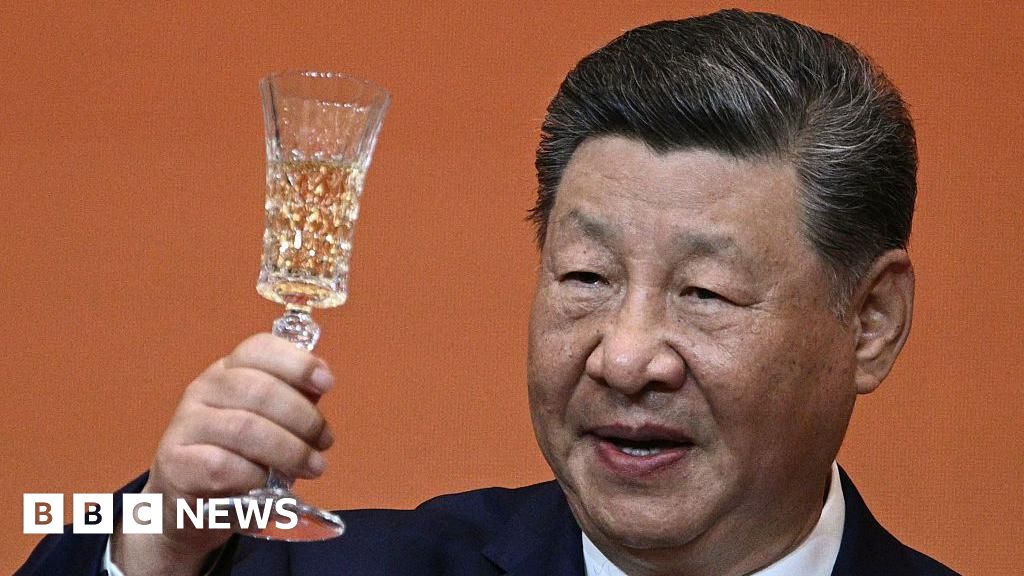
Xi basks in spotlight as he hosts Putin days after Trump
Chinese President Xi Jinping hosted Russian President Vladimir Putin shortly after meeting with former US President Donald Trump, projecting an image of engaging with global leaders without being tied to any. While Xi and Putin signed over 20 agreements on trade and technology, no major breakthroughs were announced, and a stalled Russian gas pipeline deal remains unapproved.
BBC News - WorldFiled 2026-05-20 · 11:42 GMTLean · CenterRead · 4 min
BBC News - WorldFIG 01
Reading time
4min
Word count
752words
Sources cited
1cited
Entities identified
12entities
Quality score
100%
§ 01
Briefing Summary
AI-generatedNEWSAR · AI
Chinese President Xi Jinping hosted Russian President Vladimir Putin shortly after meeting with former US President Donald Trump, projecting an image of engaging with global leaders without being tied to any. While Xi and Putin signed over 20 agreements on trade and technology, no major breakthroughs were announced, and a stalled Russian gas pipeline deal remains unapproved. The article suggests Russia needs China more on the global stage, while China's economic strength and leverage give Xi a strong hand in negotiations. This diplomatic positioning marks a significant turnaround for China, which was previously facing international criticism and isolation. However, Xi's decision to only mention the Middle East conflict and remain silent on Ukraine raises questions about China's role as an even-handed global player.
Confidence 0.90Sources 1Claims 5Entities 12
§ 02
Article analysis
Model · rule-basedFraming
Political Strategy
Diplomatic
Tone
Measured
AI-assessed
CalmNeutralAlarmist
Factuality
0.60 / 1.00
Mixed
LowHigh
Sources cited
1
Limited
FewMany
§ 03
Key claims
5 extracted01
Russia clearly needs China more than before at the global stage.
quoteDr Zheng Runyu
Confidence
0.90
02
Talks between China and Russia ended with over 20 agreements on trade and tech, but no approval for a Russian gas pipeline.
factual
Confidence
0.90
03
China's economic slowdown means it needs more foreign investment and trade, requiring stable ties.
factual
Confidence
0.80
04
China has found itself on an equal footing with Washington in the wake of Trump's unpredictability.
factual
Confidence
0.80
05
China has repositioned itself as an indispensable centre of global diplomacy and trade.
factual
Confidence
0.80
§ 04
Full report
4 min read · 752 words§ 05
Entities
12 identifiedKey playerOppositionContextPositiveNeutralNegative
People3
Organizations1
§ 06
Keywords & salience
9 termsxi jinping
1.00
vladimir putin
1.00
china-russia relations
1.00
global diplomacy
0.90
us-china relations
0.80
trade and tech agreements
0.70
ukraine invasion
0.60
rare earth minerals
0.50
geopolitical leverage
0.40
§ 07
Topic connections
Interactive graph Network visualization showing 51 related topics
View Full Graph Person Organization Location Event|Click node to navigate|Edge numbers = shared articles