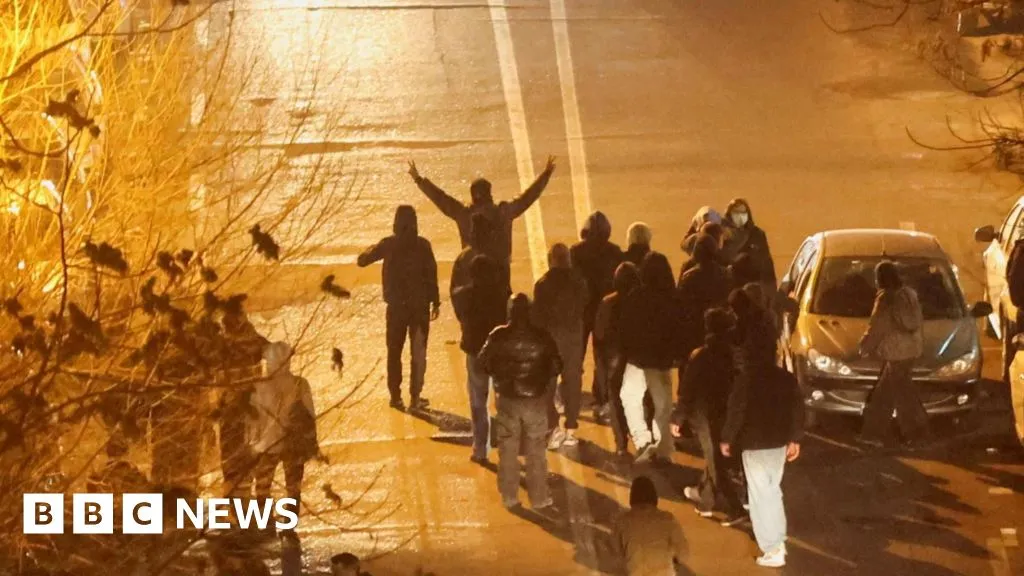
Families of people killed in the protests in Iran have told the BBC that the authorities are demanding large sums of money to return their bodies for burial. Multiple sources have told BBC-persian" class="entity-link entity-organization" data-entity-id="7448" data-entity-type="organization">BBC Persian that bodies are being held in mortuaries and hospitals and that security forces will not release them unless their relatives hand over money. At least 2,435 people have been killed during more than two weeks of protests across the country. One family in the northern city of Rasht told the BBC that security forces demanded 700 million tomans ($5,000; £3,700) to release the body of their loved one. It was being held at the Poursina Hospital mortuary, along with at least 70 other dead protesters, they said. Meanwhile in Tehran, the family of a Kurdish seasonal construction worker went to collect his body, only to be told they must pay a billion tomans ($7,000; £5,200) to receive it. The family told the BBC that they could not afford the fee and were forced to leave without their son's body. A construction worker in Iran typically earns less than $100 a month. In some cases, hospital staff have phoned the relatives of the dead to give them an advance warning to come and get the bodies before security forces can extort any funds. BBC-persian" class="entity-link entity-organization" data-entity-id="7448" data-entity-type="organization">BBC Persian has been told about a woman - who we are not identifying for her safety - who did not know her husband was killed until she received a phone call on 9 January on his phone from hospital staff. They told her she should quickly come and collect his body before security forces arrived and demanded payment for its release. BBC-persian" class="entity-link entity-organization" data-entity-id="7448" data-entity-type="organization">BBC Persian was told about this situation by a London-based relative, who has spoken to her. The woman then took her two children to the hospital to find her husband's body. She put it in the back of a pickup truck, and drove for seven hours to their hometown in western Iran to bury him. "I rode in the back of the pickup truck, crying over his body for seven hours while my children sat in the front seat," she told her London relative. BBC-persian" class="entity-link entity-organization" data-entity-id="7448" data-entity-type="organization">BBC Persian has also received reports that officials at Tehran's Behesht-e Zahra mortuary are telling families that if they claim their child was a member of the Basij paramilitary force and was killed by protesters, the body will be released without charge.The family member told the BBC in a message: "We were asked to participate in a pro-government rally and portray the body as that of a martyr. We did not agree to this."In another case in Tehran, a source told BBC-persian" class="entity-link entity-organization" data-entity-id="7448" data-entity-type="organization">BBC Persian that several families broke into a mortuary to retrieve bodies out of fear they would be taken away by the authorities. "Several families, fearing that the authorities might keep the bodies or bury them without their knowledge, broke open the morgue door and pulled the bodies out of ambulances," the source told the BBC. The families then guarded the bodies for several hours on the ground in the hospital courtyard to prevent them from being taken away until they could find private ambulances to transport them, the source said. An internet and communications blackout has made it difficult to get a full picture of what is happening on the ground. International human-rights groups have no direct access to the country and, along with other international news organisations, the BBC is not allowed by the Iranian government to report on the ground.Demonstrations began in the capital, Tehran, on 29 December, following a sharp fall in the value of the Iranian currency against the dollar. As the protests reached dozens of other towns and cities, they turned against Iran's clerical rulers and security forces launched a violent crackdown. The protests escalated significantly last Thursday and were met with deadly force by authorities. According to the US-based Human Rights Activists News Agency (HRANA), at least 2,435 protesters have been killed since the unrest began, as well as 13 children and 153 people affiliated with the security forces or government. It reports that another 18,470 protesters have been arrested.Meanwhile, arrests have continued across the country. Security forces and Revolutionary Guard intelligence units have detained activists, lawyers, and ordinary citizens.
SRCBBC News - World
LANGEN
LEANCenter
WORDS710
ENT8
THU · 2026-01-15 · 20:19 GMTBRIEF NSR-2026-0115-7779
NSR-2026-0115-7779News Report·EN·Human Rights
Iran authorities demanding large sums for return of protesters' bodies, BBC told
Iranian authorities are reportedly demanding large sums of money from families to release the bodies of protesters killed during recent demonstrations. According to the BBC, families are being told to pay thousands of dollars to retrieve their loved ones' remains from mortuaries and hospitals across the country.
BBC News - WorldFiled 2026-01-15 · 20:19 GMTLean · CenterRead · 3 min
BBC News - WorldFIG 01
Reading time
3min
Word count
710words
Sources cited
6cited
Entities identified
8entities
Quality score
100%
§ 01
Briefing Summary
AI-generatedNEWSAR · AI
Iranian authorities are reportedly demanding large sums of money from families to release the bodies of protesters killed during recent demonstrations. According to the BBC, families are being told to pay thousands of dollars to retrieve their loved ones' remains from mortuaries and hospitals across the country. In one instance, a family in Rasht was asked for $5,000, while another in Tehran was asked for $7,000, sums many cannot afford. Hospital staff have sometimes warned families to collect bodies quickly to avoid extortion by security forces. Additionally, officials at a Tehran mortuary are allegedly offering free release if families falsely claim their deceased relative was a member of the Basij paramilitary force killed by protesters, requiring participation in pro-government rallies.
Confidence 0.90Sources 6Claims 5Entities 8
§ 02
Article analysis
Model · rule-basedFraming
Human Rights
Political Strategy
Tone
Mixed Tone
AI-assessed
CalmNeutralAlarmist
Factuality
0.80 / 1.00
Factual
LowHigh
Sources cited
6
Well sourced
FewMany
§ 03
Key claims
5 extracted01
One family in Rasht was asked to pay 700 million tomans ($5,000) to release the body of their loved one.
factualBBC
Confidence
0.90
02
Iranian authorities are demanding large sums of money to return the bodies of protesters killed during recent protests.
factualBBC
Confidence
0.90
03
Officials at Tehran's Behesht-e Zahra mortuary are telling families that if they claim their child was a Basij member, the body will be released without charge.
factualBBC Persian
Confidence
0.80
04
At least 2,435 people have been killed during more than two weeks of protests across the country.
statisticBBC
Confidence
0.80
05
Several families broke into a mortuary to retrieve bodies out of fear they would be taken away by the authorities.
factualBBC
Confidence
0.70
§ 04
Full report
3 min read · 710 words§ 05
Entities
8 identifiedKey playerOppositionContextPositiveNeutralNegative
Organizations4
§ 06
Keywords & salience
10 termsiran protests
1.00
bodies
0.90
families
0.80
extortion
0.70
security forces
0.70
payment for release
0.60
mortuaries
0.60
bbc persian
0.50
pro-government rally
0.40
basij paramilitary force
0.40
§ 07
Topic connections
Interactive graph Network visualization showing 51 related topics
View Full Graph Person Organization Location Event|Click node to navigate|Edge numbers = shared articles