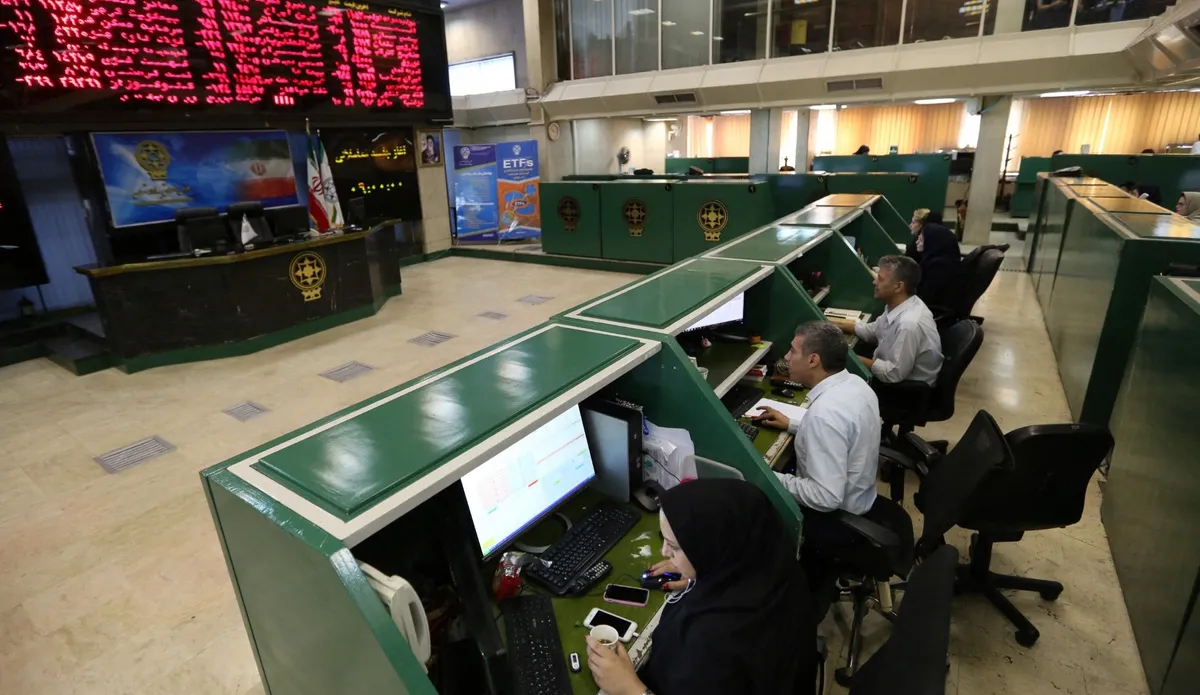
Stocks in companies hard hit by US and Israeli strikes, such as energy and steel firms, don’t take part in initial sessions.Iranian traders work at the Tehran Stock Exchange before the war [File: Atta Kenare/AFP]Published On 20 May 2026Tehran, Iran – A near-three-month closure of Iran’s stock market has ended with two days of a controlled reopening among some restrictions for investors.Although Tuesday’s and Wednesday’s sessions of the Tehran Stock Exchange allowed investors to generate some liquidity, underlying economic troubles were also evident.A little more than a third of the market’s main players were absent, reportedly to protect shareholders from the effects of the Israel-war" class="entity-link entity-event" data-entity-id="46335" data-entity-type="event">United States-Israel war.A total of 42 ticker symbols for companies representing about 36 percent of the market were offline, Securities and Exchange Organization deputy supervisor Hamid Yari told state media, adding that trading windows were extended by one hour on both days to facilitate the reopening.While Yari said he is hoping for an end to lengthy market closures, this might not be possible if attacks break out again and authorities are forced to intervene.Those absent from the reopening included the Fajr and Mobin Petrochemical giants, the Khuzestan and Mobarakeh Steel giants, utility firms and investment companies that had a large part of their portfolios invested in infrastructure that was targeted by the US and Israel.The involvement of equity funds with more than 35 percent of their portfolios invested in the most affected companies will also remain suspended until further notice. The stated goal was to “prevent additional selling pressure and support the market”.Measures put in place before the war to prevent any major financial upsets mean that shares in the remaining two-thirds of the market players could rise or fall only by 3 percent.Iran’s stock market remains relatively underdeveloped due to US sanctions and isolation from global financial markets. It also accounts for a smaller share of financial activity than that of banks and the state but still functions as an important barometer for investor confidence and short-term liquidity generation.Market opens to marginal improvementsOverall, the signs were positive during the two days of the reopening. Buy queues outpaced sell queues while the equal-weight index, which gives each listed company about the same weight to allow investors to better judge the movement of stocks, also marginally improved.TEDPIX, the main index of the Tehran Stock Exchange, saw modest gains on Tuesday and added another 44,000 points on Wednesday to stand at more than 3,758,000 heading into the weekend.The index saw an all-time high at the start of 2026 at nearly 4,500,000, but the trajectory of the market has been in decline since nationwide protests erupted in late December with deteriorating economic conditions and the advent of war leading to the stock market’s suspension.Iranians shop at a street market in northern Tehran [File: Abedin Taherkenareh/EPA]Economist Mehdi Haghbaali told Al Jazeera that authorities faced challenges to reopen the stock market, particularly as security considerations mean that companies are prevented from fully disclosing the extent of damage at their facilities and production sites.“Brokerage firms, particularly smaller ones, are also facing significant difficulties,” Haghbaali said. “Many traders held leveraged positions through credit lines, especially options traders whose contracts expired during the market closure, leaving them without clear recourse.” Authorities temporary barred brokers from forcing investors to either add cash and collateral or sell shares if they fall below required position thresholds.Does this mean actual growth?Haghbaali said the two-day reopening went better than expected but this could be more rooted in how bad the economy already was rather than a genuinely positive sign.With steep inflation plaguing Iran in recent months, the real price of shares has been reduced. A sharp fall in the value of the Iranian rial against the US dollar has also made export-oriented companies appear more attractive as revenues often translate into higher domestic currency earnings.But there are reasons to be cautious, Haghbaali said, with investors possibly needing discounts to invest in riskier shares.“Trade has been severely disrupted, exporters will face difficulties maintaining operations and rising inflation will further hinder the creation of real value, which will be reflected in stock valuations,” the economist said.The inflation rate was more than 70 percent in late April, according to the latest available official figures, and the situation has only got worse with the US imposing a naval blockade of Iran’s southern ports.Facing a huge budget crunch, the government’s room to respond has been limited, offering families hit by sanctions only meager subsidies and e-coupons for essential goods while cracking down on hoarding and price gouging.During previous periods of economic hardship, Iran has tried to mitigate foreign currency shortages, which can lead to inflation, by limiting the import of certain consumer goods.To deal with the current wave of inflation, authorities could be forced to introduce such measures again, Haghbaali said, despite the need for the import of materials to help rebuild war-damaged infrastructure. Either way, there will be no easy decisions for the government, Haghbaali said.“Naturally, a peace agreement between the US and Iran could fundamentally change the outlook, improve market expectations and provide relief to the enemy,” he added.
SRCAl Jazeera
LANGEN
LEANCenter
WORDS847
ENT12
WED · 2026-05-20 · 17:18 GMTBRIEF NSR-2026-0520-77890
NSR-2026-0520-77890News Report·EN·Economic Impact
Controlled reopening ends Iran’s lengthy stock market shutdown
Iran's stock market reopened for two days with restrictions after a nearly three-month shutdown. Companies significantly impacted by US and Israeli strikes, including energy and steel firms, were excluded from initial trading sessions to protect shareholders.
Maziar MotamediAl JazeeraFiled 2026-05-20 · 17:18 GMTLean · CenterRead · 4 min
Al JazeeraFIG 01
Reading time
4min
Word count
847words
Sources cited
1cited
Entities identified
12entities
Quality score
100%
§ 01
Briefing Summary
AI-generatedNEWSAR · AI
Iran's stock market reopened for two days with restrictions after a nearly three-month shutdown. Companies significantly impacted by US and Israeli strikes, including energy and steel firms, were excluded from initial trading sessions to protect shareholders. Approximately 36% of the market's main players were offline. Trading windows were extended, and price fluctuations were limited to 3% for the remaining companies. While buy queues exceeded sell queues and the equal-weight index saw marginal improvement, underlying economic troubles persist, including high inflation and a devalued currency. Economists note that the reopening may reflect the dire economic state rather than genuine growth, with disruptions to trade and operations posing ongoing challenges.
Confidence 0.90Sources 1Claims 5Entities 12
§ 02
Article analysis
Model · rule-basedFraming
Economic Impact
Conflict
Tone
Measured
AI-assessed
CalmNeutralAlarmist
Factuality
0.70 / 1.00
Factual
LowHigh
Sources cited
1
Limited
FewMany
§ 03
Key claims
5 extracted01
The TEDPIX index saw modest gains during the two days of reopening, adding 44,000 points on Wednesday.
statistic
Confidence
1.00
02
Measures in place meant shares in the remaining two-thirds of market players could only rise or fall by 3 percent.
factual
Confidence
1.00
03
Companies heavily impacted by US and Israeli strikes, such as energy and steel firms, were among those absent from initial trading sessions.
factual
Confidence
1.00
04
42 ticker symbols, representing about 36 percent of the market, were offline during the reopening.
statisticHamid Yari
Confidence
1.00
05
Iran's stock market reopened after a near-three-month closure with restrictions for investors.
factual
Confidence
1.00
§ 04
Full report
4 min read · 847 words§ 05
Entities
12 identifiedKey playerOppositionContextPositiveNeutralNegative
Organizations6
§ 06
Keywords & salience
9 termsstock market
1.00
controlled reopening
0.90
iran
0.80
us-israel war
0.70
securities
0.60
liquidity generation
0.50
investor confidence
0.50
us sanctions
0.40
market closure
0.40
§ 07
Topic connections
Interactive graph Network visualization showing 51 related topics
View Full Graph Person Organization Location Event|Click node to navigate|Edge numbers = shared articles