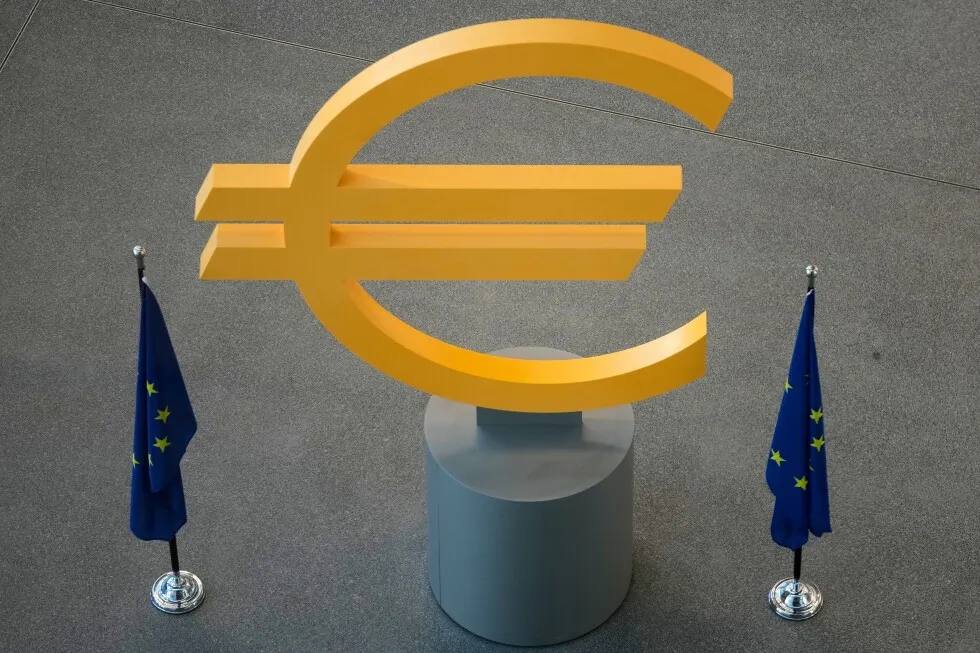
FILE -The Euro currency symbol is seen prior to a press conference after an ECB’s governing council meeting in Frankfurt, Germany, Dec. 18, 2025. (AP Photo/Michael Probst, File) FRANKFURT, Germany (AP) — The European Union’s executive commission cut its growth outlook and predicted higher inflation due to sharply higher energy prices from the Iran" class="entity-link entity-event" data-entity-id="126039" data-entity-type="event">war in Iran — but said the economy will avoid an outright recession. “As a net energy importer, the EU’s economy is highly susceptible to the energy shock caused by the conflict in the Middle East,” the commission said in a statement Thursday. The rising cost of fuel “means higher household bills and surging business costs that reduce profits for many industries.”The commission’s spring forecast lowered the outlook for growth in the 21 countries that use the euro to 0.9% for this year, from 1.2% in its autumn forecast, and to 1.2% from 1.4% for 2027. inflation is now expected to reach 3.0% for 2026, up from the earlier forecast of 1.9%.The new inflation figure exceeds the inflation goal of 2% set by the European Central Bank, and higher inflation expectations have led to predictions the ECB will raise its interest rate benchmarks this year to combat inflation. Oil prices rose sharply after risk of Iranian drone and speedboat attacks closed off most ship traffic through the Strait of Hormuz, the sea passage for about a fifth of the world’s oil and natural gas. On top of that, news of the war has shaken consumer confidence, which fell to a 40-month low amid mounting fears of job losses and higher inflation. 2 MIN READ 3 MIN READ 5 MIN READ Still, the commission said the economy will continue to show modest growth and avoid an outright recession. It warned however that a downside scenario of a prolonged period of higher energy prices would push growth lower and inflation higher. The new inflation figure exceeds the inflation goal of 2% set by the European Central Bank, and higher inflation expectations have led to predictions the ECB will raise its interest rate benchmarks this year to combat inflation.
SRCAssociated Press (AP)
LANGEN
LEANCenter
WORDS349
ENT12
THU · 2026-05-21 · 11:53 GMTBRIEF NSR-2026-0521-78093
NSR-2026-0521-78093News Report·EN·Economic Impact
Energy shock from Iran war to weigh on Europe’s growth, boost inflation
The European Union's executive commission has lowered its economic growth forecast and predicts higher inflation for the euro area due to increased energy prices stemming from the war in Iran. The commission stated that as a net energy importer, the EU economy is vulnerable to this energy shock, leading to higher household and business costs.
Updated [hour]:[minute] [AMPM] [timezone], [monthFull] [day], [year]Associated Press (AP)Filed 2026-05-21 · 11:53 GMTLean · CenterRead · 2 min
Associated Press (AP)FIG 01
Reading time
2min
Word count
349words
Sources cited
1cited
Entities identified
12entities
Quality score
100%
§ 01
Briefing Summary
AI-generatedNEWSAR · AI
The European Union's executive commission has lowered its economic growth forecast and predicts higher inflation for the euro area due to increased energy prices stemming from the war in Iran. The commission stated that as a net energy importer, the EU economy is vulnerable to this energy shock, leading to higher household and business costs. Growth projections for this year were reduced to 0.9%, and inflation is now expected to reach 3.0% in 2026, exceeding the European Central Bank's 2% target. These inflation expectations suggest the ECB may increase interest rates. Despite these challenges, the commission anticipates modest economic growth and avoidance of a recession, though a prolonged period of high energy prices could worsen the outlook.
Confidence 0.90Sources 1Claims 5Entities 12
§ 02
Article analysis
Model · rule-basedFraming
Economic Impact
Conflict
Tone
Measured
AI-assessed
CalmNeutralAlarmist
Factuality
0.80 / 1.00
Factual
LowHigh
Sources cited
1
Limited
FewMany
§ 03
Key claims
5 extracted01
Inflation is now expected to reach 3.0% for 2026, up from the earlier forecast of 1.9%.
statisticEuropean Union's executive commission
Confidence
1.00
02
The commission's spring forecast lowered the outlook for growth in the 21 countries that use the euro to 0.9% for this year, from 1.2% in its autumn forecast.
statisticEuropean Union's executive commission
Confidence
1.00
03
The EU's economy is highly susceptible to the energy shock caused by the conflict in the Middle East.
factualEuropean Union's executive commission
Confidence
1.00
04
The European Union's executive commission cut its growth outlook and predicted higher inflation due to sharply higher energy prices from the war in Iran.
factualEuropean Union's executive commission
Confidence
1.00
05
Oil prices rose sharply after risk of Iranian drone and speedboat attacks closed off most ship traffic through the Strait of Hormuz.
factual
Confidence
0.90
§ 04
Full report
2 min read · 349 words§ 05
Entities
12 identifiedKey playerOppositionContextPositiveNeutralNegative
Organizations2
Locations5
§ 06
Keywords & salience
10 termsinflation
1.00
energy prices
1.00
economic growth
0.90
iran war
0.80
european union
0.70
european central bank
0.70
interest rates
0.60
strait of hormuz
0.50
consumer confidence
0.40
recession
0.40
§ 07
Topic connections
Interactive graph Network visualization showing 9 related topics
View Full Graph Person Organization Location Event|Click node to navigate|Edge numbers = shared articles