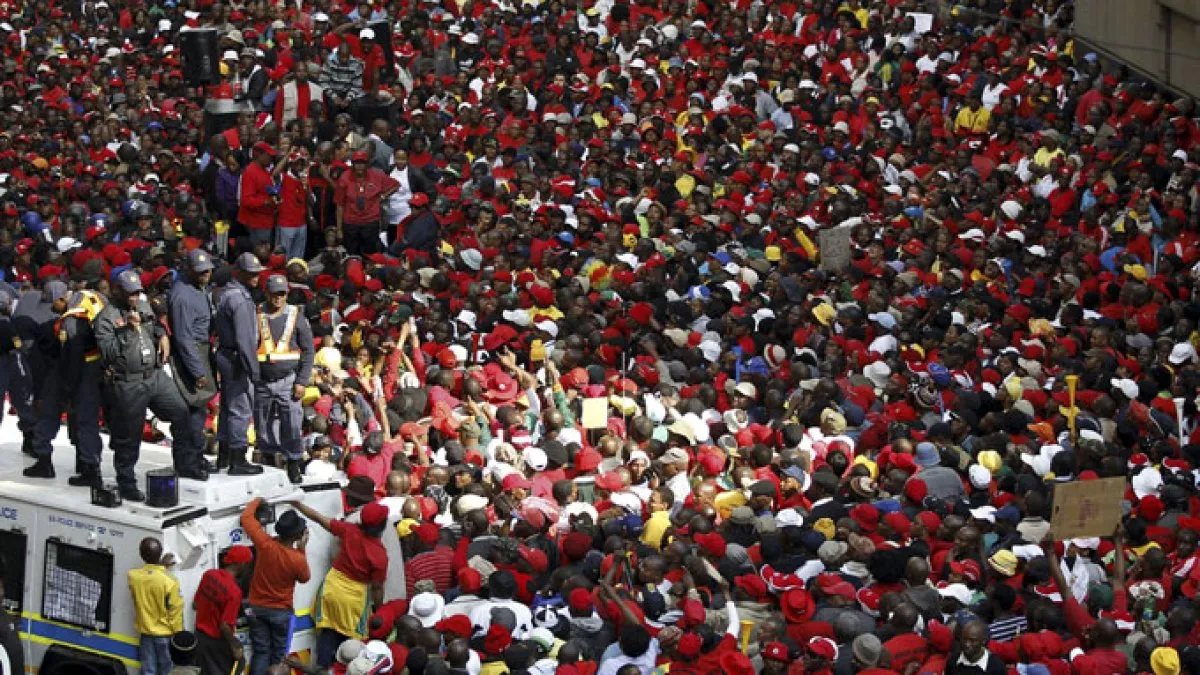
The nonbinding ruling is expected to be hailed as a victory by workers’ groups and influence global labour relations.The top United Nations court has ruled that workers and unions have the Right to strike under a key international treaty, an opinion that could shape labour laws around the world.International Court of Justice (ICJ) President Yuji Iwasawa said on Thursday that the court was “of the opinion that the Right to strike of workers and their organisations is protected” under the International Labour Organization’s (ILO) 1948 Freedom of Association treaty.Recommended Stories list of 4 itemslist 1 of 4About 50 million people trapped in ‘modern slavery’, says UNlist 2 of 4UN warns of social unrest after ‘striking’ drop in global wageslist 3 of 4South Korean truck drivers vote to end nationwide strikelist 4 of 4Why are nearly 50,000 Samsung workers about to strike in South Korea?end of listThe finding came in a 10-4 ruling by the court’s 14-member panel.The ILO, a United Nations agency that sets global labour standards, had asked for the advisory opinion in November 2023 amid a battle between workers’ and employers’ representatives over whether the treaty – known as Convention 87 – implicitly protects workers’ Right to strike.Although ICJ judges affirmed the treaty enshrines such a right, they emphasised their opinion was narrow.The conclusion “does not entail any determination on the precise content, scope or conditions for the exercise of that right”, Iwasawa said.While the ruling is not binding, many local courts view the ICJ’s opinions as authoritative. Labour advocates expect it will influence countries that have not recognised employees’ Right to strike.Convention 87 has been ratified by 158 countries.Long-standing disputeThe treaty lays out protections concerning workers’ and employers’ freedom to organise, establish and join federations.In its 43-page advisory opinion, the ICJ reasoned that strikes are “one of the main activities engaged in and tools used by workers and their organisations to promote their interests and improve conditions of labour”.
SRCAl Jazeera
LANGEN
LEANCenter
WORDS322
ENT8
THU · 2026-05-21 · 17:05 GMTBRIEF NSR-2026-0521-78189
NSR-2026-0521-78189News Report·EN·Legal & Judicial
Top UN court rules workers’ right to strike ‘protected’ in key treaty
The International Court of Justice (ICJ), the UN's top court, has issued a nonbinding advisory opinion stating that workers and their organizations have the right to strike protected under the International Labour Organization's 1948 Freedom of Association treaty. This finding, made in a 10-4 ruling, came after the ILO requested the opinion amid a dispute over whether the treaty implicitly protects the right to strike.
Al Jazeera StaffAl JazeeraFiled 2026-05-21 · 17:05 GMTLean · CenterRead · 2 min
Al JazeeraFIG 01
Reading time
2min
Word count
322words
Sources cited
2cited
Entities identified
8entities
Quality score
100%
§ 01
Briefing Summary
AI-generatedNEWSAR · AI
The International Court of Justice (ICJ), the UN's top court, has issued a nonbinding advisory opinion stating that workers and their organizations have the right to strike protected under the International Labour Organization's 1948 Freedom of Association treaty. This finding, made in a 10-4 ruling, came after the ILO requested the opinion amid a dispute over whether the treaty implicitly protects the right to strike. The ICJ reasoned that strikes are a primary means for workers to promote their interests and improve labor conditions. While the ruling is not legally binding, it is expected to influence labor laws globally, particularly in countries that have not previously recognized the right to strike, as many local courts consider ICJ opinions authoritative. The court clarified that its opinion does not define the specific scope or conditions for exercising this right.
Confidence 0.90Sources 2Claims 5Entities 8
§ 02
Article analysis
Model · rule-basedFraming
Legal & Judicial
Social Justice
Tone
Measured
AI-assessed
CalmNeutralAlarmist
Factuality
0.70 / 1.00
Factual
LowHigh
Sources cited
2
Limited
FewMany
§ 03
Key claims
5 extracted01
Strikes are considered 'one of the main activities engaged in and tools used by workers and their organisations to promote their interests and improve conditions of labour'.
quoteICJ
Confidence
1.00
02
The ICJ emphasized that the opinion does not determine the precise content, scope, or conditions for the exercise of the right to strike.
quoteICJ President Yuji Iwasawa
Confidence
1.00
03
Convention 87, the treaty in question, has been ratified by 158 countries.
statistic
Confidence
1.00
04
The International Court of Justice (ICJ) ruled that the right to strike is protected under the ILO's 1948 Freedom of Association treaty.
factualICJ
Confidence
1.00
05
The nonbinding ruling is expected to influence global labor relations and shape labor laws.
prediction
Confidence
0.80
§ 04
Full report
2 min read · 322 words§ 05
Entities
8 identifiedKey playerOppositionContextPositiveNeutralNegative
Organizations4
Locations1
§ 06
Keywords & salience
9 termsright to strike
1.00
international labour organization
0.90
international court of justice
0.90
freedom of association treaty
0.80
workers' rights
0.70
labour relations
0.70
convention 87
0.60
global labour standards
0.50
advisory opinion
0.40
§ 07
Topic connections
Interactive graph Network visualization showing 2 related topics
View Full Graph Person Organization Location Event|Click node to navigate|Edge numbers = shared articles