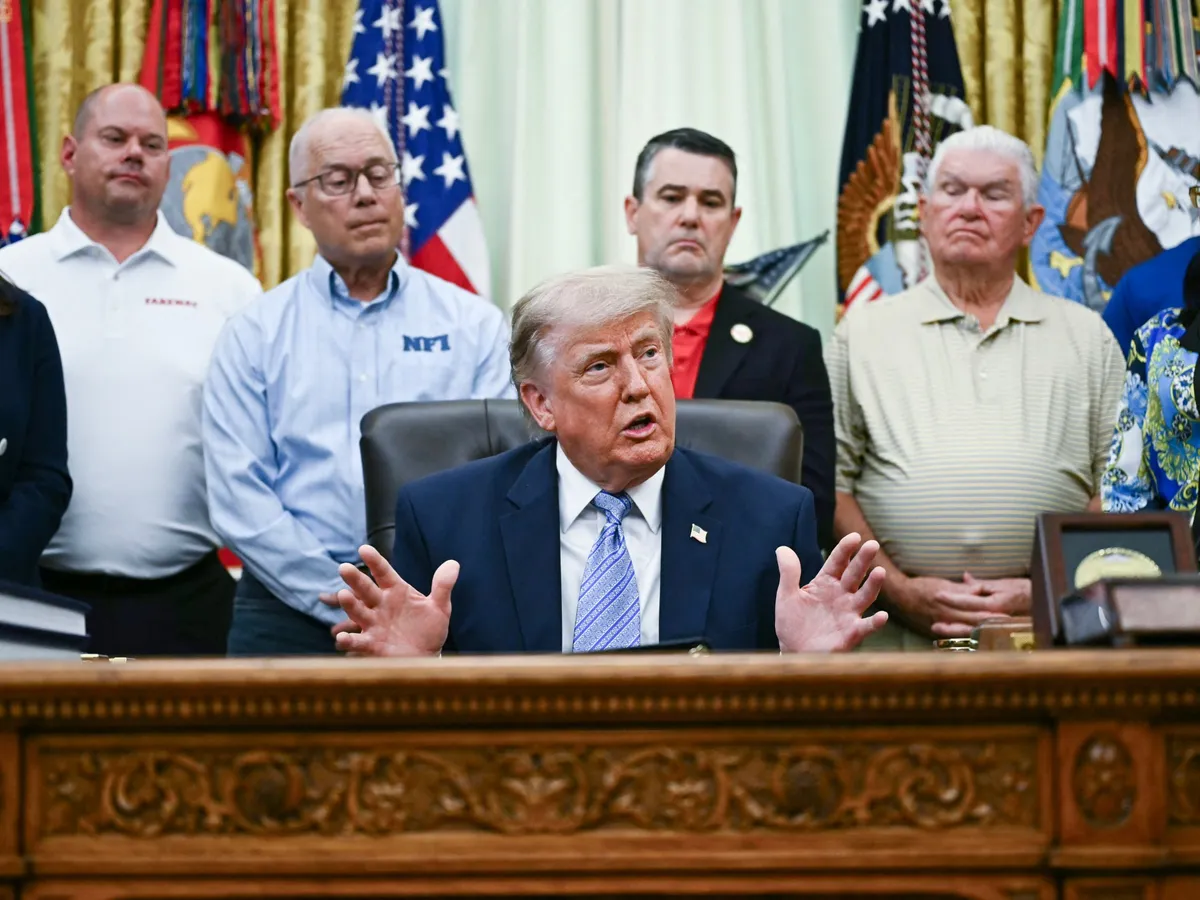
EXPLAINERSupporters say unpredictable Trump approach deal-making strength, others see reflection of strategic dilemma.US President Donald Trump speaks during an announcement with Environmental Protection Agency (EPA) Administrator Lee Zeldin in the Oval Office of the White House in Washington, DC [Kent Nishimura/AFP]Published On 21 May 2026In a week that began with Donald Trump revealing he was just an hour away from “making the decision” to resume attacks on Iran, the United States president has oscillated between expressing hope for a lasting ceasefire and threatening military escalation.Trump’s mixed messaging has also coincided with a renewed flurry of diplomacy, with Iran as of Thursday saying it had received and was reviewing Washington’s response to Tehran’s latest ceasefire proposal.Recommended Stories list of 3 itemslist 1 of 3Iran claims it coordinated passage of 26 vessels out of Hormuz in 24 hourslist 2 of 3Controlled reopening ends Iran’s lengthy stock market shutdownlist 3 of 3Iran war day 83: Pakistan steps up diplomatic efforts to end conflictend of listTrump, meanwhile, appeared to indicate an appetite for a third option: a prolonged, grinding conflict.On Thursday, he reposted a New York Post op-ed by Richard Goldberg, a senior adviser at the Foundation for Defense of Democracies, a pro-Israel think tank that has long supported military action against Tehran.The article titled “Here’s how to crush Tehran in three moves,” called on the US to “sustain blockade and accompanying economic warfare”, “remake the world in America’s energy dominance image”, and “order the US military to forge a path through the Strait of Hormuz to restore freedom of navigation on our terms, not Tehran’s”.The post came after US media widely reported that Trump and Prime Minister Benjamin Netanyahu were at loggerheads during a phone call on Tuesday about the future of the Iran-war" class="entity-link entity-event" data-entity-id="38748" data-entity-type="event">Iran war.Netanyahu reportedly pushed the US to resume attacks, while Trump resisted new strikes in hopes of reaching a deal.Trump did not confirm the report, but when asked on Wednesday, he said of Netanyahu: “He’s a very good man, he’ll do whatever I want him to do.”What has Trump said this week?The Trump administration has continually sent broad and at times contradictory messages on Iran, even preceding the war.The US and Israel began their attacks on February 28 amid ongoing US-Iran negotiations on Tehran’s nuclear programme. An agreement for the current pause in fighting, which began on April 8, came after Trump released some of his most bellicose threats of the conflict, saying a “whole civilisation will die” if a deal was not reached.“If you’re sitting in Tehran, you’re not sure if the president is actually serious about getting a deal, because every day, every few hours, the president changes his position, threatens Iranians with a strike,” Sina Azodi, an assistant professor of Middle East politics at The George Washington University, told Al Jazeera.“They can’t really decide whether the US actually wants to deal or it wants war,” he said, adding that Trump’s continued preference for “negotiation on air” makes it harder for Tehran to agree to concessions in private.The unpredictability has continued this week.Trump on Sunday threatened that the “clock is ticking” for Iran, the latest instance of the US signalling an end to the current halt to fighting, which has run parallel to an ongoing naval blockade of Iran’s ports.But on Monday, Trump said any renewed attacks had been put “on hold” pending a request from Qatar, Saudi Arabia and the United Arab Emirates. Trump said “serious negotiations” were taking place.The statement came as Iran’s semi-official Tasnim News Agency reported on Monday that Iran has submitted a revised 14-point peace plan to end the war.On Tuesday, Trump told reporters he had been “an hour away from making the decision” to resume attacks, but instead agreed to give Iran a few “days” to return to negotiations.“Maybe Friday, Saturday, Sunday – something – maybe early next week; a limited period of time,” he said at the time. “We may have to give them another big hit. I’m not sure yet.”On Wednesday, Trump continued to signal the US could go either way.“We’re in the final stages of Iran. We’ll see what happens. Either have a deal, or we’re going to do some things that are a little bit nasty, but hopefully, that won’t happen,” he told reporters.He added, “If we don’t get the right answers, it goes very quickly. We’re all ready to go.”Strategic dilemma?While Trump’s supporters have characterised his everything-on-the-table approach as part of a wider “mad man” foreign policy approach, others have said it reflects the president’s entrenched dilemma as he tries to claim a convincing victory in the conflict.Maintaining the current situation – or escalating into new attacks – risks continued knock-on effects to the US economy, driving tanking approval on how Trump has handled the war.Meanwhile, the administration is likely aware that any deal reached with Iran on its nuclear programme must be seen as going beyond the former President Barack Obama-era Joint Comprehensive Plan of Action (JCPOA), from which Trump withdrew in 2018, according to Omar Rahman, a fellow at the Middle East Council on Global Affairs.That comes as Tehran has found a “coercive instrument of extraordinary power” in its ability to assert control over the Strait of Hormuz, Rahman wrote in a post on Thursday, boosting their leverage in any talks.“Amid this stalemate, the escalation trap beckons,” Rahman wrote, “offering the slim promise that applying more force can alter the equation in Trump’s favor.”On Thursday, the impasse appeared to continue, with Trump promising to take possession of Iran’s stockpile of highly enriched uranium, a prospect Tehran has repeatedly said is a non-starter.He also again rejected the prospect of Tehran imposing a toll for the Strait of Hormuz, another of Iran’s previous demands.
SRCAl Jazeera
LANGEN
LEANCenter
WORDS947
ENT12
THU · 2026-05-21 · 19:11 GMTBRIEF NSR-2026-0521-78219
NSR-2026-0521-78219News Report·EN·Political Strategy
Trump shifts between diplomacy and threats in Iran standoff
President Donald Trump has exhibited a fluctuating approach to the Iran standoff, oscillating between diplomatic overtures and threats of military escalation. This week, Trump revealed he was close to deciding on renewed attacks but then stated they were on hold pending requests from regional allies, while also indicating serious negotiations were underway.
Joseph StepanskyAl JazeeraFiled 2026-05-21 · 19:11 GMTLean · CenterRead · 4 min
Al JazeeraFIG 01
Reading time
4min
Word count
947words
Sources cited
3cited
Entities identified
12entities
Quality score
100%
§ 01
Briefing Summary
AI-generatedNEWSAR · AI
President Donald Trump has exhibited a fluctuating approach to the Iran standoff, oscillating between diplomatic overtures and threats of military escalation. This week, Trump revealed he was close to deciding on renewed attacks but then stated they were on hold pending requests from regional allies, while also indicating serious negotiations were underway. Iran has reportedly submitted a revised peace plan. Trump's mixed messaging has led to uncertainty in Tehran regarding US intentions, with some analysts suggesting it reflects a strategic dilemma rather than a clear policy. Supporters view his unpredictable style as a strength for deal-making, while others see it as a reflection of the challenges in achieving a decisive victory.
Confidence 0.90Sources 3Claims 5Entities 12
§ 02
Article analysis
Model · rule-basedFraming
Political Strategy
Conflict
Tone
Mixed Tone
AI-assessed
CalmNeutralAlarmist
Factuality
0.60 / 1.00
Mixed
LowHigh
Sources cited
3
Well sourced
FewMany
§ 03
Key claims
5 extracted01
Sina Azodi stated that Iran 'can’t really decide wheth[er the president is actually serious about getting a deal, because every day, every few hours, the president changes his position, threatens Iranians with a strike]'.
quoteSina Azodi
Confidence
1.00
02
Trump stated of Netanyahu: 'He’s a very good man, he’ll do whatever I want him to do.'
quoteDonald Trump
Confidence
1.00
03
Richard Goldberg's op-ed called on the US to 'sustain blockade and accompanying economic warfare', 'remake the world in America’s energy dominance image', and 'order the US military to forge a path through the Strait of Hormuz'.
quoteRichard Goldberg
Confidence
1.00
04
Iran stated it had received and was reviewing Washington's response to Tehran's latest ceasefire proposal.
factualIran
Confidence
0.90
05
US President Donald Trump was an hour away from deciding to resume attacks on Iran at the start of the week.
factualarticle
Confidence
0.80
§ 04
Full report
4 min read · 947 words§ 05
Entities
12 identifiedKey playerOppositionContextPositiveNeutralNegative
People3
Organizations1
Locations5
§ 06
Keywords & salience
10 termsiran standoff
1.00
diplomacy and threats
0.90
military escalation
0.80
ceasefire proposal
0.70
economic warfare
0.60
freedom of navigation
0.50
strait of hormuz
0.50
donald trump
0.40
benjamin netanyahu
0.40
nuclear programme
0.40
§ 07
Topic connections
Interactive graph Network visualization showing 51 related topics
View Full Graph Person Organization Location Event|Click node to navigate|Edge numbers = shared articles