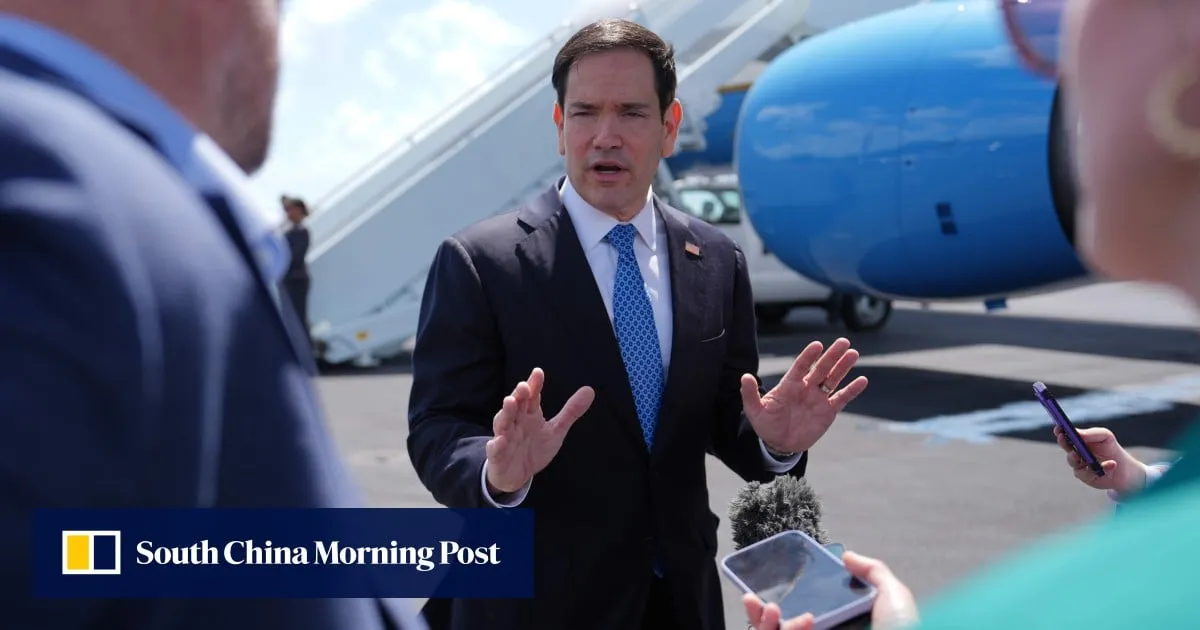
One day after the United States brought criminal charges against former Cuban leader Raul Castro over the 1996 shooting down of two civilian aircraft, President Donald Trump and Secretary of State Marco Rubio portrayed Cuba as both a growing national security threat tied to China and Russia and a candidate for a negotiated political transition.The comments came amid renewed friction between Washington and Beijing over Cuba after China criticised the US charges against Castro and accused Washington of escalating pressure on Havana.“The US side should stop brandishing the sanctions stick and the judicial stick against Cuba and stop threatening force at every turn,” Chinese foreign ministry spokesman Guo Jiakun said on Thursday.
SRCSouth China Morning Post
LANGEN
LEANCenter-Right
WORDS112
ENT10
THU · 2026-05-21 · 21:16 GMTBRIEF NSR-2026-0521-78254
NSR-2026-0521-78254News Report·EN·National Security
US casts Cuba as China-linked security threat while still pushing for talks
The United States has charged former Cuban leader Raul Castro in connection with the 1996 downing of two civilian aircraft. Following these charges, President Donald Trump and Secretary of State Marco Rubio characterized Cuba as a growing security threat linked to China and Russia, while also suggesting the possibility of a negotiated political transition.
Teresa Elena FrontadoSouth China Morning PostFiled 2026-05-21 · 21:16 GMTLean · Center-RightRead · 1 min
South China Morning PostFIG 01
Reading time
1min
Word count
112words
Sources cited
2cited
Entities identified
10entities
Quality score
100%
§ 01
Briefing Summary
AI-generatedNEWSAR · AI
The United States has charged former Cuban leader Raul Castro in connection with the 1996 downing of two civilian aircraft. Following these charges, President Donald Trump and Secretary of State Marco Rubio characterized Cuba as a growing security threat linked to China and Russia, while also suggesting the possibility of a negotiated political transition. This renewed tension between Washington and Beijing over Cuba arose after China criticized the US charges and accused the US of increasing pressure on Havana. A Chinese foreign ministry spokesman urged the US to cease its use of sanctions, judicial actions, and threats of force against Cuba.
Confidence 0.85Sources 2Claims 4Entities 10
§ 02
Article analysis
Model · rule-basedFraming
National Security
Political Strategy
Tone
Mixed Tone
AI-assessed
CalmNeutralAlarmist
Factuality
0.70 / 1.00
Factual
LowHigh
Sources cited
2
Limited
FewMany
§ 03
Key claims
4 extracted01
The US side should stop brandishing the sanctions stick and the judicial stick against Cuba and stop threatening force at every turn.
quoteGuo Jiakun
Confidence
1.00
02
China criticized the US charges against Castro and accused Washington of escalating pressure on Havana.
factualChina
Confidence
1.00
03
President Trump and Secretary of State Rubio portrayed Cuba as a growing national security threat tied to China and Russia.
factualDonald Trump and Marco Rubio
Confidence
1.00
04
The US brought criminal charges against former Cuban leader Raul Castro over the 1996 shooting down of two civilian aircraft.
factualUnited States
Confidence
1.00
§ 04
Full report
1 min read · 112 words§ 05
Entities
10 identifiedKey playerOppositionContextPositiveNeutralNegative
People4
Locations4
§ 06
Keywords & salience
8 termsnational security threat
0.90
china and russia
0.80
negotiated political transition
0.70
criminal charges
0.60
us-china relations
0.50
us-cuba relations
0.50
raul castro
0.50
sanctions
0.40
§ 07
Topic connections
Interactive graph Network visualization showing 51 related topics
View Full Graph Person Organization Location Event|Click node to navigate|Edge numbers = shared articles