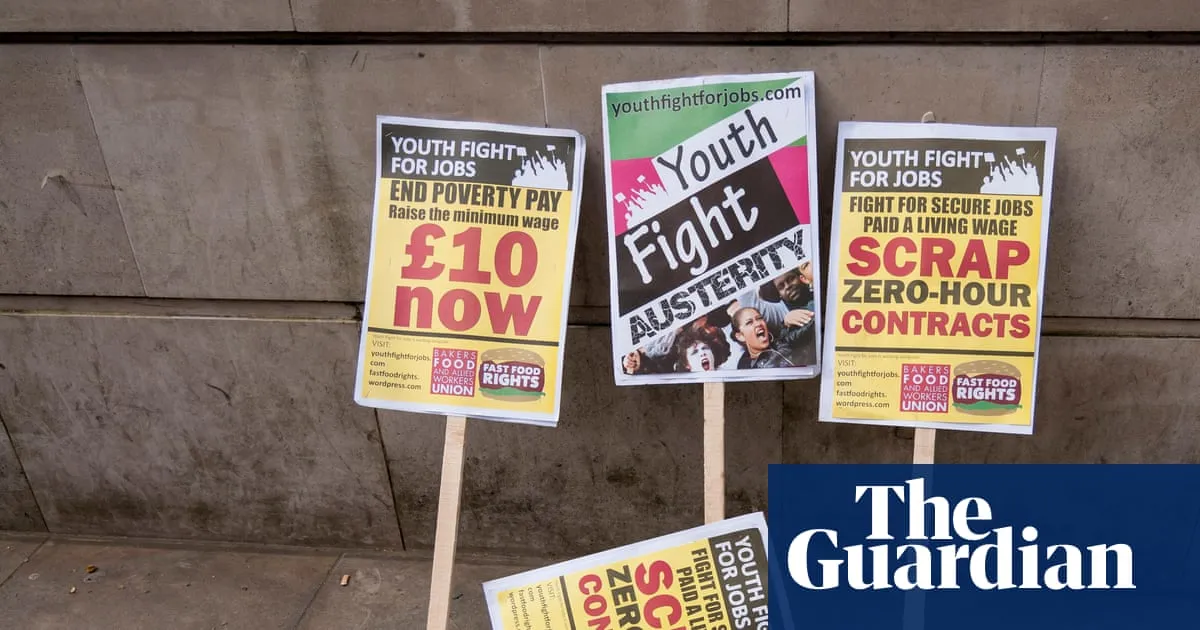
Ministers should press ahead with a ban on zero-hours contracts, campaigners say, despite claims by business leaders that it would deter hiring and lock more young people out of the labour market.The Child Poverty Action Group and the union umbrella organisation the TUC were among eight signatories to a letter to the department of business and trade calling on the government to “ignore the noise” from businesses, which want zero-hours contracts to remain.Last year, the Employment Rights Act gained royal assent, but many of the detailed provisions were left blank, allowing ministers to phase in implementation over a period of years.Peter Kyle, the business secretary, has overseen a delay in the launch of a planned consultation on zero-hours contracts that was due to begin in January. It is understood the department will ask for submissions before the end of the summer, before implementing new rules Next year.Business leaders are concerned that delays in the consultation process will not give them time to adjust their workplace practices, if new rules are agreed.In the absence of a formal consultation process, the British Retail Consortium and UKHospitality, the lobby group for restaurants and hotels, have written to Kyle saying reduced flexibility in work contracts will lead to fewer jobs.A new report by the Institute of Directors showed 86% of business leaders believe the Employment Rights Act will have a negative impact on UK economic growth, up from 72% a year ago.On Tuesday, Lord Wolfson, chair of the retailer Next, said that while he was in favour of eliminating zero-hours contracts in most sectors, the new rules would prove costly for retailers “because the risk is you then have to contract for those hours for ever”.More than a million people in the UK work to a zero-hours contract, from hospitality and warehouses to the NHS. Hundreds of thousands of them have worked for the same employer for years, the TUC says.A report by the former health secretary Alan Milburn, due on Thursday, is expected to accuse the government of failing to meet the needs of young people out of work, education and training, putting further pressure on Kyle to show new employment laws will support job creation.Paul Nowak, the TUC general secretary, said many workers do not know how much they will earn each week, “and lack of security over hours makes it hard for workers to plan their lives, budget and look after their children”. Many are unable to get mortgages and other forms of cheap credit when employers can reduce their hours to zero.Nowak added that insecure work “also makes it harder for workers to challenge unacceptable behaviour by bosses because of concerns about whether they will be penalised by not being allocated hours in future”.Alison Garnham, chief executive of the Child Poverty Action Group, said: “All too often working parents find themselves without enough to make ends meet – as their hours are cut at a moment’s notice or they pay for childcare only to find their shifts are cancelled.“These new rights could be a key tool in the fight against child poverty, giving parents the secure hours and notice of shifts they need. As part of its moral mission to reduce child poverty, now is the time for government to implement these rights fully and effectively.”The TUC said the right to a regular-hours contract would not affect holiday jobs as it “is set to be based on a reference period over several months which will even out peaks and troughs”.Other signatories to the letter include the women’s rights group the Fawcett Society, the employment thinktank the Work Foundation, and the campaigning organisations 38 Degrees and the Young Women’s Trust.The business department was asked for comment.
SRCThe Guardian - World News
LANGEN
LEANCenter-Left
WORDS615
ENT12
TUE · 2026-05-26 · 18:13 GMTBRIEF NSR-2026-0526-79403
NSR-2026-0526-79403News Report·EN·Social Justice
Ministers urged to press ahead with UK ban on zero-hours contracts
Campaigners are urging UK ministers to proceed with a ban on zero-hours contracts, rejecting business leaders' claims that it would harm hiring and youth employment. Eight organizations, including the Child Poverty Action Group and the TUC, sent a letter to the department of business and trade advocating for the ban.
Phillip InmanThe Guardian - World NewsFiled 2026-05-26 · 18:13 GMTLean · Center-LeftRead · 3 min
The Guardian - World NewsFIG 01
Reading time
3min
Word count
615words
Sources cited
7cited
Entities identified
12entities
Quality score
100%
§ 01
Briefing Summary
AI-generatedNEWSAR · AI
Campaigners are urging UK ministers to proceed with a ban on zero-hours contracts, rejecting business leaders' claims that it would harm hiring and youth employment. Eight organizations, including the Child Poverty Action Group and the TUC, sent a letter to the department of business and trade advocating for the ban. While the Employment Rights Act was passed last year, its implementation details are still being finalized, with a consultation expected before new rules are introduced next year. Business groups argue that reduced contract flexibility will lead to fewer jobs, with some leaders expressing concern about the economic impact. Over a million people in the UK are on zero-hours contracts, often lacking predictable earnings and facing difficulties with budgeting and credit. Campaigners believe secure hours are crucial for parents to combat child poverty and for workers to challenge poor treatment by employers.
Confidence 0.90Sources 7Claims 5Entities 12
§ 02
Article analysis
Model · rule-basedFraming
Social Justice
Economic Impact
Tone
Measured
AI-assessed
CalmNeutralAlarmist
Factuality
0.60 / 1.00
Mixed
LowHigh
Sources cited
7
Well sourced
FewMany
§ 03
Key claims
5 extracted01
86% of business leaders believe the Employment Rights Act will have a negative impact on UK economic growth.
statisticInstitute of Directors
Confidence
0.95
02
More than a million people in the UK work to a zero-hours contract.
factualArticle
Confidence
0.90
03
Ministers should press ahead with a ban on zero-hours contracts, campaigners say.
quoteCampaigners (Child Poverty Action Group, TUC)
Confidence
0.90
04
Lack of security over hours makes it hard for workers to plan their lives, budget, and look after their children.
quotePaul Nowak (TUC)
Confidence
0.85
05
Business leaders claim a ban on zero-hours contracts would deter hiring and lock more young people out of the labour market.
quoteBusiness leaders
Confidence
0.80
§ 04
Full report
3 min read · 615 words§ 05
Entities
12 identifiedKey playerOppositionContextPositiveNeutralNegative
Organizations7
Locations1
§ 06
Keywords & salience
9 termszero-hours contracts
1.00
employment rights act
0.80
labour market
0.70
job creation
0.60
business leaders
0.60
campaigners
0.50
workplace practices
0.50
young people
0.40
economic growth
0.40
§ 07
Topic connections
Interactive graph Network visualization showing 7 related topics
View Full Graph Person Organization Location Event|Click node to navigate|Edge numbers = shared articles