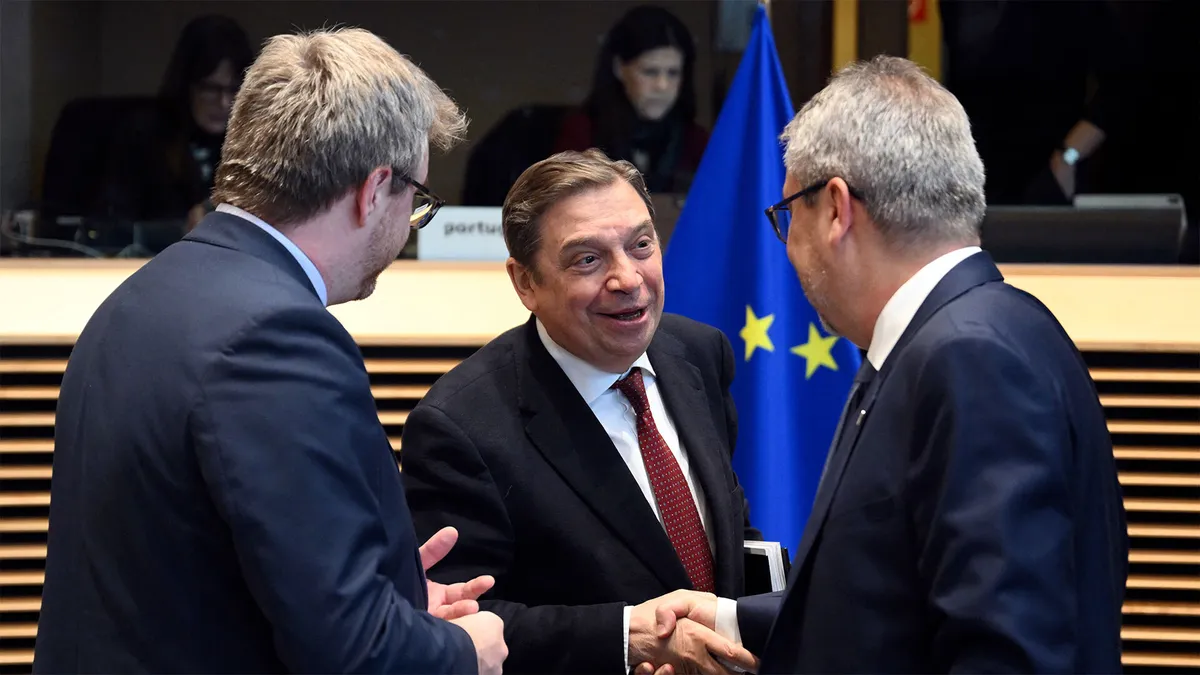
Counting the CostThe EU and the Mercosur trading bloc of five Latin American nations seal a sweeping trade pact.It would create one of the largest free-trade zones in the world, connecting markets with more than 700 million people.A trade pact between the European Union and the Mercosur trading bloc has been agreed after almost 25 years of talks.That’s despite opposition from farmers in several European countries.The deal is seen as part of Europe’s effort to curb its economic reliance on China.And it comes against the backdrop of President Donald Trump’s tariffs on countries around the world and his recent military intervention in Venezuela.Also, will Big Oil invest in Venezuela?Plus, are Greenland’s vast resources profitable?Published On 16 Jan 2026
SRCAl Jazeera
LANGEN
LEANCenter
WORDS118
ENT7
FRI · 2026-01-16 · 17:41 GMTBRIEF NSR-2026-0116-7956
NSR-2026-0116-7956News Report·EN·Economic Impact
EU-Latin America trade deal: Who wins?
In January 2026, the European Union and the Mercosur trading bloc (five Latin American nations) finalized a comprehensive trade agreement after nearly 25 years of negotiations. The deal establishes one of the world's largest free-trade zones, linking markets encompassing over 700 million people.
Al JazeeraFiled 2026-01-16 · 17:41 GMTLean · CenterRead · 1 min
Al JazeeraFIG 01
Reading time
1min
Word count
118words
Sources cited
0cited
Entities identified
7entities
Quality score
100%
§ 01
Briefing Summary
AI-generatedNEWSAR · AI
In January 2026, the European Union and the Mercosur trading bloc (five Latin American nations) finalized a comprehensive trade agreement after nearly 25 years of negotiations. The deal establishes one of the world's largest free-trade zones, linking markets encompassing over 700 million people. The agreement aims to reduce the EU's economic dependence on China. The agreement occurred amidst global trade tensions, including tariffs imposed by the United States and political instability in Venezuela. The deal faced opposition from farmers in several European countries.
Confidence 0.85Claims 4Entities 7
§ 02
Article analysis
Model · rule-basedFraming
Economic Impact
Political Strategy
Tone
Measured
AI-assessed
CalmNeutralAlarmist
Factuality
0.70 / 1.00
Factual
LowHigh
Sources cited
0
No named sources
FewMany
§ 03
Key claims
4 extracted01
The trade pact has faced opposition from farmers in several European countries.
factual
Confidence
1.00
02
The EU and the Mercosur trading bloc have agreed to a trade pact after almost 25 years of talks.
factual
Confidence
1.00
03
The deal would create one of the largest free-trade zones in the world, connecting markets with more than 700 million people.
factual
Confidence
0.90
04
The deal is seen as part of Europe’s effort to curb its economic reliance on China.
prediction
Confidence
0.70
§ 04
Full report
1 min read · 118 words§ 05
Entities
7 identifiedKey playerOppositionContextPositiveNeutralNegative
§ 06
Keywords & salience
7 termseu-latin america trade deal
1.00
free-trade zone
0.80
mercosur
0.70
trade pact
0.60
economic reliance on china
0.50
tariffs
0.40
trade
0.40
§ 07
Topic connections
Interactive graph Network visualization showing 51 related topics
View Full Graph Person Organization Location Event|Click node to navigate|Edge numbers = shared articles