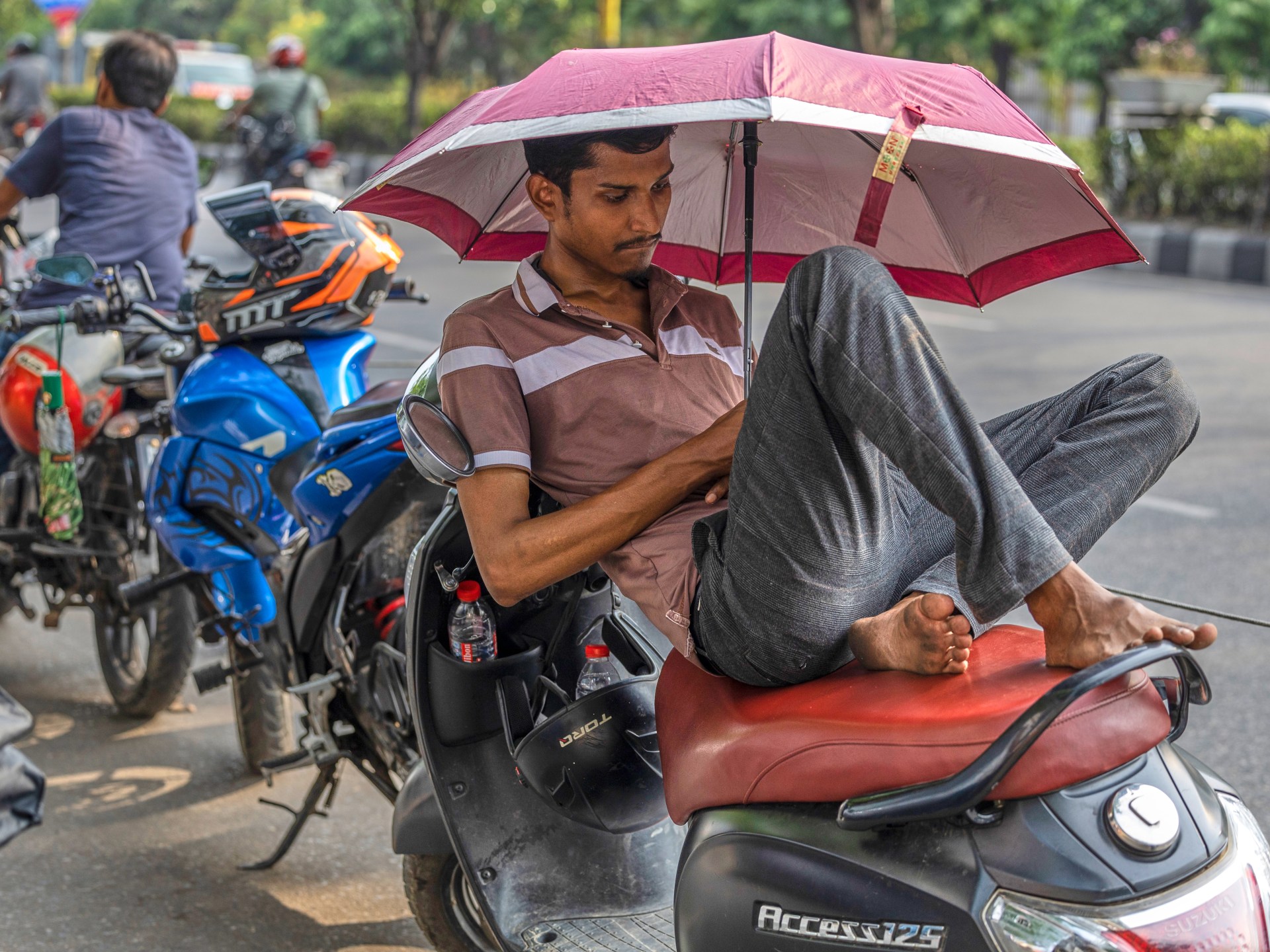
EXPLAINERThe International Monetary Fund warns that Iran-war" class="entity-link entity-event" data-entity-id="38748" data-entity-type="event">Iran war could trigger a spike in global debt levels.In April, Bangladesh hiked fuel prices in response to rising crude oil prices due to the Iran-war" class="entity-link entity-event" data-entity-id="38748" data-entity-type="event">Iran war [Abdul Goni/AP]Published On 27 May 2026The International Monetary Fund (IMF) reports that Bangladesh has requested a new assistance programme as it struggles with the economic fallout of the United States-Israel war on Iran.We take a look at what assistance Bangladesh has sought, the South Asian country’s history with the IMF and how the war has hit its economy.What has Bangladesh asked for?The IMF’s mission chief for Bangladesh, Ivo Krznar, announced on Tuesday that Bangladesh had requested a new IMF-supported programme.“IMF staff are in discussions with the authorities on their reform agenda and policy priorities,” Krznar said in a statement.“The IMF remains a committed partner to Bangladesh in its efforts to secure lasting macroeconomic and financial stability, strengthen resilience, and support strong, inclusive growth.”Neither side disclosed the size or precise terms of the requested financial aid package.However, in March, the government of Bangladesh said it was seeking $2bn in loans from various donors as it grappled with an energy crisis caused by the war on Iran.How badly has Bangladesh been hit by the Iran-war" class="entity-link entity-event" data-entity-id="38748" data-entity-type="event">Iran war?Energy crisisThe Iran-war" class="entity-link entity-event" data-entity-id="38748" data-entity-type="event">Iran war, which began on February 28 when the US and Israel launched strikes on Iran, has caused a worldwide energy crisis and sent fuel prices soaring. On April 8, a temporary ceasefire was reached, but a durable peace agreement remains elusive. Furthermore, the Strait of Hormuz – through which before the war one-fifth of the world’s oil and natural gas supplies were shipped, largely to Asian countries – remains under the control of Iran while the US has a naval blockade of Iranian ports in place. All this has caused major disruptions to energy supplies worldwide and caused the price of oil to rise to about $100 a barrel, compared with its pre-war price of about $66.Bangladesh, home to 170 million people, imports 95 percent of the oil and liquefied natural gas (LNG) it needs to meet its energy needs. Demand is especially high during the summer when cooling is required. Much of these imports come from the Middle East.Dhaka has already taken measures to curb fuel consumption, including halting production at most fertiliser factories. On April 19, Bangladesh raised fuel prices by 10 percent to 15 percent, citing the global crude price surge. It raised the price of petrol from $0.95 per litre to $1.10 per litre. Diesel and kerosene prices also rose.However, the economic fallout in Bangladesh from the Iran-war" class="entity-link entity-event" data-entity-id="38748" data-entity-type="event">Iran war is not limited to its energy supplies.Garment industryThe ready‑made garment industry, which accounts for more than 80 percent of Bangladesh’s export earnings, has also been hit. Bangladesh’s factories import much of their raw materials from China. The shipments are routed via the Red Sea and the Middle East, so recent shipping disruptions have pushed up import costs. Sayeed Ahmed Chowdhury, director of the fabrics manufacturer Square Denim, told the Bangladesh newspaper The Financial Express that he expected work orders to decline by about 20 to 25 percent in the next season.After the outbreak of the war, several airlines cancelled flights in March. As a result, shipments of garments destined for Zara owner Inditex and other major clothing retailers were stuck at airports in Bangladesh and India.Cost of raw materialsThe disruptions to supply chains have impacted other industries in Bangladesh as well. Raw material prices for plastic products have also risen.Rising crude oil prices have caused the price of resin, derived from crude oil and a key raw material for plastic, to spike. Bangladesh’s Daily Star newspaper reported that resin, which used to cost about $900 to $950 per tonne, is now selling for closer to $1,500 to $1,600.Rising foreign debt costsBangladesh’s external debt has risen in recent years as the government borrowed more to fund infrastructure projects and shore up its balance of payments, leaving the country with a moderate but growing debt burden and higher foreign‑currency repayment pressures, according to IMF assessments.In December, Bangladesh’s foreign debt rose to $113.5bn, compared with $112.2bn in the previous quarter, according to data from the London-headquartered market intelligence firm ISI.In 2024, the World Bank and IMF classified Bangladesh as being at low risk of external debt distress as its debt load represented about 22 percent of its gross national income. This is likely to change as fallout from the Iran-war" class="entity-link entity-event" data-entity-id="38748" data-entity-type="event">Iran war takes hold.What is Bangladesh’s history with the IMF?Bangladesh is already in the middle of a $5.7bn IMF programme that began in 2023 and was due to run for four years.In a virtual meeting last week between Bangladesh Finance and Planning Minister Amir Khasru Mahmud Chowdhury and IMF Deputy Managing Director Nigel Clarke, both sides agreed to move quickly to put a new programme in place, the Ministry of Finance said in a statement on Monday.Last week, the World Bank said it had approved a $350m loan to help Bangladesh manage rising fuel import costs and strengthen its energy security after severe shortages caused by the Iran-war" class="entity-link entity-event" data-entity-id="38748" data-entity-type="event">Iran war.Before the start of the Iran-war" class="entity-link entity-event" data-entity-id="38748" data-entity-type="event">Iran war, countries across Africa, Asia, Latin America, the Caribbean, the Pacific and Central Europe were already grappling with heavy external debt burdens following the COVID‑19 pandemic, climate‑related disasters, higher food and energy prices, and rising global interest rates.Sri Lanka, for instance, suffered a financial collapse in 2022 after years of unsustainable borrowing and poor fiscal management. In 2023, it secured about $3bn in support from the IMF under a four‑year programme and reached a debt‑restructuring deal with a group of creditors that included China, India and Japan. By 2024, Sri Lanka’s external debt stood at about 59 percent of its gross national income, according to World Bank data.In April, the IMF warned that the Iran-war" class="entity-link entity-event" data-entity-id="38748" data-entity-type="event">Iran war risks triggering an increase in debt levels worldwide. Its report estimated that global gross government debt rose to almost 94 percent of the world’s gross domestic product last year and warned it is on track to reach 100 percent by 2029, a level that has not been seen since the aftermath of World War II.
SRCAl Jazeera
LANGEN
LEANCenter
WORDS1 023
ENT12
WED · 2026-05-27 · 13:53 GMTBRIEF NSR-2026-0527-79652
NSR-2026-0527-79652News Report·EN·Economic Impact
Bangladesh seeks IMF aid: How badly has Iran war hit its economy?
Bangladesh has requested a new assistance program from the International Monetary Fund (IMF) due to economic challenges stemming from the US-Israel war on Iran. The conflict, which began on February 28, has caused a global energy crisis, significantly increasing fuel prices.
Al Jazeera StaffAl JazeeraFiled 2026-05-27 · 13:53 GMTLean · CenterRead · 5 min
Al JazeeraFIG 01
Reading time
5min
Word count
1 023words
Sources cited
2cited
Entities identified
12entities
Quality score
100%
§ 01
Briefing Summary
AI-generatedNEWSAR · AI
Bangladesh has requested a new assistance program from the International Monetary Fund (IMF) due to economic challenges stemming from the US-Israel war on Iran. The conflict, which began on February 28, has caused a global energy crisis, significantly increasing fuel prices. Bangladesh, heavily reliant on imported oil and LNG, has already raised fuel prices and halted production at fertilizer factories. The war has also disrupted supply chains for the ready-made garment industry, a major export earner, leading to increased import costs and expected declines in work orders. Rising crude oil prices have also inflated the cost of raw materials like resin for the plastic industry. These economic pressures are exacerbating Bangladesh's existing foreign debt burden.
Confidence 0.90Sources 2Claims 5Entities 12
§ 02
Article analysis
Model · rule-basedFraming
Economic Impact
Conflict
Tone
Measured
AI-assessed
CalmNeutralAlarmist
Factuality
0.70 / 1.00
Factual
LowHigh
Sources cited
2
Limited
FewMany
§ 03
Key claims
5 extracted01
Bangladesh raised fuel prices by 10 percent to 15 percent on April 19, citing the global crude price surge.
factualarticle
Confidence
0.90
02
Bangladesh imports 95 percent of its oil and liquefied natural gas (LNG) needs.
statisticarticle
Confidence
0.90
03
Bangladesh has requested a new IMF-supported programme due to economic fallout from the United States-Israel war on Iran.
factualIMF
Confidence
0.90
04
The ready-made garment industry, accounting for over 80 percent of Bangladesh's export earnings, has also been hit by the war.
factualarticle
Confidence
0.80
05
The Iran war caused a worldwide energy crisis and sent fuel prices soaring, with oil rising to about $100 a barrel.
factualarticle
Confidence
0.80
§ 04
Full report
5 min read · 1 023 words§ 05
Entities
12 identifiedKey playerOppositionContextPositiveNeutralNegative
People1
Organizations1
Locations7
§ 06
Keywords & salience
10 termsiran war
1.00
imf aid
1.00
economic fallout
0.90
energy crisis
0.90
fuel prices
0.80
bangladesh economy
0.70
macroeconomic stability
0.70
global debt
0.60
strait of hormuz
0.50
oil prices
0.50
§ 07
Topic connections
Interactive graph Network visualization showing 49 related topics
View Full Graph Person Organization Location Event|Click node to navigate|Edge numbers = shared articles