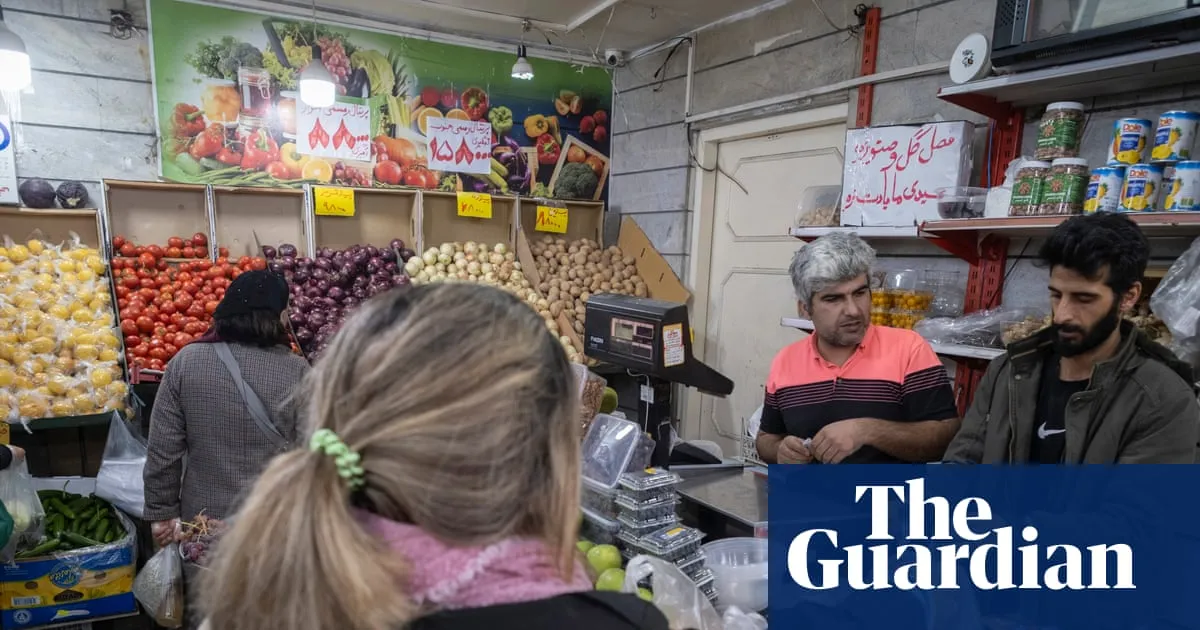
The partial lifting of internet restrictions in Iran has revealed a rising tide of anger about food price inflation as ordinary Iranians decry annual price increases of 308% for vegetable oil, 190% for chicken, and 170% for rice.Iranian authorities on Tuesday began restoring the connection to the global internet that was severed on the first day of the US-Israeli war against the Islamic Republic on 28 February, as it had been during mass protests in January.Connectivity remained patchy on Wednesday, with mobile internet still largely disconnected and many sites remaining restricted. But even the partial restoration was enough to reveal an outpouring of anger over price inflation and food shortages.“Everything is so expensive. It has become a disaster,” wrote one user on social media. “You leave the market with a broken heart after spending all your savings. It is unbearable. We have no patience left to lead a normal life.”President Masoud Pezeshkian, who has been given some credit for lifting the internet restrictions, blamed the US for Iran’s economic woes, saying Washington “had moved to economic warfare after failing to bring the government down”.In a lengthy statement, the Ministry of Intelligence revealed its concerns that internet freedom could be used for “cognitive warfare”, warning that Iran’s adversaries aimed to “incite protesters and drag them on to the streets”.It said: “The enemy, defeated on the military front, now focuses its efforts on soft warfare, cognitive warfare, and social provocations.”The government announced the launch of a “resistance economy committee”to crack down on price gouging and address surging shortages, but hyperinflation is now endemic in Iran, due to trade sanctions, exchange rate pressure, and moves taken to reduce subsidies given to traders in January.Data from the International Monetary Fund showed that food inflation has now risen to between 140% and 200%, pushing overall inflation to 70%.Support for continuing internet restrictions was put at just 9% in a survey published on Wednesday.Government supporters in a bid to forestall support for the son of the Shah Reza Pahlavi tried to flood the internet with claims directed at “youngsters returning to the internet” that Pahlavi had openly applauded the attacks on Iran mounted by Israel and the US.Others expressed simple relief that they could now talk to the wider world.Human rights activist Emadeddin Baghi wrote: “Three bloody months have passed, but not for those who lost a loved one or had their home destroyed. In this period our voices found no echo except on some internal platforms and to the best of our ability we spoke and wrote in defence of the rights of the voiceless”.Prominent rapper Toomaj Salehi, who in 2024 was sentenced to death after supporting 2022 protests before being released, said being connected to the internet is “not a favour to us – it is our right. And without filters as well”.“Like free elections, freedom of expression, freedom of assembly, freedom of parties, and many other freedoms, these are our rights and not favours,” he wrote on X.
SRCThe Guardian - World News
LANGEN
LEANCenter-Left
WORDS495
ENT12
WED · 2026-05-27 · 17:48 GMTBRIEF NSR-2026-0527-79685
NSR-2026-0527-79685News Report·EN·Economic Impact
Partial lifting of internet restrictions reveal Iranians’ anger over food inflation
Iran has partially restored global internet access after severing it on February 28th, coinciding with the start of the US-Israeli war against the Islamic Republic. The partial lifting has revealed widespread public anger over severe food inflation, with annual price increases reported at 308% for vegetable oil, 190% for chicken, and 170% for rice.
Patrick WintourThe Guardian - World NewsFiled 2026-05-27 · 17:48 GMTLean · Center-LeftRead · 2 min
The Guardian - World NewsFIG 01
Reading time
2min
Word count
495words
Sources cited
5cited
Entities identified
12entities
Quality score
100%
§ 01
Briefing Summary
AI-generatedNEWSAR · AI
Iran has partially restored global internet access after severing it on February 28th, coinciding with the start of the US-Israeli war against the Islamic Republic. The partial lifting has revealed widespread public anger over severe food inflation, with annual price increases reported at 308% for vegetable oil, 190% for chicken, and 170% for rice. The government attributes economic woes to US "economic warfare" and expresses concerns about "cognitive warfare" and social provocations via the internet. Authorities have launched a "resistance economy committee" to address price gouging and shortages, which are exacerbated by sanctions and reduced subsidies. A survey indicated low support for continued internet restrictions.
Confidence 0.90Sources 5Claims 5Entities 12
§ 02
Article analysis
Model · rule-basedFraming
Economic Impact
Human Rights
Tone
Mixed Tone
AI-assessed
CalmNeutralAlarmist
Factuality
0.70 / 1.00
Factual
LowHigh
Sources cited
5
Well sourced
FewMany
§ 03
Key claims
5 extracted01
Data from the IMF shows food inflation between 140% and 200%, with overall inflation at 70%.
statisticInternational Monetary Fund
Confidence
0.95
02
The ministry of intelligence expressed concerns that internet freedom could be used for 'cognitive warfare' and to 'incite protesters'.
quoteministry of intelligence
Confidence
0.90
03
President Masoud Pezeshkian blamed the US for Iran’s economic woes, calling it 'economic warfare'.
quotePresident Masoud Pezeshkian
Confidence
0.90
04
Partial lifting of internet restrictions in Iran revealed widespread anger over food price inflation.
factual
Confidence
0.90
05
Annual price increases reported for vegetable oil (308%), chicken (190%), and rice (170%).
statisticordinary Iranians
Confidence
0.80
§ 04
Full report
2 min read · 495 words§ 05
Entities
12 identifiedKey playerOppositionContextPositiveNeutralNegative
People3
§ 06
Keywords & salience
10 termsfood inflation
1.00
internet restrictions
0.90
economic warfare
0.80
cognitive warfare
0.70
price gouging
0.60
hyperinflation
0.60
trade sanctions
0.50
social media
0.40
resistance economy
0.40
food shortages
0.40
§ 07
Topic connections
Interactive graph Network visualization showing 51 related topics
View Full Graph Person Organization Location Event|Click node to navigate|Edge numbers = shared articles