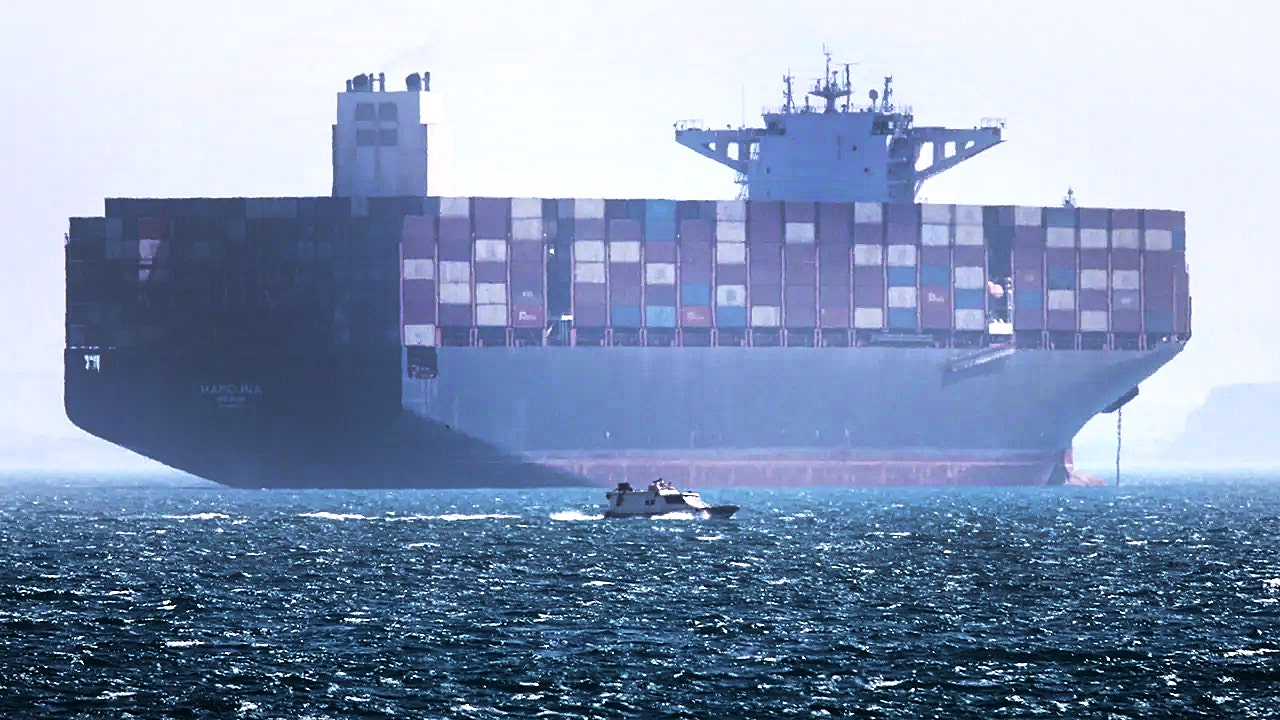
close Video EXCLUSIVE: Czech Republic's foreign minister warns Iran using Strait of Hormuz as ‘war tool’ Speaking at the United Nations, Petr Macinka says Prague is prepared to help secure the Strait of Hormuz, backs President Donald Trump’s push for stronger NATO defense spending and rejects European efforts to sanction Israel. NEWYou can now listen to Fox News articles! Hören Sie sich diesen Artikel an 5 Min UNITED NATIONS — The Czech Republic is prepared to help protect freedom of navigation in the Strait of Hormuz and is aligning closely with the Trump administration on security, NATO and Israel, Czech Foreign Minister Petr Macinka told Fox News Digital during an exclusive interview at the United Nations in New York. Prague already had begun discussions about contributing specialized capabilities to help secure the strategically vital waterway amid growing tensions with Iran, Macinka said while speaking at Security Council-related meetings at the U.N. "We are ready to contribute to freedom of passage and the Hormuz trade," Macinka said. "We were among the first countries that were ready to contribute … We have no navy, as we are in the middle of Europe," he explained, "But we have some unique passive surveillance capabilities." TRUMP SEEKS WARSHIPS FROM OTHER COUNTRIES TO HELP SECURE Strait of Hormuz Czech Republic Foreign Minister Petr Macinka arrives at the 135th Session of the Committee of Ministers of the Council of Europe at the Palace of the Republic in Chisinau, Moldova, May 15, 2026. (Vladislav Culiomza/Reuters) Macinka warned that Iran posed a global threat through what he described as four main "war tools": nuclear proliferation, drones and ballistic missiles, international terrorism and threats to the Strait of Hormuz. "Their nuclear military program must be stopped," he said. "It’s a global risk and global threat." The comments come as the Trump administration has increased pressure on European allies to take a larger role in protecting international shipping routes amid Iranian threats tied to the Strait of Hormuz, one of the world’s most critical oil transit choke points. Roughly one-fifth of global oil consumption passes through the narrow waterway connecting the Persian Gulf to the Arabian Sea. Speaking after a meeting with foreign ministers in Sweden Friday, Secretary of State Marco Rubio questioned the value of hosting U.S. military bases in allied countries that later restrict American military operations during wartime. "One of the arguments I always made was that these bases in the region provided us with logistical options that we wouldn’t otherwise have," Rubio told reporters. "And when some of those bases are denied to you during a conflict that we’re involved in, then you question whether that value is still there." President Donald Trump also has sharply criticized NATO allies over a reluctance to participate in military operations tied to the Iran conflict and securing the Strait of Hormuz. Trump said he was "strongly considering" pulling the United States out of NATO after allies failed to join the U.S. campaign against Iran, according to an April 1 interview with Britain’s Daily Telegraph, calling the alliance a "paper tiger." Vessels of Iran's Islamic Revolution Guards Corps are seen during a ceremony marking the National Persian Gulf Day at the Persian Gulf near Bushehr, Iran, April 29, 2024. The National Persian Gulf Day marks the anniversary of the expulsion of Portuguese military forces from the Strait of Hormuz in 1622. (Shadati/Xinhua via Getty Images) The Czech Republic, a NATO member since 1999, reached NATO’s benchmark of spending 2% of GDP on defense and has supported calls for Europe to increase military readiness amid Russia’s war in Ukraine. Macinka strongly defended the administration’s calls for Europe to increase defense spending and reduce dependence on Washington for long-term security guarantees. "We should do our homework and build our defense to become stronger," he said, arguing that Europe had delayed necessary military investments for too long. He also tied Europe’s defense spending challenges to the European Union’s Green Deal policies, the bloc’s sweeping climate agenda aimed at reducing carbon emissions, calling them ideological and financially destructive. "If we get rid of this green, crazy alarmism, then we have enough money to build our defense," he said. The Czech foreign minister also voiced unusually direct support for Trump and his administration, praising what he described as a global "common sense" shift following Trump’s election victory. "We are friends of Israel, and we are friends of America," Macinka said. "Especially me as a politician, I'm a friend of the ideology of the current American administration." Macinka also referenced a clash earlier in 2026 with former Secretary of State Hillary Clinton at the Munich Security Conference, where he criticized Europe’s liberal political establishment and defended the populist wave reshaping parts of Europe and the United States. EUROPE MUST LEAD ON UKRAINIAN SECURITY GUARANTEES, GREEK FOREIGN MINISTER SAYS: 'WE ARE THE NEIGHBORS' A tanker sits at the Port of Fujairah, as the U.S.-Israel conflict with Iran limits marine traffic in the Strait of Hormuz. (REUTERS / Amr Alfiky / File Photo) Macinka linked Prague’s strong support for Ukraine to the Soviet-led invasion of Czechoslovakia in 1968, when hundreds of thousands of Warsaw Pact troops occupied the country for more than two decades. He said that historical experience continues to shape Czech public opinion and support for Kyiv. "The Czech society feels a big solidarity with Ukraine," Macinka said, describing the war as a "symmetric war" between a powerful Russian military and a Ukrainian army backed by the West. Macinka highlighted Prague’s leading role in a Czech-backed ammunition initiative supplying Ukraine with artillery rounds collected through international donor efforts. Recalling a visit to Kyiv earlier in 2026, he said he received intelligence briefings on battlefield ammunition consumption from Ukrainian military officials. TRUMP, ZELENSKYY TO MEET FOR KEY DEAL AS NATO ALLIES, RUSSIA WAIT, WATCH Naval units from Iran and Russia simulate the rescue of a hijacked vessel during joint drills at the Port of Bandar Abbas in Hormozgan, Iran, on Feb. 19, 2026. (Iranian Army/Handout/Anadolu via Getty Images) The Czech initiative delivered more than half a million rounds of ammunition in 2026 alone, according to Macinka, helping stabilize the battlefield ahead of possible peace negotiations. Macinka argued that maintaining a stable front is essential for meaningful negotiations, warning that shifting battle lines will only harden demands on both sides. Newly recruited soldiers of Ukraine's 159th Separate Mechanized Brigade participate in integration and advanced training exercises in Kharkiv Oblast on May 14, 2026, after completing basic military training. (Yevhen Titov/Global Images Ukraine via Getty Images) With Washington increasingly focused on the Middle East, Macinka also said Europe must begin taking a larger diplomatic role in future negotiations over Ukraine. "America is quite busy with the Middle East," he said. "Europe should wake up and ask for a place at the table." Efrat Lachter is a reporter for Fox News Digital covering international affairs and the United Nations. Follow her on X @efratlachter. Stories can be sent to efrat.lachter@fox.com.
SRCFox News - World
LANGEN
LEANCenter-Right
WORDS1 159
ENT12
WED · 2026-05-27 · 17:35 GMTBRIEF NSR-2026-0527-79697
NSR-2026-0527-79697News Report·EN·National Security
US ally pledges support for Trump's push to break Iran's grip on Hormuz: 'We are ready to contribute'
Czech Foreign Minister Petr Macinka announced at the United Nations that the Czech Republic is prepared to contribute specialized passive surveillance capabilities to help secure freedom of navigation in the Strait of Hormuz, aligning with the Trump administration's security agenda. Macinka identified Iran's nuclear program, drones, ballistic missiles, terrorism, and threats to Hormuz as global risks.
Fox News - WorldFiled 2026-05-27 · 17:35 GMTLean · Center-RightRead · 5 min
Fox News - WorldFIG 01
Reading time
5min
Word count
1 159words
Sources cited
3cited
Entities identified
12entities
Quality score
100%
§ 01
Briefing Summary
AI-generatedNEWSAR · AI
Czech Foreign Minister Petr Macinka announced at the United Nations that the Czech Republic is prepared to contribute specialized passive surveillance capabilities to help secure freedom of navigation in the Strait of Hormuz, aligning with the Trump administration's security agenda. Macinka identified Iran's nuclear program, drones, ballistic missiles, terrorism, and threats to Hormuz as global risks. This support comes as the U.S. pressures European allies to increase their role in protecting international shipping routes. Macinka also defended increased European defense spending and expressed strong support for the Trump administration's policies. He further highlighted the Czech Republic's commitment to Ukraine, including an ammunition initiative, and suggested Europe should take a larger diplomatic role in Ukraine negotiations.
Confidence 0.90Sources 3Claims 5Entities 12
§ 02
Article analysis
Model · rule-basedFraming
National Security
Diplomatic
Tone
Mixed Tone
AI-assessed
CalmNeutralAlarmist
Factuality
0.70 / 1.00
Factual
LowHigh
Sources cited
3
Well sourced
FewMany
§ 03
Key claims
5 extracted01
The Czech Republic has unique passive surveillance capabilities.
quotePetr Macinka
Confidence
1.00
02
Roughly one-fifth of global oil consumption passes through the Strait of Hormuz.
statistic
Confidence
1.00
03
Iran poses a global threat through nuclear proliferation, drones and ballistic missiles, international terrorism, and threats to the Strait of Hormuz.
quotePetr Macinka
Confidence
1.00
04
Prague is prepared to help secure the Strait of Hormuz and backs President Donald Trump’s push for stronger NATO defense spending.
quotePetr Macinka
Confidence
1.00
05
Czech Republic is prepared to help protect freedom of navigation in the Strait of Hormuz.
quotePetr Macinka
Confidence
1.00
§ 04
Full report
5 min read · 1 159 words§ 05
Entities
12 identifiedKey playerOppositionContextPositiveNeutralNegative
People3
§ 06
Keywords & salience
9 termsiran
1.00
strait of hormuz
1.00
czech republic
0.90
freedom of navigation
0.80
trump administration
0.70
nato defense spending
0.60
nuclear proliferation
0.50
international terrorism
0.40
oil transit
0.40
§ 07
Topic connections
Interactive graph Network visualization showing 32 related topics
View Full Graph Person Organization Location Event|Click node to navigate|Edge numbers = shared articles