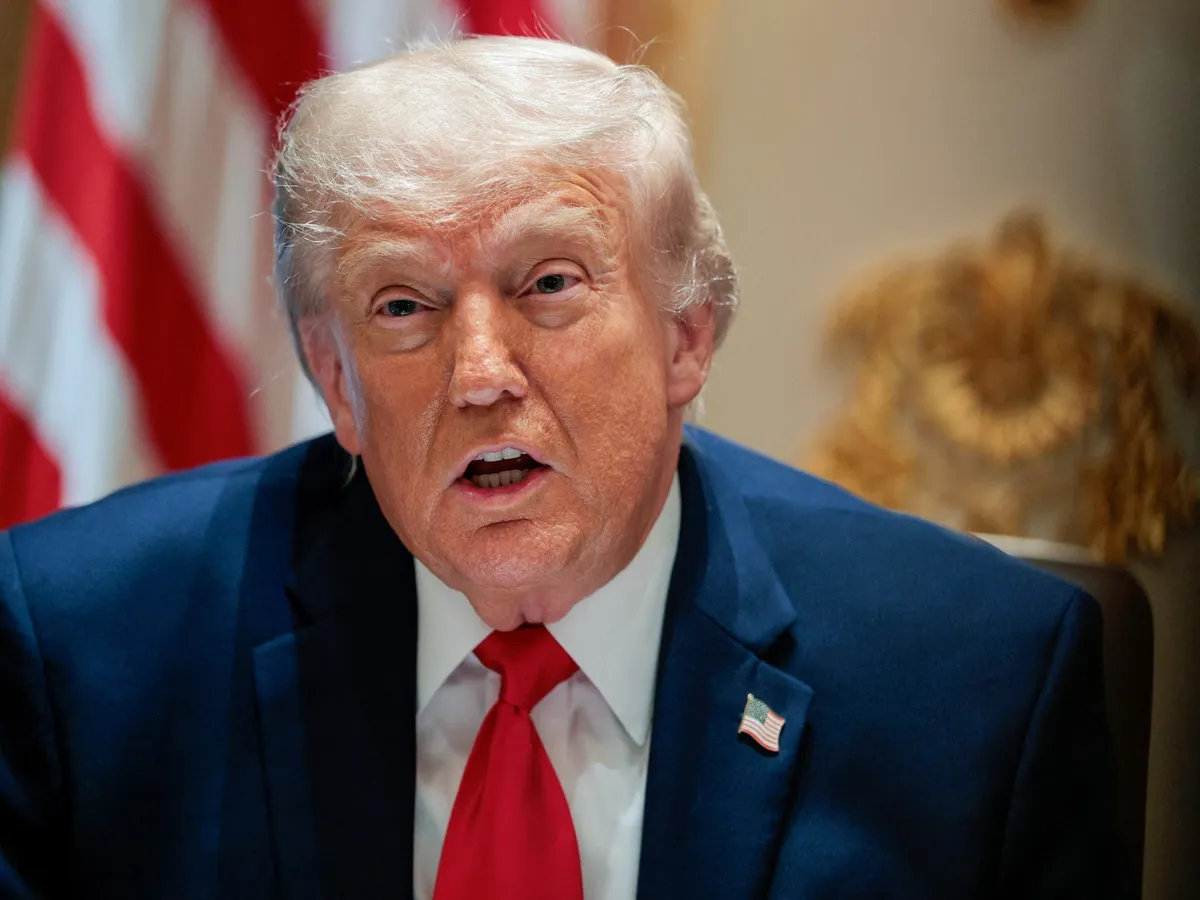
IRGC says it targeted a base used by US forces after US attacks on site near Bandar Abbas.US President Donald Trump speaks during a cabinet meeting in the Cabinet Room at the White House, May 27, 2026 [Evan Vucci/Reuters]Published On 28 May 2026Iran’s Islamic Revolutionary Guard Corps (IRGC) says it struck a base used by United States forces in response to US attacks on an Iranian target near the Strait of Hormuz, as a fragile ceasefire comes under growing strain and negotiations to end the war drag on.“Following this morning’s aggression by the invading US military against a location on the outskirts of Bandar Abbas Airport using aerial projectiles, the American air base that served as the source of the attack was targeted at 4:50 am (0120 GMT),” the IRGC said on Thursday, according to Iranian state broadcaster IRIB.Recommended Stories list of 3 itemslist 1 of 3US, Iran have launched multiple attacks during ceasefire: A timelinelist 2 of 3US, Iran issue conflicting reports on deal as Trump says no sanction relieflist 3 of 3Iran government sells subsidised meat for Eid al-Adha under blockadeend of listThe IRGC did not provide details on the location of the base, though Kuwait’s military said its air defences were responding to an “enemy” attack on Thursday.The IRGC said it targeted the base in response to what it described as an early morning US attack near Bandar Abbas airport, Tasnim News Agency reported.An unnamed US official told the Reuters news agency that the US military shot down four Iranian attack drones and struck a ground control station in the port city of Bandar Abbas that was about to launch a fifth drone.“These actions were measured, purely defensive and intended to maintain the ceasefire,” the official who requested anonymity said on Thursday.Reporting from Iran’s capital Tehran, Al Jazeera’s Resul Serdar said despite the latest strikes, “neither the US nor Iran is saying the ceasefire has collapsed.“This is the third time since the ceasefire’s announcement that they have directly engaged militarily,” he noted.Strait is ‘international waters’At a cabinet meeting on Wednesday, US President Donald Trump expressed confidence that his administration was making headway in negotiations to end the war, but rejected a report that he was close to a compromise deal with Tehran.He dismissed an Iranian state TV report that it had obtained an unofficial draft of an agreement to restore commercial shipping through the strait to pre-war levels within a month, with Iran and Oman jointly managing traffic.Trump said no single country would have control over the waterway, and appeared to threaten Oman, a country with which the US has decades-long military and economic ties.“Nobody’s going to control (the strait),” Trump said. “It’s international waters and Oman will behave just like everybody else or we’ll have to blow them up. They understand that, they’ll be fine.”Trump added that he was not yet satisfied on a potential deal with Iran, and the US was not discussing easing sanctions on the country.Oil prices, having fallen more than 5 percent on Wednesday, rebounded after reports of the escalation in hostilities. US crude futures gained more than 3 percent, while stocks fell and the dollar rose.Trump in ‘very difficult position’Ebrahim Azizi, head of the Iranian parliament’s national security committee, said Trump’s “rhetoric” would not force Iran to back away from its demands to enrich uranium, wield authority over the strait and see sanctions against it lifted.“It is obvious Trump, seeking a way out of this strategic deadlock, alternates between issuing threats and appealing for an agreement,” Azizi said on Wednesday in a post on X.The Iranian TV report of a framework deal said the US would also lift its blockade of Iranian ports and withdraw military forces from Iran’s vicinity.Doug Bandow, senior fellow at the Cato Institute, says the main fight between the US and Iran is now on the economic front, with the duel blockades currently in place in the Strait of Hormuz.“Trump is in a very difficult position. He has inadvertently given Iran a very powerful weapon by closing the Strait of Hormuz, and he’s not willing to risk US ships to try to open it,” Bandow told Al Jazeera.“It’s going to be hard for him not to make a deal that’s to the satisfaction of Iran,” he added.
SRCAl Jazeera
LANGEN
LEANCenter
WORDS710
ENT12
THU · 2026-05-28 · 07:32 GMTBRIEF NSR-2026-0528-79811
NSR-2026-0528-79811News Report·EN·Conflict
Iran and US trade attacks after Trump rejects report of Hormuz agreement
Iran's Islamic Revolutionary Guard Corps (IRGC) stated it targeted a US base in response to US aerial attacks near Bandar Abbas Airport. A US official confirmed the US shot down Iranian drones and struck a ground control station in Bandar Abbas, describing these actions as defensive and aimed at maintaining a ceasefire.
Al Jazeera StaffAl JazeeraFiled 2026-05-28 · 07:32 GMTLean · CenterRead · 3 min
Al JazeeraFIG 01
Reading time
3min
Word count
710words
Sources cited
4cited
Entities identified
12entities
Quality score
100%
§ 01
Briefing Summary
AI-generatedNEWSAR · AI
Iran's Islamic Revolutionary Guard Corps (IRGC) stated it targeted a US base in response to US aerial attacks near Bandar Abbas Airport. A US official confirmed the US shot down Iranian drones and struck a ground control station in Bandar Abbas, describing these actions as defensive and aimed at maintaining a ceasefire. Despite these exchanges, neither country has declared the ceasefire collapsed, marking the third direct military engagement since its announcement. Meanwhile, US President Donald Trump rejected reports of a deal with Iran, emphasizing that no single country would control the Strait of Hormuz and threatening Oman if it did not "behave." Trump also stated he was not satisfied with a potential deal and was not discussing sanctions relief.
Confidence 0.90Sources 4Claims 5Entities 12
§ 02
Article analysis
Model · rule-basedFraming
Conflict
Diplomatic
Tone
Mixed Tone
AI-assessed
CalmNeutralAlarmist
Factuality
0.70 / 1.00
Factual
LowHigh
Sources cited
4
Well sourced
FewMany
§ 03
Key claims
5 extracted01
Trump rejects reports of a compromise deal with Tehran regarding the Strait of Hormuz.
factualDonald Trump
Confidence
0.95
02
Trump threatened Oman, stating they would be 'blown up' if they didn't behave regarding the Strait.
quoteDonald Trump
Confidence
0.90
03
IRGC claims it struck a US base in response to US attacks near Bandar Abbas.
factualIRGC
Confidence
0.90
04
US official states US shot down four Iranian drones and struck a ground control station.
factualUnnamed US official
Confidence
0.85
05
Kuwait's military reported its air defenses were responding to an 'enemy' attack.
factualKuwait's military
Confidence
0.80
§ 04
Full report
3 min read · 710 words§ 05
Entities
12 identifiedKey playerOppositionContextPositiveNeutralNegative
Organizations5
§ 06
Keywords & salience
9 termsiran-us conflict
1.00
strait of hormuz
1.00
ceasefire
0.90
military attacks
0.80
irgc
0.70
donald trump
0.60
negotiations
0.50
bandar abbas
0.40
drone attack
0.40
§ 07
Topic connections
Interactive graph Network visualization showing 51 related topics
View Full Graph Person Organization Location Event|Click node to navigate|Edge numbers = shared articles