A woman celebrating her 32nd birthday on a train journey in the Brazilian state of Minas Gerais was horrified when a fellow passenger alerted her that an unknown man had been secretly filming her seven-year-old son.When confronted, the man – an Argentinian tourist – initially refused to show his phone. But after being pressed by other travellers, the man admitted he had sent the images to a WhatsApp contact.Police later revealed that under the photos, Eduardo Ignacio Murias, 63, an architect from the Argentinian province of Santiago del Estero, had written: “He’s Black but very cute. I could take him as a slave. I’m thinking of taking a slave, there are many here.”The tourist train in Minas Gerais where the incident took place. Photograph: Courtesy of VLIThe child’s mother photographed the phone screen and passengers kept Murias inside the the train until it reached its destination, where he was arrested for “racial insult”, a crime under Brazilian law.The case has reignited debate in both countries about racism, national identity and Argentina’s longstanding pride in its European heritage.Murias was the third Argentinian to be arrested for racism in Brazil this year, at a time when record numbers of Argentinian tourists are travelling to the country. In April, José Luis Haile, 67, was arrested after allegedly directing racist insults at a food delivery worker at a supermarket in Rio. He is awaiting trial.Agostina Páez arrives in a Rio court in March. Photograph: Bruna Prado/APIn January, Agostina Páez, 29, was arrested in Rio after being filmed mimicking a monkey towards a waiter at a nightclub. Although later released, she was barred from leaving Brazil for two and a half months while the investigation continued. During that time, she claimed on social media that her rights were being violated and she was facing “persecution” – a narrative echoed by parts of the Argentinian media.The waiter is suing Páez for moral damages.“The claimant is a Black man who daily faces a society that insists on pushing him backwards simply because of the colour of his skin,” his lawyers wrote in the filing. “And yet, while carrying out his work, he was forced to hear words that diminished him and animalised him.”When Páez returned to Argentina in April, while still facing legal proceedings in Brazil, she was welcomed by the far-right senator Patricia Bullrich, a close ally of Argentina’s president, Javier Milei. Paéz’s father, Mariano Páez, was later filmed in a bar imitating a monkey to celebrate his daughter’s return.Argentina’s president, Javier Milei (centre), and Senator Patricia Bullrich (second left) wave from the balcony of the Casa Rosada presidential palace. Photograph: Luis Robayo/AFP/Getty ImagesThe political scientist and African-Argentinian activist Federico Pita said none of the recent cases came as a surprise given Argentina’s long history of racism.“racism is inscribed within the very project of the Argentine nation. Argentina is constitutionally a supremacist country,” he said, citing article 25 of the constitution, which states: “The federal government shall promote European immigration.”Pita said Argentina continued to see itself as a “European” country while denying the existence of African-Argentinians and Indigenous peoples who, according to the 2022 census, make up about 1% and 3% of the population respectively.Activists and researchers, however, argue that those figures are likely to be underestimates. Experts believe the majority of the population has Indigenous ancestry, even if they do not identify as such.Pita said: “An Aymara descendant born in the north of Argentina is treated as Bolivian, a Mapuche born in Argentine Patagonia is treated as Chilean; and an African-descendant from Buenos Aires is treated as Uruguayan or Brazilian, because the only thing considered truly Argentine is whiteness.”In March, Argentina was the only Latin American country to vote against a UN resolution declaring the transatlantic slave trade “the gravest crime against humanity”. The US and Israel were the only other countries to oppose the measure.Although slavery was abolished in Argentina in 1853, the descendants of enslaved Africans – and their influence on the country’s culture, from tango to language and food – remain.Pita said comparisons between Argentina and Brazil were complex. While Black Brazilians make up a far larger share of the population, they also experience disproportionately high levels of poverty, police violence and social exclusion.“I don’t know what is more serious: a country like Argentina, which says its Black population does not exist, or Brazil, where a young Black man is killed every few minutes. They are equally grave,” he said.Black Consciousness Day participants in São Paulo, Brazil. Photograph: UCG/Universal Images Group/Getty ImagesCases of racism by Argentinians against Brazilians are not new – in 1920, players from Brazil’s national football team refused to play a friendly match after being depicted in an Argentinian newspaper as “monkeys”. To this day, fans imitating monkeys are caught in virtually every match involving clubs from the two countries.Although there is no evidence that such incidents are becoming more common, social media has helped put them in the spotlight. Meanwhile, thanks to the overvalued peso, more Argentinians are travelling to Brazil and account for a third of the 9.3 million foreign tourists in 2025.Pita said it was also important not to generalise about Argentinians. “Most of the Argentinian population not only never travel to Brazil, but most likely have never left the country,” he said. “But they do represent a deeper Argentina” that still struggles with racism.
SRCThe Guardian - World News
LANGEN
LEANCenter-Left
WORDS889
ENT12
THU · 2026-05-28 · 12:04 GMTBRIEF NSR-2026-0528-79930
NSR-2026-0528-79930News Report·EN·Social Justice
Argentina’s ‘European’ self-image under renewed scrutiny after racist incidents in Brazil
Recent incidents involving Argentinian tourists accused of racism in Brazil have reignited discussions about race relations and national identity in Argentina. In one case, an Argentinian man was arrested in Minas Gerais for filming a Black child and writing racist comments, including "I could take him as a slave." This follows two other arrests of Argentinians for similar offenses in Brazil this year.
Tiago Rogero in Rio de JaneiroThe Guardian - World NewsFiled 2026-05-28 · 12:04 GMTLean · Center-LeftRead · 4 min
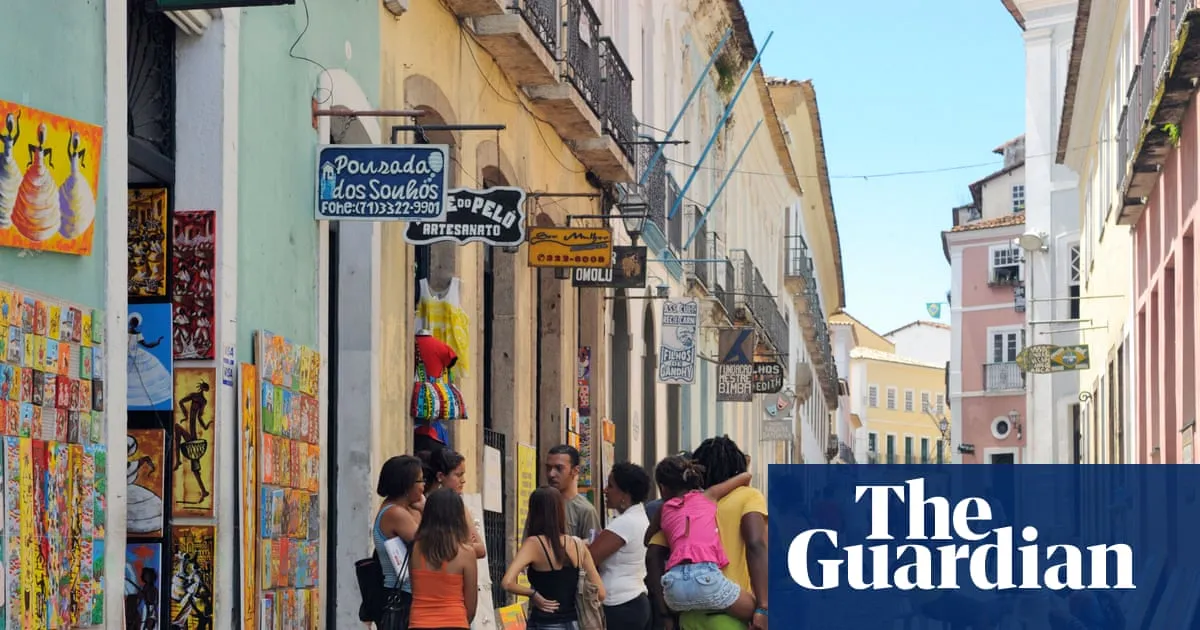
The Guardian - World NewsFIG 01
Reading time
4min
Word count
889words
Sources cited
4cited
Entities identified
12entities
Quality score
100%
§ 01
Briefing Summary
AI-generatedNEWSAR · AI
Recent incidents involving Argentinian tourists accused of racism in Brazil have reignited discussions about race relations and national identity in Argentina. In one case, an Argentinian man was arrested in Minas Gerais for filming a Black child and writing racist comments, including "I could take him as a slave." This follows two other arrests of Argentinians for similar offenses in Brazil this year. These events highlight Argentina's historical pride in its European heritage, which critics argue leads to a denial of its African-Argentinian and Indigenous populations. Activists point to constitutional provisions promoting European immigration and a societal tendency to associate Argentinian identity primarily with whiteness. The incidents have prompted comparisons between Argentina's approach to race and Brazil's, despite Brazil's larger Black population facing significant social exclusion.
Confidence 0.90Sources 4Claims 5Entities 12
§ 02
Article analysis
Model · rule-basedFraming
Social Justice
Human Interest
Tone
Mixed Tone
AI-assessed
CalmNeutralAlarmist
Factuality
0.80 / 1.00
Factual
LowHigh
Sources cited
4
Well sourced
FewMany
§ 03
Key claims
5 extracted01
Racism is inscribed within the very project of the Argentine nation.
quoteFederico Pita
Confidence
1.00
02
Agostina Páez claimed on social media that her rights were being violated and she was facing 'persecution' after her arrest in Rio.
quoteAgostina Páez
Confidence
1.00
03
Two other Argentinians were arrested for racism in Brazil this year.
factual
Confidence
1.00
04
This incident has reignited debates about racism and Argentina's European heritage.
factual
Confidence
1.00
05
An Argentinian tourist was arrested in Brazil for secretly filming a child and writing racist comments about taking him as a slave.
factual
Confidence
1.00
§ 04
Full report
4 min read · 889 words§ 05
Entities
12 identifiedKey playerOppositionContextPositiveNeutralNegative
People5
Organizations1
Locations5
Topics1
§ 06
Keywords & salience
8 termsracism
1.00
national identity
0.90
european heritage
0.80
racial insult
0.70
argentinian tourists
0.60
argentina
0.50
brazil
0.50
legal proceedings
0.40
§ 07
Topic connections
Interactive graph Network visualization showing 51 related topics
View Full Graph Person Organization Location Event|Click node to navigate|Edge numbers = shared articles