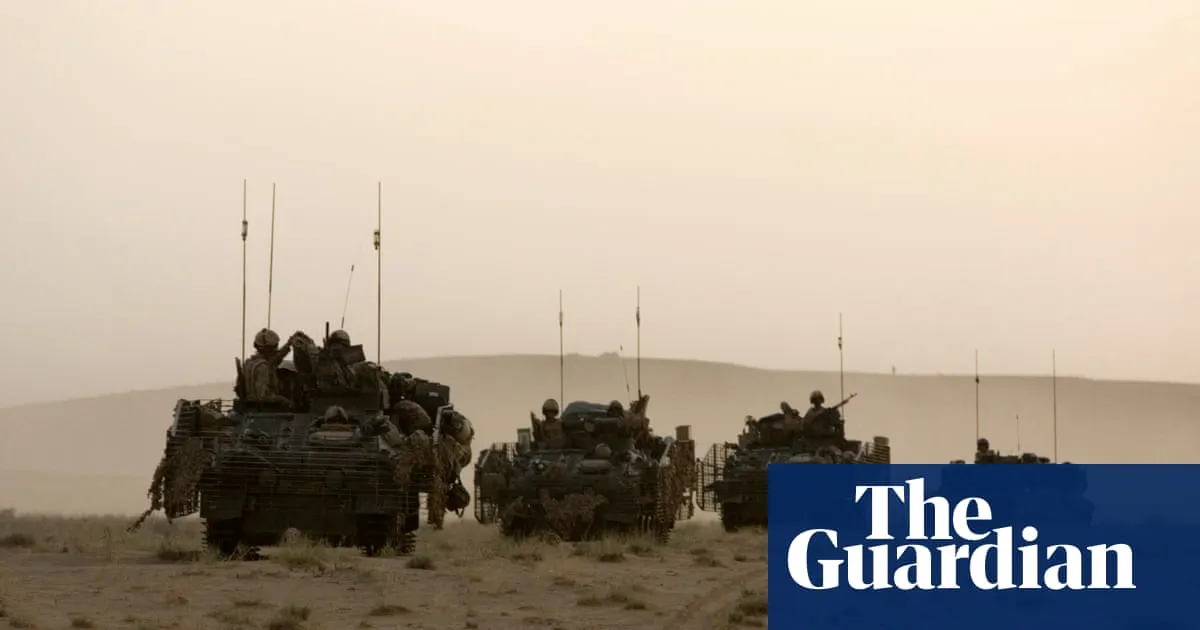
Concerns about the number of Afghan civilians being killed by British special forces in the early part of the last decade prompted the country’s then president to make a “muscular” complaint to NATO commanders fighting the Taliban.Newly released evidence from a public inquiry into the deaths of up to 80 people during an SAS deployment also showed that Afghan partner military forces were no longer willing to work alongside the British by the spring of 2011.The statements are contained in redacted and summarised evidence of a special forces staff officer, known only as N1788, who had been responsible for reviewing tactics used in operations that led to civilians repeatedly being killed.“President Hamid Karzai was very ‘muscular’ in addressing the issue” of British detention operations “with NATO’s chain of command”, according to the summary of N1788’s two days of evidence, first given in the autumn of 2024.Around the same time, the evidence summary said, “everyone was aware that some of the Afghan partner units were being reluctant to go on operations” with the British special forces sub-unit, known only as SU1.This became “a major issue for campaigns” across the NATO-led forces operating in Afghanistan and emerged at the same time as the US president Barack Obama had increased the number of US troops in Afghanistan to try to deal with a growing Taliban insurgency. “It was a known issue and a big deal,” the summary of the evidence said.In April 2011, the staff officer had been asked to review a recurring procedure in which Afghan males were asked by the SAS to come back inside a family compound that had been the subject of a special forces raid, typically at night-time.On several occasions, the Afghan men were said to have produced weapons and were promptly killed. N1788 told the inquiry that there were concerns that the procedure had become an “inefficient practice”. Sometimes there were fewer weapons discovered than there were Afghans killed.Asked by the chair of the inquiry, Charles Haddon-Cave, to explain what that phrase meant, N1788 said there were concerns that a tactic that had been designed to reduce the threat to British forces and civilians had become counterproductive.Separating off Afghan adult males during raids had “directly increased the propensity of kinetic [ie military] activity”, N1788 said. It was “undermining the very reason it was designed for … which was to de-escalate”, he added.Evidence from a second soldier, N2252, who was chief of staff to the director of the UK’s special forces in 2010 and 2011, said there had been a high degree of pressure to deliver because many British soldiers had been killed in 2010.“As I’ve said to you, we wanted to do things right. We’d all been to lots of funerals in 2009/2010, 100-plus people killed in 2010. We didn’t want that to happen again,” N2252 said. But he said that the tactic of separating off Afghan males during raids had led to “unintended consequences”.Concerns about the lethal conduct of the SAS in Helmand province in Afghanistan have been circulating since, leading to the setting up of the public inquiry in December 2022. It began with a handful of public hearings the following October, covering UK special forces deployments between 2010 and 2013, though since then progress has been slow.Hearings involving former members of the special forces, with the exception of former MP Johnny Mercer, have largely been held in private without press or public present and evidence is then summarised and redacted to comply with official requests to maintain secrecy around the day-to-day activities of the SAS.The inquiry has also heard allegations that two Afghan adults were shot dead while sleeping with children next to them, in evidence presented by Richard Hermer KC, who has since become attorney general.Another British soldier told his superiors at the time that he believed the SAS had a policy in Afghanistan to “kill all males on target whether they posed a threat or not” – a practice colloquially described as “flat packing”.
SRCThe Guardian - World News
LANGEN
LEANCenter-Left
WORDS662
ENT11
THU · 2026-05-28 · 23:01 GMTBRIEF NSR-2026-0529-80053
NSR-2026-0529-80053News Report·EN·Conflict
Afghan president voiced concern over civilians killed by SAS troops, inquiry told
Newly released evidence from a public inquiry into the deaths of up to 80 people during an SAS deployment in Afghanistan reveals that then-Afghan President Hamid Karzai lodged a "muscular" complaint with NATO commanders regarding civilian casualties caused by British special forces. By the spring of 2011, Afghan partner military forces were reportedly reluctant to operate alongside the British.
Dan SabbaghThe Guardian - World NewsFiled 2026-05-28 · 23:01 GMTLean · Center-LeftRead · 3 min
The Guardian - World NewsFIG 01
Reading time
3min
Word count
662words
Sources cited
2cited
Entities identified
11entities
Quality score
100%
§ 01
Briefing Summary
AI-generatedNEWSAR · AI
Newly released evidence from a public inquiry into the deaths of up to 80 people during an SAS deployment in Afghanistan reveals that then-Afghan President Hamid Karzai lodged a "muscular" complaint with NATO commanders regarding civilian casualties caused by British special forces. By the spring of 2011, Afghan partner military forces were reportedly reluctant to operate alongside the British. A special forces staff officer, known as N1788, testified that a tactic of separating Afghan males during raids, intended to de-escalate situations, was instead increasing lethal activity and becoming counterproductive. Another soldier, N2252, cited pressure to deliver results due to high British casualties in previous years as a factor, but acknowledged "unintended consequences" from these tactics. These concerns have been circulating since the early 2010s, leading to the public inquiry into UK special forces deployments between 2010 and 2013.
Confidence 0.90Sources 2Claims 4Entities 11
§ 02
Article analysis
Model · rule-basedFraming
Conflict
Human Rights
Tone
Mixed Tone
AI-assessed
CalmNeutralAlarmist
Factuality
0.80 / 1.00
Factual
LowHigh
Sources cited
2
Limited
FewMany
§ 03
Key claims
4 extracted01
There was high pressure to deliver results in Afghanistan due to over 100 British soldier deaths in 2010.
quoteN2252 (chief of staff to director of UK special forces)
Confidence
0.95
02
A tactic of separating Afghan males during raids led to increased 'kinetic activity' and unintended consequences.
factualN1788 (special forces staff officer)
Confidence
0.90
03
Afghan President Hamid Karzai made a 'muscular' complaint to Nato about civilians killed by British special forces.
quoteN1788 (special forces staff officer)
Confidence
0.90
04
Afghan partner military forces were unwilling to work with British special forces by spring 2011 due to civilian deaths.
factualN1788 (special forces staff officer)
Confidence
0.85
§ 04
Full report
3 min read · 662 words§ 05
Entities
11 identifiedKey playerOppositionContextPositiveNeutralNegative
People5
Organizations4
§ 06
Keywords & salience
10 termscivilian deaths
1.00
afghan president
0.90
sas troops
0.90
public inquiry
0.80
nato commanders
0.70
afghan partner military
0.60
taliban
0.60
special forces operations
0.50
kinetic activity
0.40
counterproductive tactics
0.40
§ 07
Topic connections
Interactive graph No topic relationship data available yet. This graph will appear once topic relationships have been computed.