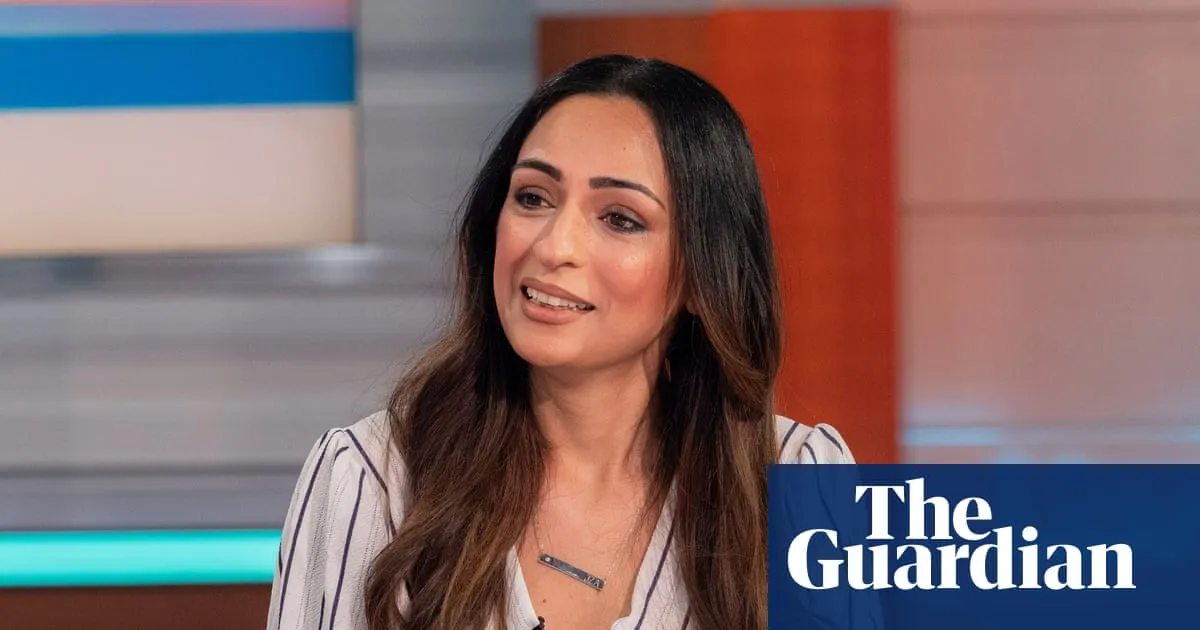
A UK television personality went on two state-sponsored tours of Iran this spring where she met senior officials and was “active” in spreading the regime’s message, according to an investigation by a Iranian factchecking organisation.Bushra Shaikh, from Surrey, owned a luxury clothing brand and finished ninth on series 13 of The Apprentice in 2017, where she described herself as “inspired by Coco Chanel”.Shaikh posts on X and Instagram to hundreds of thousands of followers about her appearances on TalkTV and Good Morning Britain withphotographs of her outfits and opinions on rightwing figures such as Laura Loomer and Rupert Lowe.An investigation by Factnameh found that Shaikh played a “highly active role in reproducing the government’s narrative” this spring after taking part in two press tours organised by IRIB World Service, the international arm of Iran’s state broadcaster.Factnameh identified more than a dozen participants in these tours, including a handful of US journalists.Fereidoon Bashar, the executive director of ASL19, which created Factnameh, said cultivating friendly journalists and public figures had been part of Iran’s strategy for some time. “There has been a long tradition of having prominent western figures to Iran who are aligned with anti-imperialist, anti-colonial frameworks,” he said.But since the 12-day conflict between Iran and Israel in June 2025, he said, there had been a “major shift in Iran’s communication approach”.Bashar said: “My thinking is that they’re realising – much like the rest of the world – that a lot of mainstream media is losing their audiences, and these individual influencers are much easier to engage and invite. The content they put out is more likely to align with state narratives, and less likely to be factchecked.”It is unclear whether Shaikh and others covered their own expenses or were paid to do the trip. Bashar said it appeared that the Iranian government valued Shaikh’s content as it invited her back for a second trip in April, after her first tour in February.He said: “The level of access she got the second time around was far higher than the first time around, with high-level officials. Looks like they appreciated her coverage the first time around.”Shaikh’s posts about Iran appeared timed to coincide with critical events in Iran, including the intensification of the conflict, ceasefire talks and nationwide protests in January. Some of this amounted to “broadcasting the unedited propaganda of the Islamic Republic”, Factnameh said.In Shaikh’s visits, which she documented to hundreds of thousands of followers on X, she toured an Armenian monastery and Tehran’s Tajrish bazaar. In one post, she modelled a black and gold scarf that she said was a gift from Iran’s culture minister.She met senior officials, including the governor of Isfahan and the foreign ministry spokesperson, and visited sensitive sites including the strait of Hormuz, where she posed on a boat with the caption “the strait of Hormuz is open for us but closed for the Epstein empire”, appearing to refer to the US.Factnameh found Shaikh’s posts showed a “highly calculated pattern of social media manipulation”. In the past year, 20% of her 4,047 posts have been about Iran and these had generated millions of interactions and “disproportionately high engagement”.Earlier this year, Shaikh’s tours sparked criticism from Iranian digital rights activists, who noticed she appeared to have access to the internet that ordinary people did not, suggesting her trips were at the invitation of the regime. Iranian activists, some affiliated with the Women, Life, Freedom movement, circulated an online petition suggesting Shaikh should be investigated for sanctions violations.Shaikh, meanwhile, shrugged off the internet shutdown in Iran, writing: “It seems those outside of Iran are more bothered about limited internet access for Iranians to the outside world, than Iranians inside Iran themselves. Most don’t see it as a government crackdown but rather temporary citizen security.”Shaikh is part of a growing number of “war influencers” or “war-fluencers”, content creators who offer followers unmediated, at times citizen journalist-style access to a war zone.Several of her posts aimed to offer an on-the-ground look at the effect of US-Israeli strikes against Iran. In one, she describes residential buildings destroyed; in another, she says she investigated a missile strike on a girl’s school in Minab.Israel and Russia have also been reported to use influencers to spread their narratives, especially in the face of more hostile coverage from traditional media.Shaikh was approached for comment.
SRCThe Guardian - World News
LANGEN
LEANCenter-Left
WORDS720
ENT12
FRI · 2026-05-29 · 15:45 GMTBRIEF NSR-2026-0529-80247
NSR-2026-0529-80247News Report·EN·Political Strategy
UK influencer met senior officials on state-sponsored tours of Iran, fact-checking body finds
A UK television personality, Bushra Shaikh, participated in two state-sponsored tours of Iran this spring, according to an investigation by Iranian fact-checking organization Factnameh. Shaikh, a former contestant on The Apprentice, met with senior Iranian officials, including the governor of Isfahan and the foreign ministry spokesperson.
Aisha DownThe Guardian - World NewsFiled 2026-05-29 · 15:45 GMTLean · Center-LeftRead · 3 min
The Guardian - World NewsFIG 01
Reading time
3min
Word count
720words
Sources cited
2cited
Entities identified
12entities
Quality score
100%
§ 01
Briefing Summary
AI-generatedNEWSAR · AI
A UK television personality, Bushra Shaikh, participated in two state-sponsored tours of Iran this spring, according to an investigation by Iranian fact-checking organization Factnameh. Shaikh, a former contestant on The Apprentice, met with senior Iranian officials, including the governor of Isfahan and the foreign ministry spokesperson. Factnameh found that Shaikh was "highly active" in spreading the Iranian regime's message during these tours, which were organized by IRIB World Service. Her social media posts, which reached hundreds of thousands of followers, coincided with critical events in Iran and appeared to align with state narratives. The investigation suggests Iran valued Shaikh's content, inviting her back for a second, more access-granting trip.
Confidence 0.90Sources 2Claims 5Entities 12
§ 02
Article analysis
Model · rule-basedFraming
Political Strategy
Diplomatic
Tone
Measured
AI-assessed
CalmNeutralAlarmist
Factuality
0.70 / 1.00
Factual
LowHigh
Sources cited
2
Limited
FewMany
§ 03
Key claims
5 extracted01
Shaikh played a 'highly active role in reproducing the government’s narrative' in Iran.
quoteFactnameh
Confidence
1.00
02
Shaikh met senior officials, including the governor of Isfahan and the foreign ministry spokesperson, during her visits.
factualFactnameh
Confidence
1.00
03
UK influencer Bushra Shaikh participated in two state-sponsored tours of Iran this spring.
factualFactnameh
Confidence
1.00
04
Shaikh's posts about Iran coincided with critical events like intensified conflict and nationwide protests.
factualFactnameh
Confidence
0.90
05
Iran's communication strategy has shifted to engaging influencers due to declining mainstream media audiences.
factualFereidoon Bashar (ASL19)
Confidence
0.80
§ 04
Full report
3 min read · 720 words§ 05
Entities
12 identifiedKey playerOppositionContextPositiveNeutralNegative
People5
§ 06
Keywords & salience
8 termsstate-sponsored tours
1.00
iran regime
0.90
influencer marketing
0.80
propaganda
0.70
media strategy
0.60
irib world service
0.50
bushra shaikh
0.50
iran-israel conflict
0.40
§ 07
Topic connections
Interactive graph Network visualization showing 51 related topics
View Full Graph Person Organization Location Event|Click node to navigate|Edge numbers = shared articles