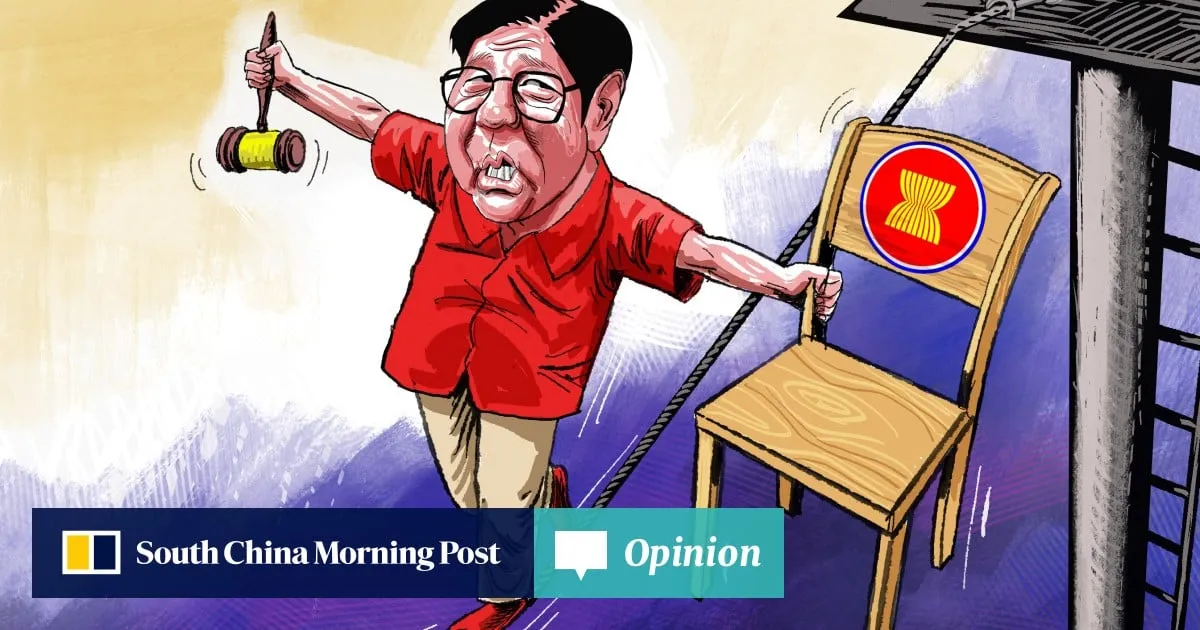
When Philippine President Ferdinand Marcos Jnr accepted the Asean gavel from Malaysian counterpart Anwar Ibrahim in Kuala Lumpur last October, the script was already written: a packed agenda, South China Sea diplomacy in the spotlight and a regional digital economy deal to clinch. Then the world changed.On February 28, US and Israeli forces struck Iran. The Strait of Hormuz, an artery of global shipping through which 98 per cent of the Philippines’ crude oil imports travel, became a war zone. Fuel prices spiked. Over 2.5 million Filipino workers in the Persian Gulf suddenly found their jobs, safety and the remittances sustaining millions of families back home under threat.At the 48th Asean Summit in Cebu, Marcos scrapped his original agenda and convened what officials described as a “bare-bones” session focused on oil, food and migrant workers. “We will achieve absolutely nothing until there is peace,” he told reporters.
SRCSouth China Morning Post
LANGEN
LEANCenter-Right
WORDS147
ENT12
FRI · 2026-05-29 · 21:30 GMTBRIEF NSR-2026-0529-80294
NSR-2026-0529-80294Analysis·EN·Diplomatic
Why the Philippines walks a delicate balance as Asean chair
The Philippines, as the ASEAN chair, is navigating a delicate balance due to escalating global tensions. Initially, President Ferdinand Marcos Jr.'s agenda focused on the South China Sea and a regional digital economy deal.
Sheheryar BilalSouth China Morning PostFiled 2026-05-29 · 21:30 GMTLean · Center-RightRead · 1 min
South China Morning PostFIG 01
Reading time
1min
Word count
147words
Sources cited
2cited
Entities identified
12entities
Quality score
100%
§ 01
Briefing Summary
AI-generatedNEWSAR · AI
The Philippines, as the ASEAN chair, is navigating a delicate balance due to escalating global tensions. Initially, President Ferdinand Marcos Jr.'s agenda focused on the South China Sea and a regional digital economy deal. However, the US and Israeli strikes on Iran in February transformed the Strait of Hormuz, a critical route for 98% of the Philippines' crude oil imports, into a war zone. This development led to fuel price spikes and threatened the safety and employment of over 2.5 million Filipino workers in the Persian Gulf, impacting remittances vital to millions of families. Consequently, at the 48th ASEAN Summit, Marcos Jr. shifted the focus to immediate concerns of oil, food, and migrant workers, stating that peace was a prerequisite for achieving other goals.
Confidence 0.85Sources 2Claims 4Entities 12
§ 02
Article analysis
Model · rule-basedFraming
Diplomatic
Economic Impact
Tone
Measured
AI-assessed
CalmNeutralAlarmist
Factuality
0.70 / 1.00
Factual
LowHigh
Sources cited
2
Limited
FewMany
§ 03
Key claims
4 extracted01
Marcos stated, 'We will achieve absolutely nothing until there is peace.'
quoteFerdinand Marcos Jnr
Confidence
1.00
02
Over 2.5 million Filipino workers in the Persian Gulf found their jobs, safety, and remittances under threat due to the conflict.
factual
Confidence
0.90
03
The Strait of Hormuz, through which 98% of the Philippines' crude oil imports travel, became a war zone after US and Israeli forces struck Iran.
factual
Confidence
0.90
04
Philippine President Ferdinand Marcos Jnr convened a 'bare-bones' Asean session focused on oil, food, and migrant workers, scrapping his original agenda.
quoteofficials
Confidence
0.80
§ 04
Full report
1 min read · 147 words§ 05
Entities
12 identifiedKey playerOppositionContextPositiveNeutralNegative
Locations7
§ 06
Keywords & salience
10 termsasean chair
1.00
south china sea
0.80
migrant workers
0.80
digital economy
0.70
strait of hormuz
0.70
oil prices
0.60
iran conflict
0.50
philippines
0.50
ferdinand marcos jnr
0.40
remittances
0.40
§ 07
Topic connections
Interactive graph Network visualization showing 51 related topics
View Full Graph Person Organization Location Event|Click node to navigate|Edge numbers = shared articles