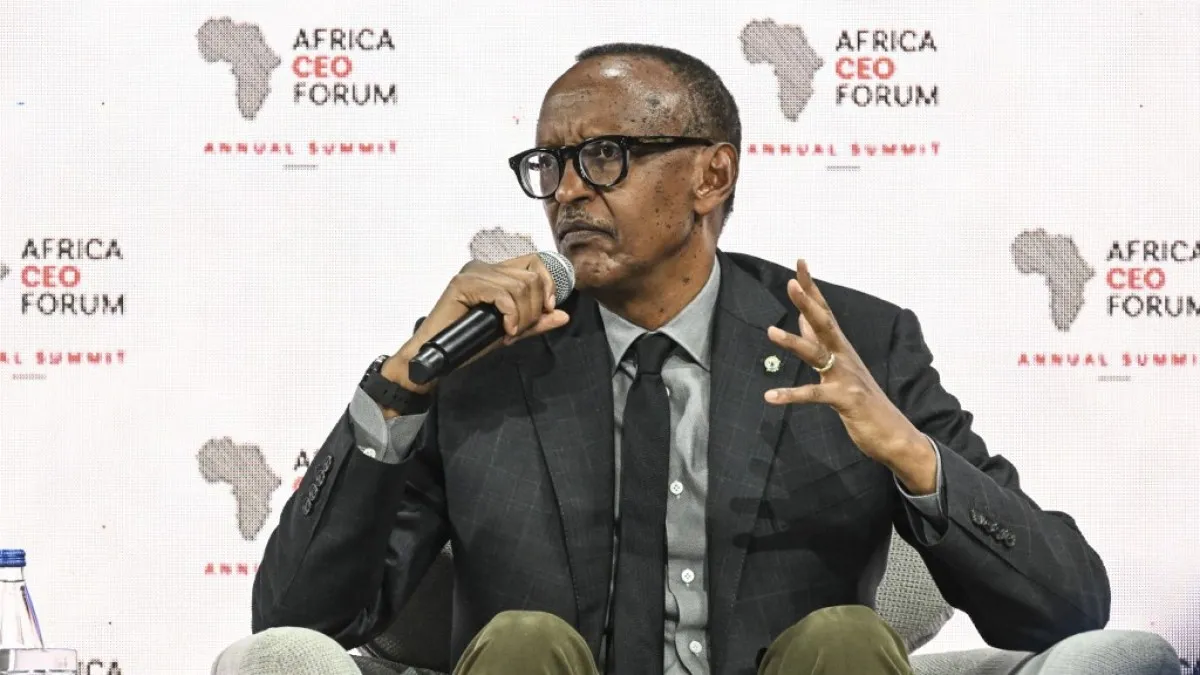
Rwanda turns to Russia for nuclear training and research, advancing ambitions in technology, healthcare and diplomacy.Rwanda's President Paul Kagame is maintaining a balancing act in foreign relations, keeping ties with the United States, China, Europe, the Gulf and Russia while avoiding dependence on any single power [Issouf Sanogo/AFP]Published On 30 May 2026Kigali, Rwanda – Rwanda’s new Nuclear cooperation agreement with Russia may look technical on paper, focused on science, nuclear medicine and energy, but it signals a deeper shift in the geopolitical balance across Africa.While Moscow is deepening its presence on the continent, Washington and other Western powers are increasingly viewed as inconsistent partners, leaving room for countries like Rwanda to explore new alliances.The agreement was signed on May 19 at the Nuclear Energy Innovation Summit in Kigali, where Rwanda’s government emphasised its ambition to become a regional hub for technology, innovation and advanced healthcare.The Memorandum of Understanding (MoU) covers nuclear medicine and broader cooperation in health and nuclear science, including potential research reactor projects and training programmes.Rwandan government spokesperson Yolande Makolo told Al Jazeera that feasibility studies are under way for a Small modular reactor (SMR)-based facility and a Centre for Nuclear Science and Technology.“In addition to Russian company Rosatom, Rwanda also signed MoUs with the US government on civil Nuclear cooperation, as well as agreements with firms from South Africa and Austria,” Makolo said, highlighting Kigali’s strategy of engaging multiple international partners.The proposed centre would eventually host a research reactor, laboratories, training facilities and nuclear medicine infrastructure, though the plan remains in its early stages. For now, Rwanda is sending students to Russia for nuclear engineering programmes, laying the groundwork for domestic technical capacity.A changing influence mapWestern influence in Africa, long rooted in aid, development financing and security partnerships, is facing new challenges. Some African governments question whether foreign partners can be relied upon when policy priorities shift between administrations.Russia has moved quickly to exploit this uncertainty, promoting a policy of noninterference and respect for sovereignty, a message that resonates with leaders frustrated by perceived Western pressure.“Russia is benefitting from weakening perceptions of Western consistency,” said Professor Macharia Munene, a specialist in diplomacy and international relations. “In the eyes of some African leaders, Moscow’s approach is more predictable: you get investment and training without strings attached.”Russia’s nuclear outreach is part of a broader strategy to expand its influence on the continent, with agreements reportedly signed in countries such as Egypt, Ethiopia, Nigeria, Ghana and South Africa. Many of these deals involve Rosatom, the state nuclear agency central to Moscow’s technical and diplomatic push.At the same time, China’s growing economic footprint and the United States’s security partnerships in Kenya, Uganda, Ethiopia, and Djibouti, home to the US’s largest military base in Africa, mean that Africa is increasingly a chessboard of competing powers.Rwanda’s careful balancing actRwanda has faced criticism over human rights, including accusations of targeting journalists and opposition figures. Relations with the US have been tense, with Washington accusing Kigali of backing the M23 rebel group in the eastern Democratic Republic of the Congo, a key flashpoint in regional power struggles.Yet, Rwanda frames its engagement with Moscow largely around technology, training and investment rather than politics. The nuclear agreement is not about immediate electricity generation but appears to be focused on long-term capacity building.“Rwanda will still be able to juggle multiple bilateral partners,” said Beverly Ochieng, senior analyst at Control Risks. “This deal comes alongside a health MoU with Russia and defence talks with France. Rwanda is compartmentalising partnerships to serve its priorities.”President Paul Kagame’s strategy is clear: maintain strong ties with the US, China, Europe, the Gulf and Russia, without becoming overly dependent on any single partner.Nuclear deals as symbols of ambitionNuclear projects in Africa often serve dual purposes: technical development and political signalling. A Small modular reactor or research facility demonstrates scientific ambition and industrial sophistication, even before any electricity is produced.“Most of Russia’s nuclear agreements are symbolic,” Ochieng said. “They let Rosatom dominate technical capacity, even under sanctions. It may take a decade before these deals result in operational power plants.”Experts point out that nuclear programmes are expensive and complex, requiring decades of expertise, regulatory oversight and careful management of international safeguards. Governments must weigh the benefits of training and capacity-building against the long-term financial and technical risks.Yet, many African nations see Nuclear cooperation as an attractive option because it allows them to pursue development pragmatically, rather than committing to a single global power.“Russia does not pretend to be morally superior,” Munene said. “That honesty, combined with Western double standards, draws African countries to Russia and China.”Regional and domestic stakesIn East Africa, nuclear capability is increasingly seen as part of national prestige and economic strategy. Kenya, Uganda, and Ethiopia have all expressed long-term interest in nuclear energy, though progress has been slow. Rwanda’s decision to pursue partnerships with multiple countries, including the US, South Africa, Austria and Russia, reflects both regional ambition and caution.For Kigali, the nuclear programme is also tied to domestic priorities: improving healthcare through nuclear medicine, training engineers and advancing scientific research. If successful, the centre could make Rwanda a regional hub for nuclear technology and applied science, attracting talent and investment.The deal also fits into Kagame’s broader vision of transforming Rwanda into a technology-driven economy, leveraging partnerships that blend innovation, investment and diplomacy. However, critics warn that reliance on foreign technology and training could create long-term dependence, especially if global political dynamics shift.What comes nextThe Nuclear cooperation agreement is long-term and incremental. Feasibility studies, student training and infrastructure planning are expected to take several years. Only after these foundations are laid could operational facilities be considered, a process that may span a decade or more.Rwanda is signalling a strategic approach: diversify partnerships, invest in human capital and use technical agreements as a form of geopolitical leverage.“Rwanda is showing that it can pursue development and diplomatic objectives simultaneously,” Ochieng said. “By carefully compartmentalising its partnerships, the country hedges against uncertainty while laying the groundwork for advanced scientific capacity.”
SRCAl Jazeera
LANGEN
LEANCenter
WORDS995
ENT12
SAT · 2026-05-30 · 06:29 GMTBRIEF NSR-2026-0530-80378
NSR-2026-0530-80378Analysis·EN·Political Strategy
Rwanda-Russia nuclear deal underscores Africa’s shifting power balance
Rwanda has signed a nuclear cooperation agreement with Russia, focusing on training, research, nuclear medicine, and potential research reactor projects. This deal, signed in Kigali, signals Rwanda's ambition to become a regional hub for technology and healthcare, while also reflecting a broader shift in Africa's geopolitical landscape.
Vivianne WanderaAl JazeeraFiled 2026-05-30 · 06:29 GMTLean · CenterRead · 4 min
Al JazeeraFIG 01
Reading time
4min
Word count
995words
Sources cited
1cited
Entities identified
12entities
Quality score
100%
§ 01
Briefing Summary
AI-generatedNEWSAR · AI
Rwanda has signed a nuclear cooperation agreement with Russia, focusing on training, research, nuclear medicine, and potential research reactor projects. This deal, signed in Kigali, signals Rwanda's ambition to become a regional hub for technology and healthcare, while also reflecting a broader shift in Africa's geopolitical landscape. The agreement allows Rwanda to explore new alliances as some African nations perceive Western partners as inconsistent. Russia is expanding its influence on the continent through such agreements, often involving its state nuclear agency, Rosatom. Rwanda is pursuing a strategy of engaging multiple international partners, including the US, South Africa, and Austria, to advance its priorities without becoming dependent on any single power.
Confidence 0.90Sources 1Claims 5Entities 12
§ 02
Article analysis
Model · rule-basedFraming
Political Strategy
Diplomatic
Tone
Measured
AI-assessed
CalmNeutralAlarmist
Factuality
0.60 / 1.00
Mixed
LowHigh
Sources cited
1
Limited
FewMany
§ 03
Key claims
5 extracted01
Russia is benefitting from weakening perceptions of Western consistency.
quoteProfessor Macharia Munene
Confidence
1.00
02
Rwanda signed MoUs with the US government on civil nuclear cooperation, as well as agreements with firms from South Africa and Austria.
quoteYolande Makolo
Confidence
1.00
03
Rwanda's nuclear cooperation agreement with Russia signals a deeper shift in the geopolitical balance across Africa.
factual
Confidence
0.80
04
Russia's nuclear outreach is part of a broader strategy to expand its influence on the continent, with agreements reportedly signed in countries such as Egypt, Ethiopia, Nigeria, Ghana and South Africa.
factual
Confidence
0.70
05
Moscow is deepening its presence on the continent, while Washington and other Western powers are increasingly viewed as inconsistent partners.
factual
Confidence
0.70
§ 04
Full report
4 min read · 995 words§ 05
Entities
12 identifiedKey playerOppositionContextPositiveNeutralNegative
Organizations2
Locations5
§ 06
Keywords & salience
10 termsnuclear cooperation
1.00
africa power balance
0.90
rwanda
0.80
russia
0.80
geopolitics
0.70
nuclear energy
0.60
nuclear medicine
0.50
foreign relations
0.50
small modular reactor
0.40
western influence
0.40
§ 07
Topic connections
Interactive graph Network visualization showing 51 related topics
View Full Graph Person Organization Location Event|Click node to navigate|Edge numbers = shared articles