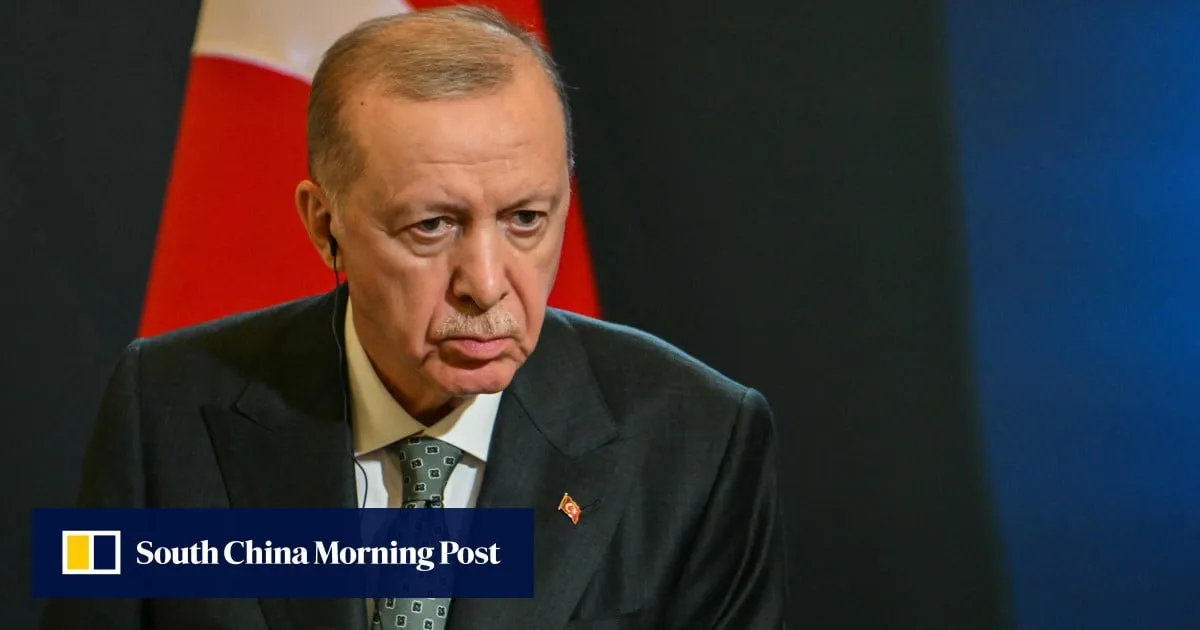
Since the Iran-war" class="entity-link entity-event" data-entity-id="38748" data-entity-type="event">Iran war began in late February, Turkey has positioned itself as a key regional power, an economic bridge and a neutral mediator, condemning both the US-Israeli strikes on Iran and Iran’s retaliatory attacks on Gulf nations.Turkish President Recep Tayyip Erdogan reiterated his country’s support for peace talks in separate phone calls with Iranian President Masoud Pezeshkian and Pakistani Prime Minister Shehbaz Sharif last week.The week before, in a call with US President Donald Trump, Erdogan welcomed the extension of the ceasefire which began in April and expressed optimism that the issues remaining between Washington and Tehran could be resolved.
SRCSouth China Morning Post
LANGEN
LEANCenter-Right
WORDS101
ENT12
MON · 2026-06-01 · 09:00 GMTBRIEF NSR-2026-0601-80802
NSR-2026-0601-80802Analysis·EN·Political Strategy
How ‘strategic ambiguity’ made Turkey a winner in the Iran war
Since the Iran war began in late February, Turkey has adopted a strategy of "strategic ambiguity," positioning itself as a neutral mediator. President Recep Tayyip Erdogan has condemned both US-Israeli strikes on Iran and Iran's retaliatory attacks on Gulf nations.
Fan ChenSouth China Morning PostFiled 2026-06-01 · 09:00 GMTLean · Center-RightRead · 1 min
South China Morning PostFIG 01
Reading time
1min
Word count
101words
Sources cited
0cited
Entities identified
12entities
Quality score
100%
§ 01
Briefing Summary
AI-generatedNEWSAR · AI
Since the Iran war began in late February, Turkey has adopted a strategy of "strategic ambiguity," positioning itself as a neutral mediator. President Recep Tayyip Erdogan has condemned both US-Israeli strikes on Iran and Iran's retaliatory attacks on Gulf nations. Turkey supports peace talks and has reiterated this stance in calls with Iranian President Masoud Pezeshkian and Pakistani Prime Minister Shehbaz Sharif. Additionally, Erdogan welcomed the extension of a ceasefire in a call with US President Donald Trump, expressing optimism for resolving US-Iran issues. This approach has allowed Turkey to emerge as a key regional power and an economic bridge.
Confidence 0.85Claims 4Entities 12
§ 02
Article analysis
Model · rule-basedFraming
Political Strategy
Diplomatic
Tone
Measured
AI-assessed
CalmNeutralAlarmist
Factuality
0.70 / 1.00
Factual
LowHigh
Sources cited
0
No named sources
FewMany
§ 03
Key claims
4 extracted01
Erdogan welcomed the extension of the ceasefire and expressed optimism about resolving US-Tehran issues in a call with US President Donald Trump.
quoteTurkish President Recep Tayyip Erdogan
Confidence
1.00
02
Turkish President Recep Tayyip Erdogan reiterated his country’s support for peace talks in calls with Iranian President Masoud Pezeshkian and Pakistani Prime Minister Shehbaz Sharif.
quoteTurkish President Recep Tayyip Erdogan
Confidence
1.00
03
Turkey condemned both US-Israeli strikes on Iran and Iran’s retaliatory attacks on Gulf nations.
factual
Confidence
0.95
04
Turkey has positioned itself as a key regional power, an economic bridge, and a neutral mediator since the Iran war began.
factual
Confidence
0.90
§ 04
Full report
1 min read · 101 words§ 05
Entities
12 identifiedKey playerOppositionContextPositiveNeutralNegative
People4
Locations5
Topics1
§ 06
Keywords & salience
10 termsiran war
1.00
turkey
0.90
strategic ambiguity
0.90
neutral mediator
0.80
regional power
0.80
iran's retaliatory attacks
0.70
us-israeli strikes
0.70
peace talks
0.60
ceasefire
0.50
turkey's support
0.40
§ 07
Topic connections
Interactive graph Network visualization showing 51 related topics
View Full Graph Person Organization Location Event|Click node to navigate|Edge numbers = shared articles