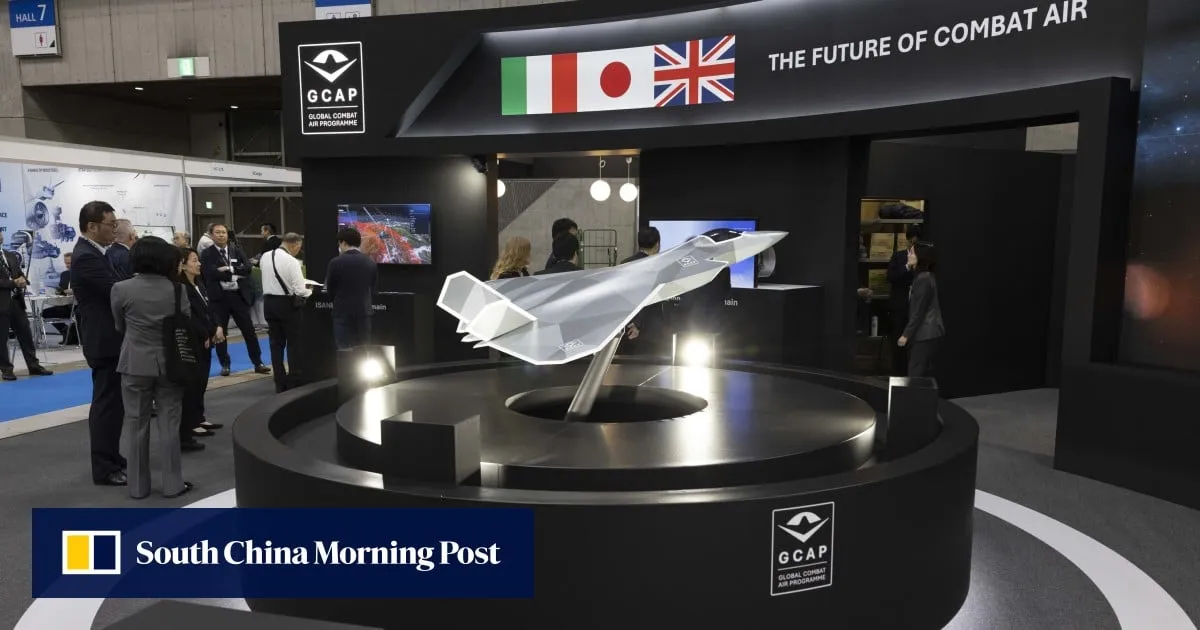
‘Reality check’ for Japan as Britain’s funding shortfall threatens fighter jet projectTokyo is concerned as its ageing fighters need to be replaced and the project lacks a clear development plan and schedule, analysts say4-MIN READ4-MIN5ListenPublished: 8:06am, 2 Jun 2026Japan’s patience with Britain as a defence partner is being tested after reports that funding shortfalls in London could delay a next-generation fighter jet that both countries are developing with Italy.The Global Combat Air Programme, or GCAP, is intended to deliver a new fighter for the three countries by 2035, but The Telegraph reported on Saturday that the aircraft could be delayed by several years because of uncertainty over Britain’s defence spending plans.The report has raised concerns that Japan may have to extend the service life of fighters that GCAP was meant to replace, potentially weakening national security amid growing pressure from China’s expanding air power.Select VoiceSelect Speed0.8x0.9x1.0x1.1x1.2x1.5x1.75x00:0000:001.00x
SRCSouth China Morning Post
LANGEN
LEANCenter-Right
WORDS146
ENT7
TUE · 2026-06-02 · 00:06 GMTBRIEF NSR-2026-0602-81003
NSR-2026-0602-81003News Report·EN·National Security
‘Reality check’ for Japan as Britain’s funding shortfall threatens fighter jet project
Japan's patience with its defense partnership with Britain is strained due to potential delays in the Global Combat Air Programme (GCAP), a next-generation fighter jet project also involving Italy. Reports indicate that funding shortfalls in the UK could push back the delivery of the new aircraft, originally slated for 2035, by several years.
Julian RyallSouth China Morning PostFiled 2026-06-02 · 00:06 GMTLean · Center-RightRead · 1 min
South China Morning PostFIG 01
Reading time
1min
Word count
146words
Sources cited
1cited
Entities identified
7entities
Quality score
100%
§ 01
Briefing Summary
AI-generatedNEWSAR · AI
Japan's patience with its defense partnership with Britain is strained due to potential delays in the Global Combat Air Programme (GCAP), a next-generation fighter jet project also involving Italy. Reports indicate that funding shortfalls in the UK could push back the delivery of the new aircraft, originally slated for 2035, by several years. This uncertainty raises concerns for Japan, which needs to replace its aging fighter jets and faces growing pressure from China's expanding air power. Analysts suggest Japan may have to extend the service life of its current aircraft, potentially impacting national security. The project currently lacks a clear development plan and schedule.
Confidence 0.90Sources 1Claims 4Entities 7
§ 02
Article analysis
Model · rule-basedFraming
National Security
Diplomatic
Tone
Mixed Tone
AI-assessed
CalmNeutralAlarmist
Factuality
0.70 / 1.00
Factual
LowHigh
Sources cited
1
Limited
FewMany
§ 03
Key claims
4 extracted01
The Global Combat Air Programme (GCAP) is intended to deliver a new fighter for Japan, Britain, and Italy by 2035.
factual
Confidence
0.90
02
Britain's funding shortfalls could delay the development of a next-generation fighter jet.
factualThe Telegraph
Confidence
0.80
03
Japan may have to extend the service life of fighters that GCAP was meant to replace, potentially weakening national security.
predictionanalysts
Confidence
0.70
04
Japan's patience with Britain as a defence partner is being tested.
factual
Confidence
0.70
§ 04
Full report
1 min read · 146 words§ 05
Entities
7 identifiedKey playerOppositionContextPositiveNeutralNegative
Organizations1
Locations4
§ 06
Keywords & salience
9 termsfighter jet project
1.00
global combat air programme
0.90
funding shortfall
0.80
defence spending
0.70
national security
0.60
britain
0.50
japan
0.50
italy
0.40
china's air power
0.40
§ 07
Topic connections
Interactive graph Network visualization showing 51 related topics
View Full Graph Person Organization Location Event|Click node to navigate|Edge numbers = shared articles