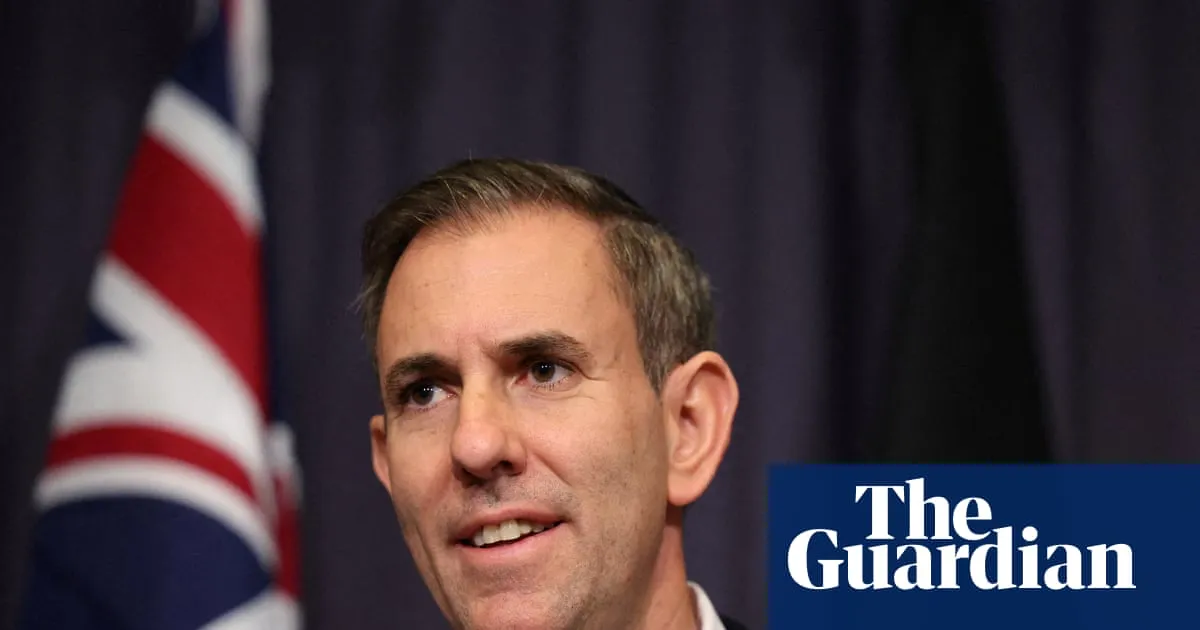
Treasurer Jim Chalmers hailed the boom in Datacentres, which papered over much of the bad news in the economy. Australia has not seen this pace of new business spending since the end of the mining investment boom nearly 15 years ago. Photograph: Hollie Adams/Reuters View image in fullscreen Treasurer Jim Chalmers hailed the boom in Datacentres, which papered over much of the bad news in the economy. Australia has not seen this pace of new business spending since the end of the mining investment boom nearly 15 years ago. Photograph: Hollie Adams/Reuters Analysis Jim Chalmers is putting a positive spin on the economy, but is the outlook for Australia grim? Patrick Commins The economy was slowing even before the Middle East conflict and interest rate hikes started to bite, while the boom in Datacentres was a rare bright spot Get our breaking news email, free app or daily news podcast The economy slowed sharply in early 2026 and Australians’ living standards are once again going backwards. At the risk of upsetting the treasurer by “talking down the economy”, as he put it, there wasn’t all that much to love in the latest national accounts. And a lot of the bad news was papered over by the extraordinary rush to build Datacentres. The economy was indeed running hot in the second half of 2025, which helps explain the pickup in inflationary pressures even before the US and Israel started bombing Iran in late February. That recent strength accentuates the slowdown in the latest figures. After expanding by 0.9% in the December quarter, real GDP growth faltered to just 0.3% in the three months to March. Speaking to the press after the release of the official figures, Jim Chalmers remained laser focused on the annual growth in real GDP, which was steady at 2.5% in the year to March. “This growth is really solid in the circumstances,” the treasurer said. “You think about everything that’s coming at the Australian economy. The fact that we’ve got any growth at all, given the challenging global circumstances, I think is welcome.” He lauded the extraordinary boom in building Datacentres to cater for the looming artificial intelligence revolution. We haven’t seen this pace of new business spending since the end of the mining investment boom nearly 15 years ago. Investment in machinery and equipment – which captures the datacentre phenomenon – was the single largest contributor to growth in the quarter, the Australian Bureau of Statistics said. But that had to be balanced against the fact that most of the parts were imported, the ABS noted, which contributed to the big drag from net trade. Even so, Pat Bustamante, a senior economist at Westpac, reckons that the spillover effects to other parts of the economy from all that datacentre construction still added 0.5 percentage points to total real GDP growth in the quarter, and about 0.8 points to the annual growth rate. “Outside of this, investment and economic activity were weak, with the pick‑up in household consumption offset by a fall in public demand,” Bustamante said. “This shows that the economy was clearly slowing even before the conflict in the Middle East and interest rate hikes had really started to impact.” The pressures are most clearly shown in household incomes that are barely keeping up with inflation, according to Commonwealth Bank analysis. Economic growth per person also went backwards in the March quarter – a sign of falling living standards. That’s the first time in a year that’s happened. Overall consumption was up, but almost all of that was more spending on essentials, like electricity (as rebates rolled off) and fuel (as petrol prices climbed in March). To pay for those additional costs, households saved less. Spending on non-essentials barely budged. The outlook is a bit grim. These national accounts only captured the beginning of the global oil shock, as Chalmers recognised. “When you remember that this data doesn’t capture the worst parts or the worst consequences of the war in the Middle East, then obviously we can expect some challenging times ahead,” he said. The longer the strait of Hormuz remains closed, the worse the effects on the global economy. Overall, it looks set to be a pretty gloomy year, and consumer confidence is certainly down in the dumps. Unemployment is still relatively low, but recently jumped up to 4.5%. A recession as per the technical definition – the economy shrinking for two consecutive quarters – can’t be ruled out. Especially if the Reserve Bank believes it has to keep hiking rates to get inflation under control, despite a weakening economy. But the treasurer, for all his positive spin, is right: we are not in a terrible place leading into the latest global crisis. Patrick Commins is Guardian Australia’s economics editor Explore more on these topics Australian economy Reserve Bank of Australia Jim Chalmers Inflation Cost of living crisis Unemployment Interest rates analysis Share Reuse this content
SRCThe Guardian - World News
LANGEN
LEANCenter-Left
WORDS822
ENT11
WED · 2026-06-03 · 06:49 GMTBRIEF NSR-2026-0603-81355
NSR-2026-0603-81355Analysis·EN·Economic Impact
Jim Chalmers is putting a positive spin on the economy, but is the outlook for Australia grim?
Australia's economy showed a sharp slowdown in early 2026, with living standards declining. Treasurer Jim Chalmers highlighted the boom in datacentre construction, a rare bright spot contributing significantly to business spending and GDP growth.
Patrick ComminsThe Guardian - World NewsFiled 2026-06-03 · 06:49 GMTLean · Center-LeftRead · 4 min
The Guardian - World NewsFIG 01
Reading time
4min
Word count
822words
Sources cited
2cited
Entities identified
11entities
Quality score
100%
§ 01
Briefing Summary
AI-generatedNEWSAR · AI
Australia's economy showed a sharp slowdown in early 2026, with living standards declining. Treasurer Jim Chalmers highlighted the boom in datacentre construction, a rare bright spot contributing significantly to business spending and GDP growth. However, this surge in investment, largely in imported components, was offset by a drag from net trade and weak activity elsewhere. Household consumption increased, but primarily on essentials, leading to reduced savings and stagnant non-essential spending. The national accounts predate the full impact of the Middle East conflict and interest rate hikes, suggesting challenging times ahead, with a technical recession not ruled out.
Confidence 0.90Sources 2Claims 5Entities 11
§ 02
Article analysis
Model · rule-basedFraming
Economic Impact
Technology
Tone
Mixed Tone
AI-assessed
CalmNeutralAlarmist
Factuality
0.60 / 1.00
Mixed
LowHigh
Sources cited
2
Limited
FewMany
§ 03
Key claims
5 extracted01
Investment in machinery and equipment, capturing the datacentre phenomenon, was the single largest contributor to growth in the quarter.
factualAustralian Bureau of Statistics
Confidence
1.00
02
Real GDP growth faltered to just 0.3% in the three months to March.
statisticAustralian Bureau of Statistics
Confidence
1.00
03
Treasurer Jim Chalmers hailed the boom in datacentres as a positive economic indicator.
quoteJim Chalmers
Confidence
1.00
04
Australia has not seen this pace of new business spending since the end of the mining investment boom nearly 15 years ago.
statisticArticle
Confidence
0.90
05
The economy slowed sharply in early 2026 and Australians’ living standards are once again going backwards.
factualArticle
Confidence
0.80
§ 04
Full report
4 min read · 822 words§ 05
Entities
11 identifiedKey playerOppositionContextPositiveNeutralNegative
Organizations1
Locations4
§ 06
Keywords & salience
10 termsaustralian economy
1.00
datacentres
0.90
business spending
0.80
economic outlook
0.70
gdp growth
0.60
artificial intelligence
0.50
mining investment boom
0.50
inflationary pressures
0.40
jim chalmers
0.40
living standards
0.40
§ 07
Topic connections
Interactive graph No topic relationship data available yet. This graph will appear once topic relationships have been computed.