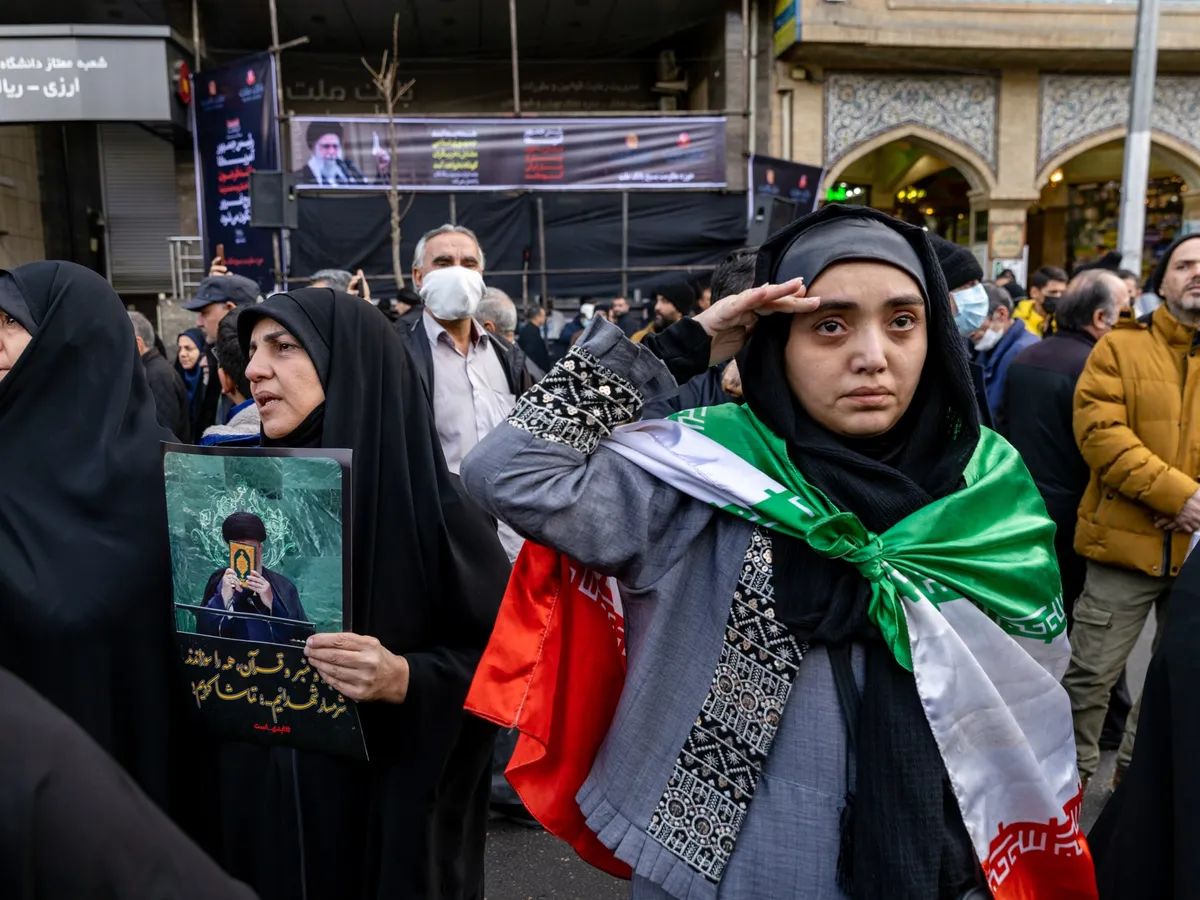
Officials promise a gradual return of internet connectivity after weeks of deadly protests.A woman gestures during a mass funeral held for over 100 members of the security forces whom authorities said were killed during recent nationwide protests, on January 14, 2026 outside Tehran University in Tehran, Iran [Stringer/Getty Images]Published On 17 Jan 2026Iran has begun easing sweeping communication restrictions imposed after deadly antigovernment protests rocked the country for more than two weeks.The semiofficial Fars News Agency on Saturday said authorities restored the short messaging service (SMS) nationwide as part of a phased plan after eight days of near-total internet disruption.Recommended Stories list of 4 itemslist 1 of 4US-Iran tensions: Trump has no path to an easy ‘win’ despite Tehran’s woeslist 2 of 4Iran in limbo: What’s next for country under internet blackout?list 3 of 4Iran says 3,000 people arrested as antigovernment protests subsidelist 4 of 4Analysis: Why a ‘quick and clean’ US attack on Iran won’t be easyend of listQuoting officials, the agency reported that the decision followed what it described as the stabilisation of the security situation and the detention of key figures linked to “terror organisations” behind the violence during protests over rising prices and economic hardship that erupted on December 28 in several Iranian cities.Authorities said the internet blackout had “significantly weakened the internal connections of opposition networks abroad” and disrupted the activities of the “terror cells”.They said they would gradually lift other internet and communications controls. In the second phase, users are expected to regain access to Iran’s national internet network and domestic applications, before international internet connectivity is restored in a final stage.Local sources said access to Iranian messaging platforms, including Eita and Bale, had resumed after days of interruption.No timelineReporting from the capital, Tehran, via satellite, Al Jazeera correspondent Resul Serdar Atas said daily life has been profoundly affected by the prolonged shutdown of the internet.“People are feeling that they’re living almost 30 years back, when there was very limited internet around,” he said.Officials say the restoration will follow a phased approach. “Now the SMS services are restored. It has been, as of now, around 10 hours since this service was restored,” Atas said on Saturday morning, adding that no clear timeline has been provided for the phased restoration of internet access.The only official guidance so far has come from Iran’s Foreign Minister Abbas Araghchi, who has said connectivity will return “soon” – a promise Atas said remains vague.The blackout has compounded economic pressures that initially fuelled the unrest, our correspondent said.“It is, of course, having a huge impact on business as well. The main trigger of this protest was the economic hardship that Iranians are facing on a daily basis, and this large internet blackout is further complicating and destabilising the economy here,” he said.“As long as this internet blackout is in place, the sense of normalcy is not going to return.”Meanwhile, tensions remain high in Iran despite the protests being relatively subdued in recent days.Iran’s Supreme Leader Ayatollah Ali Khamenei on Saturday said Iran considers United States President Donald Trump a “criminal” for inflicting casualties, damage and slander on the Iranian people during the protests.“The latest anti-Iran sedition was different in that the US president personally became involved,” Iranian media quoted Khamenei as saying.Officials say some 3,000 people have been arrested over the protests. There is still no confirmed death toll, though US-based rights group, HRANA, says a further 3,000 have been killed in the protests.Atas reported that “more than 100 security personnel and hundreds of civilians and protesters have been killed,” with figures likely to change as inquiries proceed.Officials said the government was “fully aware of its human rights obligations” and had taken “all necessary measures to exercise maximum restraint” while also fulfilling its “duty to protect its people and maintain public order and national security”.Despite the partial easing of communication facilities, monitoring groups say overall connectivity remains severely limited. Internet watchdog NetBlocks said its data showed a slight increase in connectivity on Saturday morning, but overall access remained at about 2 percent of normal levels.“There is no indication of a significant return,” the group said in a post on X, suggesting that most Iranians remain largely offline as uncertainty continues over when full access will be restored.
SRCAl Jazeera
LANGEN
LEANCenter
WORDS707
ENT8
SAT · 2026-01-17 · 10:44 GMTBRIEF NSR-2026-0117-8198
NSR-2026-0117-8198News Report·EN·National Security
Iran restores SMS as phased rollback of internet blackout begins
Following weeks of deadly anti-government protests, Iran has begun a phased rollback of internet restrictions, starting with the restoration of SMS services nationwide on January 17, 2026. The move comes after authorities claim to have stabilized the security situation and detained individuals linked to violence during protests that began on December 28 over rising prices and economic hardship.
Al JazeeraFiled 2026-01-17 · 10:44 GMTLean · CenterRead · 3 min
Al JazeeraFIG 01
Reading time
3min
Word count
707words
Sources cited
4cited
Entities identified
8entities
Quality score
100%
§ 01
Briefing Summary
AI-generatedNEWSAR · AI
Following weeks of deadly anti-government protests, Iran has begun a phased rollback of internet restrictions, starting with the restoration of SMS services nationwide on January 17, 2026. The move comes after authorities claim to have stabilized the security situation and detained individuals linked to violence during protests that began on December 28 over rising prices and economic hardship. Officials stated the internet blackout weakened opposition networks and disrupted "terror cells." The restoration will occur in phases, first with the national internet network and domestic applications, followed by international internet connectivity. The prolonged shutdown has significantly impacted daily life in Iran, according to reports. A timeline for the complete restoration of internet access has not been provided.
Confidence 0.90Sources 4Claims 5Entities 8
§ 02
Article analysis
Model · rule-basedFraming
National Security
Economic Impact
Tone
Measured
AI-assessed
CalmNeutralAlarmist
Factuality
0.70 / 1.00
Factual
LowHigh
Sources cited
4
Well sourced
FewMany
§ 03
Key claims
5 extracted01
Iran has begun easing sweeping communication restrictions after deadly antigovernment protests.
factual
Confidence
1.00
02
Authorities restored the short messaging service (SMS) nationwide as part of a phased plan.
factualFars News Agency
Confidence
0.90
03
Authorities said the internet blackout had “significantly weakened the internal connections of opposition networks abroad”.
quoteauthorities
Confidence
0.80
04
The decision followed the stabilisation of the security situation and the detention of key figures linked to “terror organisations”.
quoteofficials
Confidence
0.80
05
Connectivity will return “soon”.
quoteAbbas Araghchi
Confidence
0.60
§ 04
Full report
3 min read · 707 words§ 05
Entities
8 identifiedKey playerOppositionContextPositiveNeutralNegative
§ 06
Keywords & salience
9 termsinternet blackout
1.00
internet connectivity
0.80
sms
0.70
protests
0.70
communication restrictions
0.60
security situation
0.50
phased rollback
0.50
economic hardship
0.50
opposition networks
0.40
§ 07
Topic connections
Interactive graph Network visualization showing 51 related topics
View Full Graph Person Organization Location Event|Click node to navigate|Edge numbers = shared articles