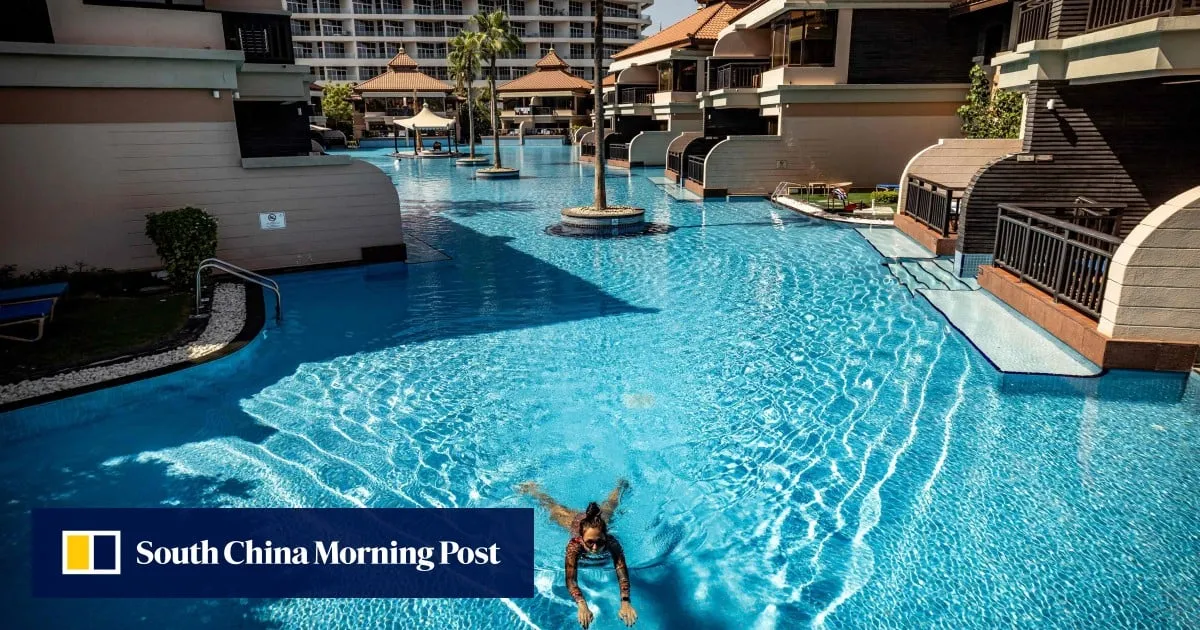
Once reserved for wealthy travellers, Dubai’s top-notch hotels have become almost exclusively reliant on residents, drawn in by dizzying staycation offers as war drives tourists away.On the Palm, an artificial island that has become synonymous with Dubai opulence, five-star hotels are busy on weekends and holidays once more, despite having been deserted by tourists.The clientele is driven by hotels offering residents-only deals that have become a lifeline for Dubai’s luxury tourism.“I had never been in a hotel on the Palm because the prices were crazy,” said Fadi Iskandarani, a doctor in his sixties who just spent his first weekend at a luxury resort on the tree-shaped island.The Lebanese national, who has lived in Dubai for five years, decided to opt for a staycation after he saw that a hotel on the Palm had slashed its rates by a factor of four.The hotel was not packed, with some floors closed because there were not enough guests.But the poolside area was filled with people, he said, who came to the Palm to enjoy a slice of luxury that had long been unattainable.A man walks inside a villa at the Dubai-resort" class="entity-link entity-organization" data-entity-id="141634" data-entity-type="organization">Anantara The Palm Dubai Resort. Photo: AFP“Luxury in Dubai has become affordable for residents, before it was just for the rich, very rich people,” he said.With 19.5 million yearly tourists, Dubai is among the region’s top destinations and was long seen as a playground for the world’s rich and famous.Its 827 hotels, including 173 five-star establishments, boasted an average occupancy rate of more than 80 per cent.But the war, which was triggered by Iran" class="entity-link entity-event" data-entity-id="41132" data-entity-type="event">US-Israeli strikes on Iran on February 28, shattered the Gulf’s image as a haven of stability, with Tehran directing its fury at the oil-rich region.Further ReadingThe United Arab Emirates bore the brunt of Iran’s missiles and drones, which hit hotels, including on the Palm, as well as its landmark Burj Al Arab resort.Since a shaky ceasefire came into effect on April 8, some tourists have trickled in, but hotels are mostly relying on local guests, said Michael Robinson, the general manager of the Dubai-resort" class="entity-link entity-organization" data-entity-id="141634" data-entity-type="organization">Anantara The Palm Dubai Resort.People sit along the beach at the Dubai-resort" class="entity-link entity-organization" data-entity-id="141634" data-entity-type="organization">Anantara The Palm Dubai Resort. Photo: AFPWith its overwater villas, artificial lagoons and Thai-inspired decor, the luxury hotel is packed with Dubai residents, who get special discounts of up to 50 per cent.On Fridays and Saturdays, hotel occupancy sits between 70 and 90 per cent, he said.Sunday through to Thursday, it has an average occupancy of around 20 to 30 per cent.This new clientele has offered hotels a lifeline, allowing Anantara The Palm to remain “cash positive” without resorting to lay-offs.But staycations are not enough on the long term.“Your staycation business is essentially one to two nights and that’s it … Whereas previously, the international market, they might come for one week,” Robinson said.Should tourists stay away come July, when schools are closed and many families return home for the summer, “there won’t be as many people wishing to do staycations”, he said.01:41Dubai-based influencers post videos praising leadership as Iranian strikes target citySome hotels, including Burj Al Arab, have temporarily closed for renovations as business slowed.Others have cut staff or salaries, particularly hotels in downtown Dubai, which are dependent on business tourism.An employee at one Dubai hotel, who spoke on condition of anonymity, said his salary had been cut by up to 40 per cent during and after the war, before it returned to normal in recent weeks.Another employee, at a hotel in neighbouring Abu Dhabi, said he was put on unpaid leave for two months but that he is set to return to work soon with his salary restored.Talks to end the war have dragged on for two months and sporadic strikes still punctuate life in the Gulf, straining tourism.Yet, Robinson remains hopeful.“If we see some form of resolution in the next month or so … I think you’ll see tourists come back faster than everyone anticipates,” he said.
SRCSouth China Morning Post
LANGEN
LEANCenter-Right
WORDS654
ENT12
SUN · 2026-06-07 · 03:49 GMTBRIEF NSR-2026-0607-82331
NSR-2026-0607-82331News Report·EN·Economic Impact
How Iran war allows residents to indulge in opulence at Dubai’s luxury hotels
Dubai's luxury hotels, once reliant on international tourists, are now primarily catering to residents through discounted staycation offers. This shift occurred after a war, triggered by US-Israeli strikes on Iran, impacted the region's stability and deterred foreign visitors, with the UAE experiencing missile and drone attacks.
Agence France-PresseSouth China Morning PostFiled 2026-06-07 · 03:49 GMTLean · Center-RightRead · 3 min
South China Morning PostFIG 01
Reading time
3min
Word count
654words
Sources cited
2cited
Entities identified
12entities
Quality score
100%
§ 01
Briefing Summary
AI-generatedNEWSAR · AI
Dubai's luxury hotels, once reliant on international tourists, are now primarily catering to residents through discounted staycation offers. This shift occurred after a war, triggered by US-Israeli strikes on Iran, impacted the region's stability and deterred foreign visitors, with the UAE experiencing missile and drone attacks. Hotels on artificial islands like the Palm are seeing increased weekend and holiday occupancy from locals who can now afford previously unattainable luxury experiences. While these resident deals have provided a lifeline, allowing some hotels to remain profitable, they are not a long-term solution as they typically involve shorter stays compared to international visitors. Some hotels have faced challenges, including temporary closures and staff salary reductions, but there is hope for a tourism rebound if the conflict resolves.
Confidence 0.90Sources 2Claims 5Entities 12
§ 02
Article analysis
Model · rule-basedFraming
Economic Impact
Conflict
Tone
Measured
AI-assessed
CalmNeutralAlarmist
Factuality
0.70 / 1.00
Factual
LowHigh
Sources cited
2
Limited
FewMany
§ 03
Key claims
5 extracted01
Luxury in Dubai has become affordable for residents, whereas before it was only for the very rich.
quoteFadi Iskandarani
Confidence
1.00
02
The Anantara The Palm Dubai Resort offers residents discounts of up to 50% and sees 70-90% occupancy on weekends.
statisticMichael Robinson
Confidence
0.95
03
Staycation business is not enough long-term for hotels compared to international tourists who might stay for a week.
quoteMichael Robinson
Confidence
0.90
04
Dubai's luxury hotels are now reliant on residents due to staycation offers, as war drives tourists away.
factual
Confidence
0.90
05
The war, triggered by US-Israeli strikes on Iran on February 28, shattered the Gulf's image as a haven of stability.
factual
Confidence
0.80
§ 04
Full report
3 min read · 654 words§ 05
Entities
12 identifiedKey playerOppositionContextPositiveNeutralNegative
Locations4
Events3
§ 06
Keywords & salience
8 termsdubai luxury hotels
1.00
staycation offers
0.90
iran war
0.80
residents indulgence
0.70
tourism impact
0.60
affordability
0.50
the palm dubai
0.40
hotel occupancy
0.40
§ 07
Topic connections
Interactive graph Network visualization showing 49 related topics
View Full Graph Person Organization Location Event|Click node to navigate|Edge numbers = shared articles