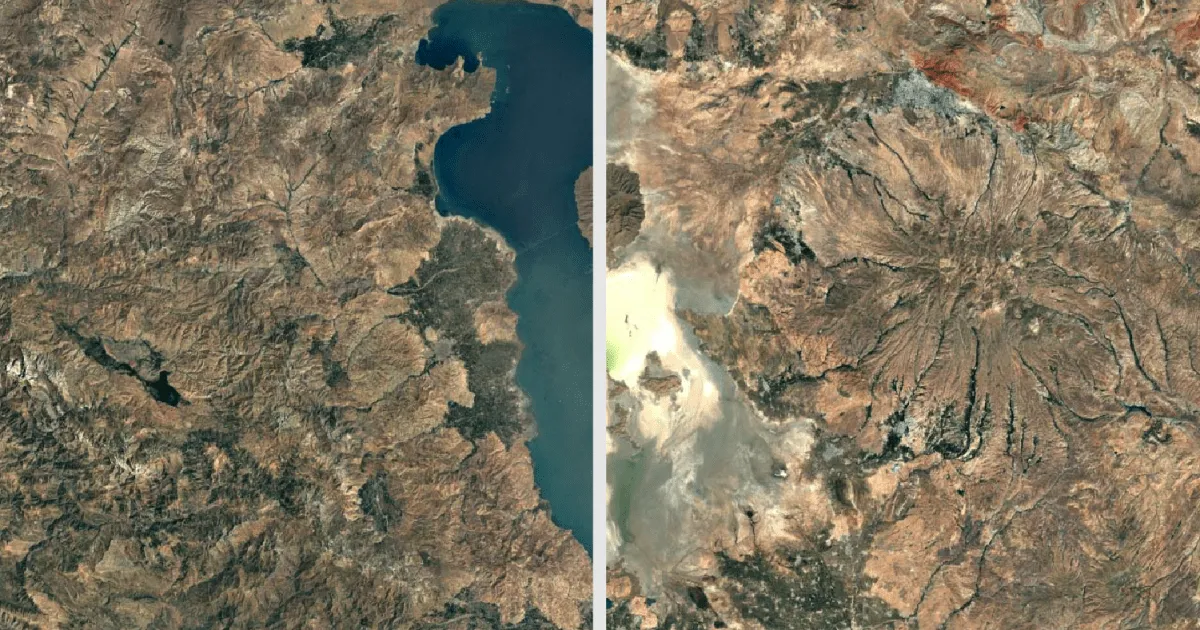
EXPLAINERYears of drought, falling rainfall and unsustainable water use have been worsened further by the US-Israel war.Dried-up fish lie on the shore of dried Lake Hamun near Zabol, Iran [File: Mohammad Dehdast/Picture alliance via Getty Images]Published On 9 Jun 2026For many Iranians, the most immediate threat is no longer just war, but water.Years of drought, falling rainfall and unsustainable water use have pushed the country into severe water stress, depleting reservoirs, rivers and groundwater reserves. The Israel-war-on-Iran" class="entity-link entity-event" data-entity-id="38678" data-entity-type="event">US-Israel war on Iran has added further strain after reports of damage to desalination plants, pipelines and other civilian water infrastructure in the early weeks of the conflict.Iran is classified by the World Resources Institute as facing “extremely high” baseline water stress, using more than 80 percent of its renewable water supplies each year.In this visual explainer, Al Jazeera breaks down Iran’s worsening water crisis and what is driving it.How Lake Urmia disappearedOne of the most striking examples of Iran’s water crisis can be seen from space.A time-lapse display of Lake Urmia in northwestern Iran shows how the largest saltwater lake in the Middle East, which covered nearly 6,000sq km (2,300sq miles) in the 1990s, shrunk to just 581sq km (224sq miles), less than 10 percent of its former size.A time-lapse view of Lake Urmia from 1990 to 2026 [Google Earth]Consecutive droughts, agricultural water use, river diversion, and groundwater extraction have transformed vast stretches of Lake Urmia into exposed salt flats.More than 60 dams built on its feeder rivers choked off inflows, while farmers diverted water into irrigation channels and decades of groundwater extraction drained the aquifers below. Rising temperatures accelerated evaporation as precipitation fell.A view of Lake Urmia in 2014 [Kaveh Kazemi/Getty Images]Iran’s growing water deficitTo sustain its freshwater resources, a country must replenish at least as much water as it withdraws for agriculture, industry, and household use.Iran has long been on the wrong side of that equation. Decades of dam construction, intensive farming, and groundwater extraction have pushed consumption far beyond what rainfall can replenish.In 2025, Iran’s 92 million people consumed around 100 billion cubic metres of water, nearly 13 billion more than its renewable resources could provide.Agriculture is by far the largest consumer of water in Iran, accounting for about 91 percent of all withdrawals, compared with seven percent for households and two percent for industry. Yet much of that water is lost before it reaches crops, as ageing and inefficient irrigation systems waste a significant share of the country’s most precious resource.Disappearing dams around TehranIran is one of the world’s major dam-building countries, and has constructed hundreds of large and small dams to store water, generate electricity, and manage shortages.In recent years, dozens of reservoirs have dropped to extremely low levels, leaving several to nearly run dry.Before-and-after satellite imagery of Lar Dam, Latyan Dam and Mamloo Dam, all clustered around Tehran and the southern slopes of the Alborz mountains and forming part of the main water supply system for the capital region, reveals how water levels have declined over time as drought and rising demand strain Tehran’s water system.drought displacing thousandsWater scarcity is increasingly reshaping where Iranians can live.As wells run dry and farming becomes harder to sustain, many families are leaving rural communities in search of more secure livelihoods. According to Abdolkarim Hosseinzadeh, Iran’s vice president for Rural Development and Disadvantaged Regions, only 38,000 of the country’s 69,000 villages remain inhabited, while 31,000 villages have been abandoned.The pressure extends far beyond abandoned settlements. According to Iran’s state-owned Water and Wastewater Company, about 27,000 villages, home to more than 10 million people, are currently experiencing water shortages. In total, more than 70 percent of Iran’s villages are facing some form of water crisis.Many migrants head towards major cities such as Tehran, Mashhad, Isfahan, and Shiraz. Yet these cities are facing water pressures of their own. Home to more than nine million people, Tehran has seen growing strain on its water system as drought and demand continue to rise.The map below shows how Iran’s population is concentrated in the western half of the country. Today, roughly 75 percent of Iranians live on less than 40 percent of the country’s land area, concentrating both people and water demand in a relatively small region.The effects of water scarcity can also be seen along the Zayandehrud River, once one of central Iran’s most important waterways.Satellite imagery of Zayandehrud Dam reveals declining water levels upstream after years of drought and overuse.Further downstream, the consequences become visible in the heart of Isfahan. The historic Allahverdi Khan Bridge (Si-o-Se Pol) was built over a river that sustained the city for centuries.Today, residents increasingly encounter dry riverbeds beneath its arches as sections of the Zayandehrud repeatedly run dry.Desalination accounts for only about three percent of Iran’s water needs, a stark contrast to Gulf neighbours, which depend on it for the majority of their drinking water.Most of Iran’s desalination plants are located along its southern coast on the Gulf. As a result, desalination is largely concentrated in coastal cities, while inland areas such as Tehran, Isfahan and most agricultural regions rely on other water sources.
SRCAl Jazeera
LANGEN
LEANCenter
WORDS846
ENT12
TUE · 2026-06-09 · 06:38 GMTBRIEF NSR-2026-0609-82903
NSR-2026-0609-82903News Report·EN·Environmental
Iran’s lakes are vanishing: Satellite images show a deepening water crisis
Iran is facing a severe water crisis driven by years of drought, declining rainfall, and unsustainable water use, exacerbated by damage to water infrastructure during the US-Israel war. Satellite imagery reveals the dramatic shrinking of major lakes like Urmia, which has lost over 90% of its size due to dam construction, agricultural diversion, and groundwater extraction.
Mohamed HusseinAl JazeeraFiled 2026-06-09 · 06:38 GMTLean · CenterRead · 4 min
Al JazeeraFIG 01
Reading time
4min
Word count
846words
Sources cited
2cited
Entities identified
12entities
Quality score
100%
§ 01
Briefing Summary
AI-generatedNEWSAR · AI
Iran is facing a severe water crisis driven by years of drought, declining rainfall, and unsustainable water use, exacerbated by damage to water infrastructure during the US-Israel war. Satellite imagery reveals the dramatic shrinking of major lakes like Urmia, which has lost over 90% of its size due to dam construction, agricultural diversion, and groundwater extraction. The country's water consumption significantly exceeds its renewable resources, with agriculture accounting for 91% of withdrawals. This scarcity is displacing thousands, with over 31,000 villages abandoned and millions facing water shortages, leading to migration towards already strained urban centers.
Confidence 0.90Sources 2Claims 5Entities 12
§ 02
Article analysis
Model · rule-basedFraming
Environmental
Conflict
Tone
Mixed Tone
AI-assessed
CalmNeutralAlarmist
Factuality
0.80 / 1.00
Factual
LowHigh
Sources cited
2
Limited
FewMany
§ 03
Key claims
5 extracted01
Iran is classified as facing 'extremely high' baseline water stress, using over 80% of its renewable water supplies annually.
statisticWorld Resources Institute
Confidence
1.00
02
Agriculture accounts for approximately 91% of water consumption in Iran.
statistic
Confidence
0.95
03
Lake Urmia, once the largest saltwater lake in the Middle East, has shrunk from nearly 6,000 sq km in the 1990s to just 581 sq km.
statistic
Confidence
0.95
04
In 2025, Iran's population consumed around 100 billion cubic metres of water, exceeding its renewable resources by nearly 13 billion cubic metres.
statistic
Confidence
0.90
05
Years of drought, falling rainfall, and unsustainable water use have worsened Iran's water crisis, exacerbated by the US-Israel war damaging water infrastructure.
factual
Confidence
0.90
§ 04
Full report
4 min read · 846 words§ 05
Entities
12 identifiedKey playerOppositionContextPositiveNeutralNegative
Locations6
§ 06
Keywords & salience
10 termsiran
1.00
water crisis
1.00
drought
0.90
lake urmia
0.80
water use
0.70
groundwater extraction
0.60
rainfall
0.60
agriculture
0.50
us-israel war
0.40
water infrastructure
0.40
§ 07
Topic connections
Interactive graph No topic relationship data available yet. This graph will appear once topic relationships have been computed.