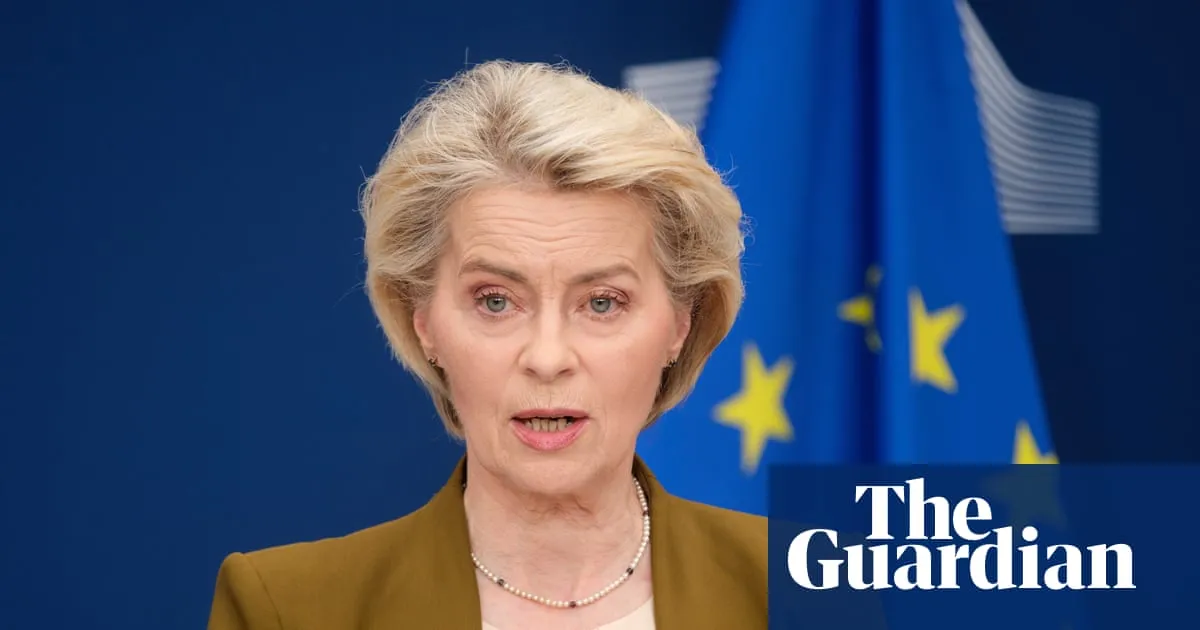
The EU hopes to ban Russian soldiers from entering its territory as part of further sanctions against Moscow that also target banks, crypto firms and the Kremlin’s oil revenues.Announcing the proposals on Tuesday, the European Commission president, Ursula von der Leyen, said: “We propose for the first time to ban from entry into the European Union anyone who has served in the Russian armed forces since the beginning of the war. So Europe stays off limit for anyone who has participated in the Ukraine" class="entity-link entity-event" data-entity-id="143185" data-entity-type="event">Invasion of Ukraine, as simple as that.”The proposed visa ban on combatants is part of the EU’s latest tightening of sanctions against Russia, proposals that could be amended and must be agreed unanimously by 27 member states.“Our sanctions keep biting hard and cutting deep. They are weakening the economic foundations of Russia’s war effort,” von der Leyen said as she introduced the plans, the 21st set of measures since Moscow’s full-scale Ukraine" class="entity-link entity-event" data-entity-id="143185" data-entity-type="event">Invasion of Ukraine in February 2022.The commission also wants to maintain a price cap on Russian oil at $44 until January 2027, which would prevent the Kremlin reaping gains from rising crude prices resulting from the closure of the strait of Hormuz.“We want to maintain the full intensity of our sanctions,” von der Leyen said.EU officials also want to add 30 “shadow fleet” vessels helping Russia evade western sanctions to its blacklist, in addition to 632 already under restrictions.Dashan, a tanker from Russia’s ‘shadow fleet’, transits the Bosphorus en route to the Black Sea in December 2025. Photograph: Yoruk Isik/ReutersIn addition, Brussels wants to extend sanctions against cryptocurrency firms that are helping Russia cope with being shut out of western capital markets. It proposes placing sanctions on 20 banks, crypto firms and oil traders in third countries deemed to be helping Russia dodge sanctions.Estonia put a ban on Russian ex-combatants on the agenda earlier this year. Its foreign minister, Margus Tsahkna, told reporters in January that a visa ban was necessary for Europe’s security.“Putin will push these people to Europe,” he said, citing continuing hybrid attacks by Russian agencies in the EU. “Can you imagine these hundreds of thousands of ex-combatants, criminals coming here? I am sure they are not going to just work and pay all taxes. No, they are going to do many bad things.”Von de Leyen also confirmed the decision to move ahead with Ukraine’s negotiations to join the EU. The bloc is expected to open the first set of negotiating chapters – on the rule of law and democratic standards – in accession talks with Ukraine and Moldova next week.“This basically opens the door to the next phase of the accession process, the formal start of negotiations,” she said.The latest sanctions proposals extend for the first time to Russian fish imports, with a potential ban on cod and restrictions on trade in other species.The EU also intends to ban the import of Russian metals, ores and car parts worth €60m (£52m) as part of continuing attempt to restrict economic ties.EU export restrictions are proposed for metals and alloys used in the aerospace and defence industries, including drone equipment and launch systems.Missing from the sanctions list were EU alumina exports, which have come under the spotlight since investigative journalists revealed details of how the raw material needed to produce aluminium and refined in Ireland feeds into Russian supply chains.Alumina is shipped from the Russian-owned Aughinish plant in County Limerick to Siberia, where it is smelted into aluminium to supply Russian factories.An investigation by the Organized Crime and Corruption Reporting Project and partners including the Guardian and the Irish Times revealed that alumina refined in Ireland fed into a Russian supply chain that appeared to conclude with arms firms making lethal weapons used in Ukraine.The EU foreign policy chief, Kaja Kallas, was expected to raise the issue when she met the taoiseach, Micheál Martin, in Dublin on Tuesday, a few weeks before Ireland takes over the rotating presidency of the EU council.The revelations appear to contradict assurances from the Irish government in 2022 that the plant was “not in any way connected to a war machine”. It said in March: “The general principle of EU Russia" class="entity-link entity-topic" data-entity-id="135161" data-entity-type="topic">Sanctions on Russia is that their imposition does not have a greater impact on a European member state than on Russia itself.”The Aughinish plant employs 900 people and supplies about 30% of the EU’s alumina, used in everything from medical devices to mobiles phones.EU officials say there are no alternatives to bauxite, the primary ore for aluminium, or alumina that are not controlled by Russian or Chinese firms.
SRCThe Guardian - World News
LANGEN
LEANCenter-Left
WORDS759
ENT12
TUE · 2026-06-09 · 15:12 GMTBRIEF NSR-2026-0609-83035
NSR-2026-0609-83035News Report·EN·Political Strategy
EU plans to ban Russian soldiers from bloc in fresh sanctions on Moscow
The European Union is proposing its 21st set of sanctions against Russia, which includes a potential ban on Russian soldiers who have served since the start of the Ukraine invasion from entering the bloc. European Commission President Ursula von der Leyen announced these proposals, which also target banks, crypto firms, and Russian oil revenues.
Jennifer Rankin in BrusselsThe Guardian - World NewsFiled 2026-06-09 · 15:12 GMTLean · Center-LeftRead · 4 min
The Guardian - World NewsFIG 01
Reading time
4min
Word count
759words
Sources cited
3cited
Entities identified
12entities
Quality score
100%
§ 01
Briefing Summary
AI-generatedNEWSAR · AI
The European Union is proposing its 21st set of sanctions against Russia, which includes a potential ban on Russian soldiers who have served since the start of the Ukraine invasion from entering the bloc. European Commission President Ursula von der Leyen announced these proposals, which also target banks, crypto firms, and Russian oil revenues. The EU aims to maintain the oil price cap at $44 until 2027 and blacklist additional "shadow fleet" vessels used to evade sanctions. The proposals, which require unanimous agreement from member states, also extend to Russian fish and metal imports, as well as car parts. These measures are intended to weaken Russia's economic foundations and its war effort.
Confidence 0.90Sources 3Claims 5Entities 12
§ 02
Article analysis
Model · rule-basedFraming
Political Strategy
Conflict
Tone
Measured
AI-assessed
CalmNeutralAlarmist
Factuality
0.80 / 1.00
Factual
LowHigh
Sources cited
3
Well sourced
FewMany
§ 03
Key claims
5 extracted01
Estonia previously advocated for a visa ban on Russian ex-combatants for Europe's security.
quoteMargus Tsahkna
Confidence
1.00
02
The EU proposes banning Russian soldiers from entering the EU as part of new sanctions against Moscow.
quoteUrsula von der Leyen
Confidence
1.00
03
The EU is expected to open the first set of negotiating chapters for Ukraine's accession talks next week.
factual
Confidence
0.90
04
The EU plans to maintain the oil price cap at $44 until January 2027.
factual
Confidence
0.90
05
The proposed sanctions also target banks, crypto firms, oil revenues, and Russian fish and metal imports.
factual
Confidence
0.90
§ 04
Full report
4 min read · 759 words§ 05
Entities
12 identifiedKey playerOppositionContextPositiveNeutralNegative
People3
Organizations2
Locations5
§ 06
Keywords & salience
10 termseu sanctions
1.00
russian soldiers visa ban
1.00
moscow
0.90
ukraine invasion
0.80
russian oil revenues
0.70
crypto firms
0.60
shadow fleet
0.50
european commission
0.50
price cap
0.40
eu membership negotiations
0.40
§ 07
Topic connections
Interactive graph Network visualization showing 51 related topics
View Full Graph Person Organization Location Event|Click node to navigate|Edge numbers = shared articles