People always talk knowingly about Weimar, a period of extremes: artistic and social-sexual decadence, democratic liberalism and the radicalisation of the left and the right, before Germany’s descent into Hitlerian hell. The city as a symbol, close to the site of the former Buchenwald concentration camp, is back in the news, well, at least the op-ed pages of the Western press.That’s rarely a good sign. “The new crisis [in Germany] seems uncomfortably familiar because, in some respects, it resembles the one that engulfed the Weimar Republic a century ago,” Katja Hoyer, author of Weimar: Life on the Edge of Catastrophe, wrote in Bloomberg.I leave it to erudite commentators to fret about the return of Weimar as a political metaphor and its implications for the future of Germany and Europe.Those of us from Asia ought to reflect more on something similar but usually ignored: the Taisho period in Japan. This liberal but unstable period partially coincided with Weimar and was essentially the Japanese version of it. And, of course, it was followed by the Early Showa period, which was characterised by fanatical militarism that eventually turned most of Asia into a living hell.Today, after a long period of pacifism, hardline Japanese Prime Minister Sanae Takaichi and her right-wing cabinet openly embrace rearmament and remilitarisation. Going nuclear could again be on the political agenda. All this risks a regional arms race, all cheered on by the United States and the European Union.But it looks eerily like a repeat of the Taisho period before all hell broke loose. No wonder Japan’s neighbours are unnerved.A view of Tokyo Station, circa 1920. Photo: Hulton Archive/Getty ImagesThe Taisho emperor inherited the social, political and technological advances from the Meiji reforms and Westernisation process, but also the powerful oligarchs who got rich during the Meiji period. During his reign, universal male suffrage was established for men over 25, and labour rights and unionisation expanded quickly, that is, until the military crackdown on socialists and unions in the 1930s. Japanese feminism emerged from this period, and the Japanese Communist Party, which is still active today, was established.But class warfare intensified, along with the rise of the extreme left and right. Like Weimar Germany, Taisho Japan was destabilised by political violence, murders, riots and assassinations. In 1921, the country’s prime minister, Takaishi Hara, was assassinated. Shinzo Abe’s murder a century later was the latest in a long history of political violence.Even the beating to death of famous anarchist Sakae Osugi and his lover, the radical feminist Noe Ito, by military police in Tokyo – part of a looming crackdown on dissent – mirrored the murders of Marxist revolutionaries Rosa Luxembourg and Karl Liebknecht in Berlin by the Freikorps, a government-controlled right-wing paramilitary group.But also like Weimar, Taisho was a period of Westernised sexual liberation and artistic flowering, summarised by the Japanese phrase ero guro nansensu – erotic, grotesque nonsense. It wasn’t just the emergence of modern Japanese art forms; Bauhaus, coming out of post-war Germany, made its way into Taisho Japan.Japan Ground Self-Defence Force soldiers seen in front of a Type 88 surface-to-ship missile launcher, during the annual Balikatan joint military exercises between the US and the Philippines, at Culili Point Sand Dunes, Paoay, Ilocos Norte province, in the Philippines, on May 6. Photo: ReutersDemocratic liberalism, licentiousness, decadence and political radicalisation – these were exciting and dangerous in Berlin and Tokyo. But in a tragic historical twist, they all ended up in their opposites, spelling catastrophe not only for their countries, but for the world.Further ReadingToday, Western leaders and pundits are extracting a sensationalist lesson from Weimar, just as they do even with “Munich” as a political metaphor. And they duly ignore Taisho. That is all part and parcel of the West’s post-war distortion and selective memory about Germany and Japan.That’s even more obvious now with the West’s warmongering in Ukraine and its containment strategy against China by remilitarising Japan.The collapse of “Weimar” is a useful liberal propaganda tool against the rise of the far-right Alternative for Germany and the hard-left Left Party. Interestingly, both parties advocate a quick end to the war in Ukraine. The mainstream coalition parties, including the traditionally anti-war Greens, have been the most enthusiastic about arming Ukraine, defeating Russia and expanding Nato.06:06Place of controversy: Japan’s Yasukuni ShrineIn Japan, it’s the opposite. As the mainstream ruling Liberal Democratic Party becomes increasingly militant under Takaichi, alarming even the party’s old guard, the West doesn’t just approve but actively encourages Japan’s erosion of its post-war pacifist constitution and return to great power status in Asia.That’s why it’s convenient to forget the tragedy of the Taisho period, lest it remind everyone of Japan’s fleeting experiment with liberal democracy before its slide into militarism. But the people of Asia remember the horrors.
SRCSouth China Morning Post
LANGEN
LEANCenter-Right
WORDS793
ENT11
TUE · 2026-06-09 · 21:30 GMTBRIEF NSR-2026-0609-83102
NSR-2026-0609-83102Opinion·EN·Political Strategy
Forget Weimar, it’s Japan’s Taisho period we need to talk about
The article argues that while Western commentators often draw parallels between current crises and Germany's Weimar Republic, they overlook Japan's Taisho period, a similar era of democratic liberalism, artistic flourishing, and social upheaval that preceded militarism. Like Weimar, Taisho Japan (partially coinciding with it) saw the establishment of universal male suffrage and expanded labor rights, alongside intensified class warfare and political violence, including assassinations.
Alex LoSouth China Morning PostFiled 2026-06-09 · 21:30 GMTLean · Center-RightRead · 4 min
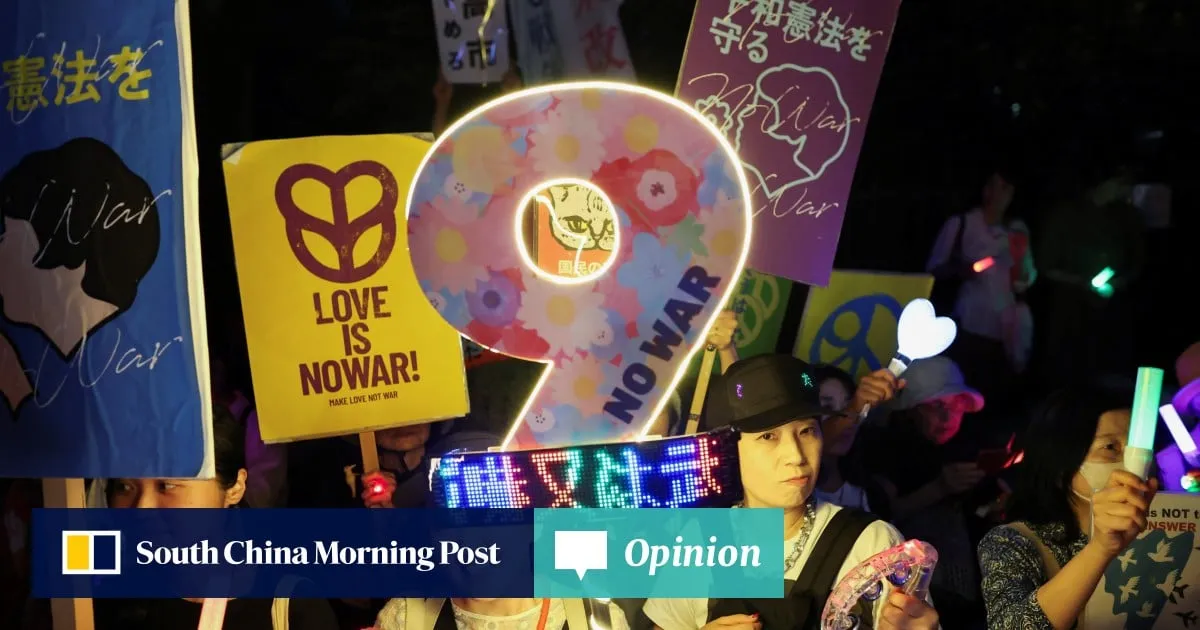
South China Morning PostFIG 01
Reading time
4min
Word count
793words
Sources cited
1cited
Entities identified
11entities
Quality score
100%
§ 01
Briefing Summary
AI-generatedNEWSAR · AI
The article argues that while Western commentators often draw parallels between current crises and Germany's Weimar Republic, they overlook Japan's Taisho period, a similar era of democratic liberalism, artistic flourishing, and social upheaval that preceded militarism. Like Weimar, Taisho Japan (partially coinciding with it) saw the establishment of universal male suffrage and expanded labor rights, alongside intensified class warfare and political violence, including assassinations. This period also featured Westernized sexual liberation and artistic expression. The author contends that current Western encouragement of Japan's remilitarization mirrors the dangerous path taken during Taisho, which ultimately led to the Showa period's militarism and regional conflict, a historical lesson often ignored due to selective Western memory.
Confidence 0.90Sources 1Claims 5Entities 11
§ 02
Article analysis
Model · rule-basedFraming
Political Strategy
Conflict
Tone
Mixed Tone
AI-assessed
CalmNeutralAlarmist
Factuality
0.40 / 1.00
Mixed
LowHigh
Sources cited
1
Limited
FewMany
§ 03
Key claims
5 extracted01
The murder of Prime Minister Takaishi Hara in 1921 and Shinzo Abe a century later are part of a long history of political violence in Japan.
factual
Confidence
0.90
02
Political violence, including assassinations and riots, destabilized Taisho Japan, mirroring Weimar Germany.
factual
Confidence
0.90
03
The Taisho period saw advancements like universal male suffrage and expanded labor rights, but also intensified class warfare.
factual
Confidence
0.90
04
The Taisho period in Japan is often ignored but was similar to Weimar Germany, a period of liberal instability.
factual
Confidence
0.90
05
Current Japanese politics, with a focus on rearmament and potential nuclear capability, risks a regional arms race.
prediction
Confidence
0.70
§ 04
Full report
4 min read · 793 words§ 05
Entities
11 identifiedKey playerOppositionContextPositiveNeutralNegative
Organizations1
§ 06
Keywords & salience
9 termstaisho period
1.00
weimar republic
0.90
japan
0.80
germany
0.70
militarism
0.70
rearmament
0.60
political metaphor
0.50
extreme left and right
0.40
liberalism
0.40
§ 07
Topic connections
Interactive graph Network visualization showing 51 related topics
View Full Graph Person Organization Location Event|Click node to navigate|Edge numbers = shared articles