The future of peace talks in the Middle East have been thrown into question after Iran’s foreign ministry said it needed to “reassess” its participation, while Donald Trump said Iran would have to “pay the price” after the two countries traded fire overnight, drawing neighbouring states back into an on-and-off war that has consumed the region since late February.The US launched strikes against Iran in the early hours of Wednesday, in retaliation for what it said was Iran’s downing of a US army helicopter near the Strait of Hormuz. Iran then launched a wave of retaliatory airstrikes claiming hits on US bases in Kuwait, Bahrain and Jordan.The tit-for-tat attacks were the most severe escalation since a ceasefire was established in early April. Talks to turn the ceasefire into a durable peace have been stalling for weeks, with periodic flare-ups as both sides launched limited strikes and traded blame for violating the truce.Iran’s foreign ministry spokesperson, Esmail Baqaei, said US strikes jeopardised ongoing ceasefire negotiations. He accused the US of undermining diplomacy with its attacks and contradictory messages, and said Israel was also harming the diplomatic process by continuing to violate the ceasefire in Lebanon.“Following overnight events, we need to reassess … Any diplomatic process requires a minimum stable environment,” Baqaei said.Trump, for his part, said Iran had taken “too long to negotiate a deal that would have been great for them” and would now pay a price.In a post on Truth Social, the US president said: “Iran’s military is a complete and total mess. Much of it, like their Navy and Air Force, doesn’t even exist any more – They have been completely defeated. Iran is all talk and no action. The Bully of the Middle East is DEAD!!!”Donald Trump: ‘They have been completely defeated.’ Photograph: Mark Schiefelbein/APTrump has frequently threatened to resume military action since a ceasefire was established in April, but has not yet fully followed through.Strikes since the ceasefire have been limited and styled as calculated, one-off attacks, as both sides jockey for position at the negotiating table.The US military described its overnight attacks as a “proportional response” to the downing of the helicopter, whose two crew members were rescued. The US said it had hit Iranian air defences, ground control stations and radar sites. Iran said Qeshm island and the port city of Sirik were attacked, while Iranian media reported explosions in the seaside city of Bandar Abbas.“I believe the response should be very strong, very powerful, and that’s what this one is,” Trump told ABC news.The Iranian Islamic Revolutionary Guard Corps (IRGC) responded by attacking US bases in Bahrain, Kuwait and Jordan with missiles, and said it was ready to give a “crushing and decisive” response if the US attacked again.The US military said nearly all Iranian missiles and drones had been intercepted, with no immediate reports of US casualties or damage to its facilities. Jordan, Kuwait and Bahrain all said the Iranian projectiles had been intercepted.Hours before the US strikes, Iran’s parliament speaker, Mohammad Bagher Ghalibaf, said in a post on X: “We prefer the language of diplomacy, but we speak other languages far more fluently. Break your commitments, and we’ll switch to what we speak best.”Despite the attacks and escalating rhetoric, a US official suggested that a deal with Iran could still be close.“Nothing changes where the deal stands right now,” an anonymous senior white house official told Politico. “There’s a military bucket and then there’s a negotiation bucket … So, two things can happen at the same time.”Trump is keen for a peace deal as US midterm elections approach amid rising inflation and plummeting presidential approval ratings. But despite the US president frequently claiming that a deal with Iran is close, and several rounds of mediated talks, significant gaps remain between the two sides.Iran is seeking the lifting of international sanctions, the unfreezing of billions of dollars in assets, and control over the Strait of Hormuz. Trump has said that any future peace deal must prevent Iran from developing a nuclear weapon, while Iran denies that it wants one.Access to the Strait of Hormuz – a choke point for about a fifth of the global oil supply – remains restricted by Iran, while the US maintains a blockade on Iranian ports. The interruption to global shipping and energy supplies have had knock-on effects around the world, increasing the prices of food, energy and other goods.A significant obstacle to a lasting peace deal between Iran and the US has been the fighting between Hezbollah and Israel in Lebanon. Iran has insisted that any ceasefire must include the Lebanese front, while Israel and the US have been eager to separate the two.On Sunday, Iran and Israel traded strikes for the first time since the April ceasefire, after Israel struck the southern suburbs of Beirut. Iran has threatened to strike Israel again if it hits Lebanon’s capital. Israel carries out dozens of strikes on south Lebanon each day, while Hezbollah fires on Israeli soldiers in southern Lebanon.Israeli strikes have killed more than 3,666 people in Lebanon since the latest conflict began, while attacks by Hezbollah have killed at least 30 Israeli soldiers and three Israeli civilians.
SRCThe Guardian - World News
LANGEN
LEANCenter-Left
WORDS861
ENT12
WED · 2026-06-10 · 12:22 GMTBRIEF NSR-2026-0610-83311
NSR-2026-0610-83311News Report·EN·Conflict
Middle East peace talks in doubt as Iran says it needs to ‘reassess’ after overnight strikes
Middle East peace talks are in jeopardy after Iran announced it needs to "reassess" its participation following overnight US strikes. The US launched retaliatory strikes after Iran allegedly downed a US army helicopter near the Strait of Hormuz.
William Christou in BeirutThe Guardian - World NewsFiled 2026-06-10 · 12:22 GMTLean · Center-LeftRead · 4 min
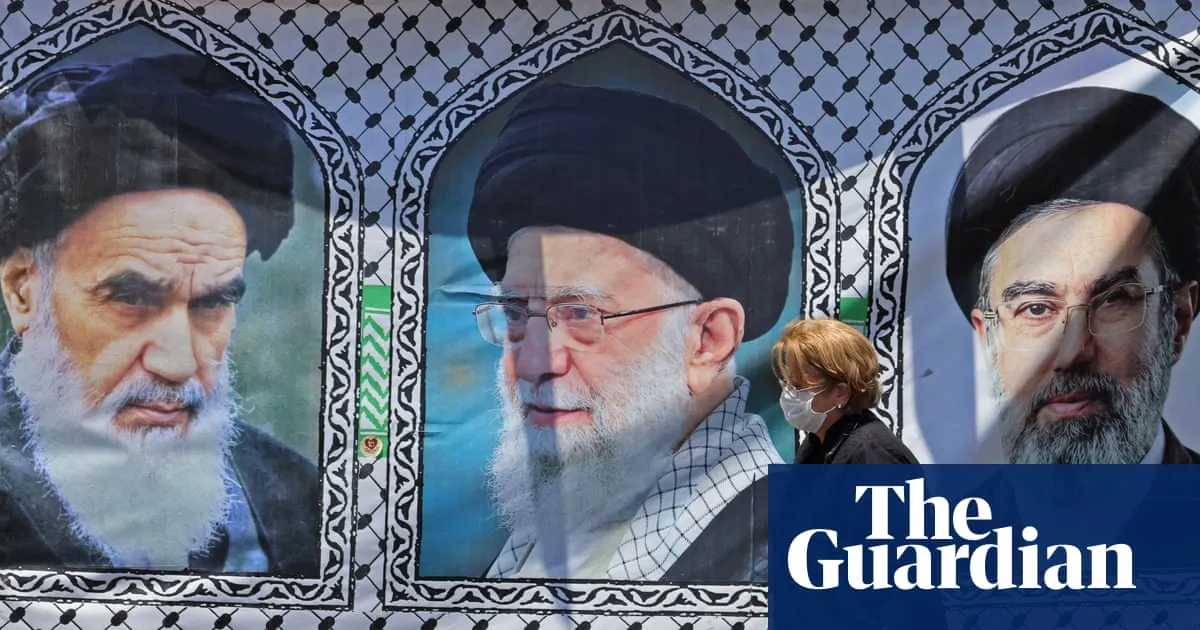
The Guardian - World NewsFIG 01
Reading time
4min
Word count
861words
Sources cited
3cited
Entities identified
12entities
Quality score
100%
§ 01
Briefing Summary
AI-generatedNEWSAR · AI
Middle East peace talks are in jeopardy after Iran announced it needs to "reassess" its participation following overnight US strikes. The US launched retaliatory strikes after Iran allegedly downed a US army helicopter near the Strait of Hormuz. Iran responded with airstrikes targeting US bases in Kuwait, Bahrain, and Jordan. Iran's foreign ministry stated that the US attacks jeopardize ceasefire negotiations, while President Trump declared Iran would "pay the price." Despite the escalation, a US official suggested a deal could still be close, indicating a separation between military actions and negotiation efforts. Key sticking points in the stalled peace talks include sanctions relief, asset unfreezing, and Iran's nuclear program, alongside ongoing conflict between Hezbollah and Israel in Lebanon.
Confidence 0.90Sources 3Claims 5Entities 12
§ 02
Article analysis
Model · rule-basedFraming
Conflict
Diplomatic
Tone
Mixed Tone
AI-assessed
CalmNeutralAlarmist
Factuality
0.60 / 1.00
Mixed
LowHigh
Sources cited
3
Well sourced
FewMany
§ 03
Key claims
5 extracted01
US strikes jeopardized ongoing ceasefire negotiations and undermined diplomacy, according to Iran.
quoteIran's foreign ministry spokesperson, Esmail Baqaei
Confidence
1.00
02
Donald Trump stated Iran would 'pay the price' for its actions and claimed Iran's military is 'completely defeated'.
quoteDonald Trump
Confidence
1.00
03
Iran's foreign ministry stated it needs to 'reassess' its participation in Middle East peace talks following overnight strikes.
quoteIran's foreign ministry spokesperson, Esmail Baqaei
Confidence
1.00
04
The US launched strikes against Iran in retaliation for Iran's alleged downing of a US army helicopter.
factualUS military
Confidence
0.90
05
Iran launched retaliatory airstrikes claiming hits on US bases in Kuwait, Bahrain, and Jordan.
factualIranian Islamic Revolutionary Guard Corps (IRGC)
Confidence
0.80
§ 04
Full report
4 min read · 861 words§ 05
Entities
12 identifiedKey playerOppositionContextPositiveNeutralNegative
Locations9
§ 06
Keywords & salience
10 termsiran
1.00
middle east peace talks
1.00
us strikes
0.90
ceasefire negotiations
0.80
escalation
0.70
retaliatory airstrikes
0.60
donald trump
0.60
strait of hormuz
0.50
diplomacy
0.40
israel
0.40
§ 07
Topic connections
Interactive graph Network visualization showing 51 related topics
View Full Graph Person Organization Location Event|Click node to navigate|Edge numbers = shared articles