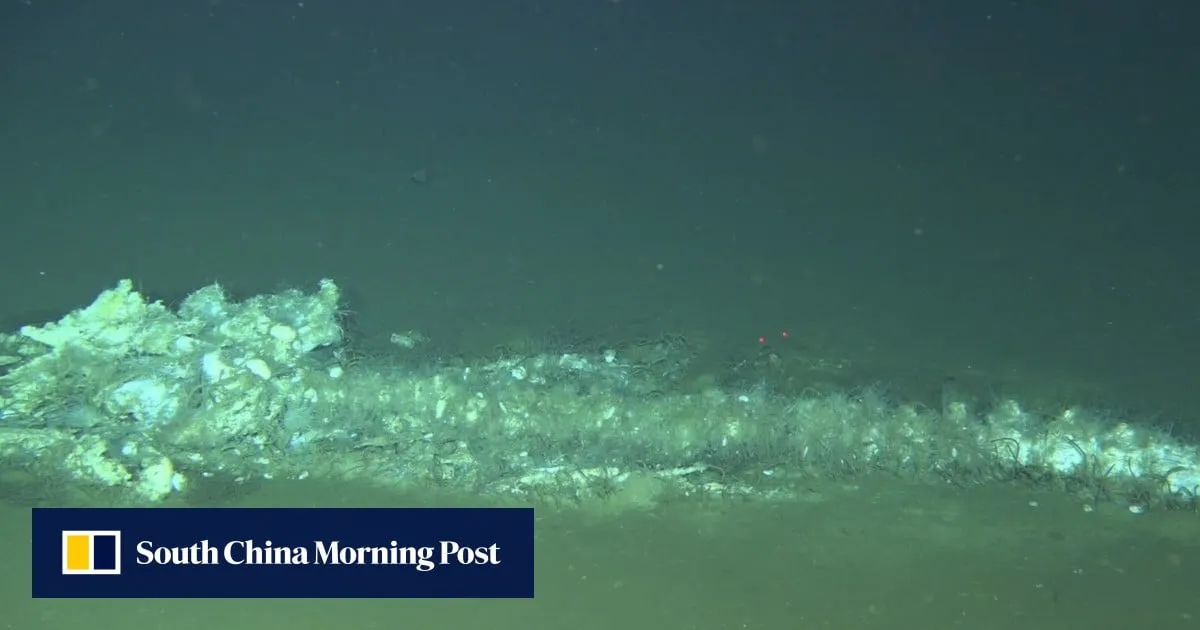
Chinese deep-sea explorers from the Chinese Academy of Sciences (CAS) have discovered the largest “whale-fall site” ever recorded in the Indian Ocean.The graveyard is the Earth’s deepest and most extensive known accumulation of whale fossils, carcasses and the unique ecosystems they support, with some fossils dating back about 5.3 million years.Detailed in a paper published in the peer-reviewed journal Nature on Wednesday, the study was conducted by researchers from the CAS Institute of Deep-Sea Science and Engineering in Sanya, an island city in southern Hainan province, in collaboration with researchers from the University of Pisa and Earth Sciences New Zealand.
SRCSouth China Morning Post
LANGEN
LEANCenter-Right
WORDS100
ENT10
FRI · 2026-06-12 · 01:00 GMTBRIEF NSR-2026-0612-83733
NSR-2026-0612-83733News Report·EN·Environmental
For 5 million years, whales have come to this place in the Indian Ocean to die
Chinese deep-sea explorers from the Chinese Academy of Sciences (CAS) have discovered the largest whale-fall site ever recorded in the Indian Ocean. This site represents the Earth's deepest and most extensive known accumulation of whale fossils and carcasses, supporting unique ecosystems.
Dannie PengSouth China Morning PostFiled 2026-06-12 · 01:00 GMTLean · Center-RightRead · 1 min
South China Morning PostFIG 01
Reading time
1min
Word count
100words
Sources cited
3cited
Entities identified
10entities
Quality score
100%
§ 01
Briefing Summary
AI-generatedNEWSAR · AI
Chinese deep-sea explorers from the Chinese Academy of Sciences (CAS) have discovered the largest whale-fall site ever recorded in the Indian Ocean. This site represents the Earth's deepest and most extensive known accumulation of whale fossils and carcasses, supporting unique ecosystems. Some of the fossils found at this graveyard date back approximately 5.3 million years. The discovery, detailed in the journal Nature, was made by researchers from the CAS Institute of Deep-Sea Science and Engineering in collaboration with scientists from the University of Pisa and Earth Sciences New Zealand.
Confidence 0.85Sources 3Claims 4Entities 10
§ 02
Article analysis
Model · rule-basedFraming
Environmental
Human Interest
Tone
Measured
AI-assessed
CalmNeutralAlarmist
Factuality
0.90 / 1.00
Factual
LowHigh
Sources cited
3
Well sourced
FewMany
§ 03
Key claims
4 extracted01
The site is the Earth’s deepest and most extensive known accumulation of whale fossils, carcasses, and unique ecosystems.
factualChinese Academy of Sciences (CAS)
Confidence
1.00
02
The study detailing the discovery was published in the peer-reviewed journal Nature.
factualArticle
Confidence
1.00
03
The whale-fall site contains fossils dating back about 5.3 million years.
factualChinese Academy of Sciences (CAS)
Confidence
1.00
04
Chinese deep-sea explorers discovered the largest whale-fall site ever recorded in the Indian Ocean.
factualChinese Academy of Sciences (CAS)
Confidence
1.00
§ 04
Full report
1 min read · 100 words§ 05
Entities
10 identifiedKey playerOppositionContextPositiveNeutralNegative
Organizations4
Locations4
§ 06
Keywords & salience
8 termswhale-fall site
1.00
deep-sea exploration
0.90
fossil accumulation
0.80
indian ocean
0.70
unique ecosystems
0.60
whale fossils
0.50
chinese academy of sciences
0.40
nature journal
0.40
§ 07
Topic connections
Interactive graph Network visualization showing 6 related topics
View Full Graph Person Organization Location Event|Click node to navigate|Edge numbers = shared articles