The almost dealA near-resolution was playing out at a different altitude a month after the ceasefire, among the diplomats and politicians in their leafy enclaves.Of the 13 rounds of talks the two countries engaged in since January 1986, the closest they came to a long-term deal on the glacier was in June 1989, the fifth round that took place in Rawalpindi.A change of government in Pakistan, after the death of General Zia ul-Haq, had ushered in democracy. When Pakistan’s Benazir Bhutto and India’s Rajiv Gandhi met in December 1988, relations had thawed.The late Humayun Khan, who served as Pakistan’s foreign secretary at the time, recalled that Indian Defence Secretary Naresh Chandra’s approach during the June 1989 talks was “much more positive than his predecessors”.An agreement was soon reached. “It was agreed that both sides would withdraw their forces to pre-Simla positions, once verified by the two military sides,” Khan told this reporter some years ago, before he passed away in 2022.The late Chandra only half-corroborated this account when this reporter spoke to him a year before his passing in 2017.“While we did agree to ‘redeploy’ the troops instead of ‘withdrawal’, it was meant to be done only after consultation between the officials of two armies. But our primary disagreement remained over the accusation that India had violated the Simla Agreement [by climbing onto Siachen],” he had said.The shadow of the two militaries loomed over the talks throughout. The Indian army, holding advantageous positions near the glacier, did not want its diplomats to make any military concession.Pakistan’s army was not eager for a ceasefire either, on the grounds that the conflict was helping drain Indian coffers.When Bhutto agreed to meet the two foreign secretaries, Khan and Shilendra Kumar Singh from India, she also sought approval of Pakistani Army Chief General Aslam Beg over the joint statement.Chandra believed a genuine opportunity had been lost.“When the joint statement was finalised, it was only me and Zaidi in the room. A roadmap was agreed for the army to implement on the ground. It was a gentlemen’s agreement and we said to each other there will be no explanation to the media,” he told me, referring to Ijlal Haider Zaidi, the Pakistani defence secretary.What happened instead was that the two foreign secretaries spoke to the media and gave the impression that a breakthrough was imminent.By the time the Indian foreign secretary’s plane landed back in New Delhi, there was chaos. India flatly denied any agreement to retreat.Shilendra Kumar Singh “had his knuckles rapped sharply on his return to Delhi because it was felt the photographs of Indian troops withdrawing from Siachen would not look too good for the government in an election year,” Indian journalist — and later minister — MJ Akbar wrote in The Telegraph in August 1992.Singh had to resign.Even though senior military planners met in Delhi in July 1989, the goodwill had been punctured. By August, it was evident the war would continue.The joint statement issued on June 17, 1989 – the document that briefly appeared to offer a way out – had stated that the two sides would work towards a settlement “based on redeployment of forces to reduce the chances of conflict, avoidance of use of force and the determination of future positions on the ground ... to conform to the Simla Agreement”.Its final clause was the one that mattered most: “The army authorities on both sides will determine these positions.” The military, in other words, had been handed the pen. The result was never in doubt.Salman Bashir, who served as Pakistan’s foreign secretary between 2008 and 2012 before becoming High Commissioner to India, told this reporter that “Siachen, like some others, is not a necessary issue” for the neighbours to fight over.Yet both countries have shown inflexibility on their primary demands.India refuses to move until Pakistan accepts legally binding authentication of the current position of Indian troops on Saltoro Ridge — which would effectively acknowledge Indian control over this patch of contested territory.Pakistan, on the other hand, argues that troops must step back to where they were before the Simla Agreement was signed in 1972. That would mean a major retreat for Indian soldiers.Even the ceasefire of November 2003 didn’t help — instead, both sides hardened their stance in the years that followed.Pakistani soldiers at a post near Siachen [Abid Hussein/Al Jazeera]Ashraf Qureshi, a Pakistani diplomat who later served as an ambassador before his retirement, was part of the ninth round of talks in May 2005.He pointed to the statement by then-Indian army chief General J J Singh, who publicly declared before the talks that India’s gains on Siachen achieved at the cost of martyrs must not be bartered away at the negotiating table.“This was perhaps the first time the Indian military establishment had clearly pronounced itself over an issue that was essentially political,” the Pakistani diplomat told this reporter.Lieutenant-General Deependra Singh Hooda commanded India’s Northern Command – the formation with direct operational responsibility for Siachen – until his retirement in 2016. He is blunt about why India will not move.“India holds the dominating positions along the Saltoro Ridge,” he told this writer. “It would therefore not want to withdraw without an authentication of the current positions on a map agreed by both sides, to ensure that the Pakistan Army does not occupy these heights after an agreement on demilitarisation.”Indian defence analyst and former army colonel Ajai Shukla, who has followed the conflict for decades, agrees but argues that there is also a “mismatch of expectations” between the two sides: Pakistan views Siachen in isolation, while for India, it is part of the larger Kashmir dispute.India’s military, according to Shukla, has also come to regard Siachen as a laboratory for its expertise in high-altitude warfare, an asset with value well beyond the glacier itself.Meanwhile, Chinese infrastructure developments in the Shaksgam Valley, Hooda added, make India’s continued presence in the Siachen sector a strategic imperative that goes beyond the bilateral dispute alone.The Shaksgam Valley – the territory Pakistan ceded to China under their 1963 border agreement – has since seen substantial Chinese road and military infrastructure development.“In a climate marked by a lack of trust, no move forward is possible,” Hooda said.After 1989, there was one more moment when the two sides came close to an agreement, in 2006.Riaz Mohammad Khan, then Pakistan’s foreign secretary, and his Indian counterpart Shyam Saran had worked out the structure of a deal under what the two countries called a Composite Dialogue.Pakistan proposed that the disengagement schedule from Siachen be recorded on maps annexed to an overall accord, a formula that in effect addressed New Delhi’s longstanding demand for the formal acknowledgement of its control positions as part of the deal itself. India had agreed. The matter was considered done, but it was not to be.According to Saran’s account in his 2017 book How India Sees the World, the proposal was brought to a Cabinet Committee on Security meeting chaired by Prime Minister Manmohan Singh.India’s National Security Adviser MK Narayanan “launched into a bitter offensive” against it, citing distrust of Pakistan and anticipated political opposition. Army Chief JJ Singh – who had “happily gone along with the proposal in its earlier iterations” – reversed his position and joined Narayanan. Manmohan Singh “chose to keep silent,” Saran recalled.The conclusion Saran drew was unsparing: The opportunity to “finally resolve a long-standing issue and a constant source of bitterness in Pakistan was lost”.According to Riaz Khan’s op-ed in Dawn newspaper in January 2022, when he raised the matter again at the next round in 2007 with Saran’s successor Shiv Shankar Menon, the response was a single sentence. “On that issue we have to get back to you,” Menon said. India never did.Pakistan at the time was governed by General Pervez Musharraf, who had seized power in a military coup in 1999 and ruled until 2008. It was under Musharraf that the November 2003 Siachen ceasefire had been agreed to, and under his government that the 2006 composite dialogue talks, the closest the two sides came to a settlement after 1989, were held.Khan, who led Pakistan's delegation in those talks, told this reporter in a recent conversation that he still believed "there was a genuine chance" for a deal at that time.“Musharraf and Manmohan Singh had agreed. Shyam and I showed the agreed text to them. The next day, literally before we were hoping to sign, the Indian side backed out,” he said.The 13th and final round of talks was held in Rawalpindi in June 2012. Nothing has followed.
SRCAl Jazeera
LANGEN
LEANCenter
WORDS1 421
ENT12
FRI · 2026-06-12 · 07:14 GMTBRIEF NSR-2026-0612-83814
NSR-2026-0612-83814News Report·EN·Diplomatic
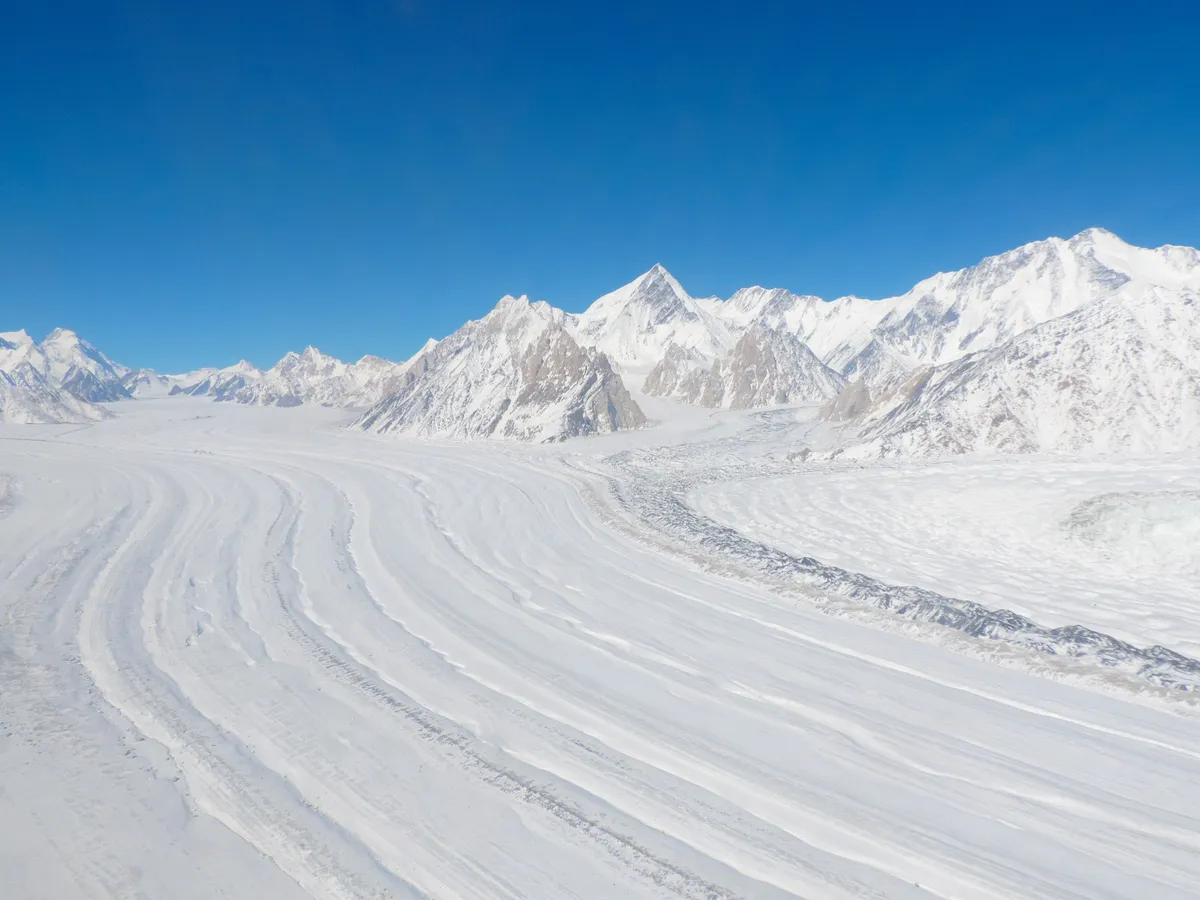
Mountain of war: The India-Pakistan conflict’s deadliest battle zone
In June 1989, India and Pakistan came close to a long-term deal regarding the Siachen Glacier, the world's highest battlefield. During talks in Rawalpindi, then-Pakistani Foreign Secretary Humayun Khan recalled an agreement for both sides to withdraw forces to pre-Simla positions, verified by military officials.
Abid HussainAl JazeeraFiled 2026-06-12 · 07:14 GMTLean · CenterRead · 6 min
Al JazeeraFIG 01
Reading time
6min
Word count
1 421words
Sources cited
3cited
Entities identified
12entities
Quality score
100%
§ 01
Briefing Summary
AI-generatedNEWSAR · AI
In June 1989, India and Pakistan came close to a long-term deal regarding the Siachen Glacier, the world's highest battlefield. During talks in Rawalpindi, then-Pakistani Foreign Secretary Humayun Khan recalled an agreement for both sides to withdraw forces to pre-Simla positions, verified by military officials. However, Indian Defence Secretary Naresh Chandra stated the agreement was for "redeploying" troops after army consultation, and a primary disagreement remained over India's presence on Siachen. The Indian army, holding advantageous positions, opposed concessions, while Pakistan's army saw the conflict as draining Indian resources. A joint statement was issued, but subsequent media interpretations and India's denial of a retreat agreement led to the collapse of the deal. The military ultimately retained control over determining troop positions, and despite a 2003 ceasefire, both nations remain inflexible on their demands regarding Siachen.
Confidence 0.90Sources 3Claims 5Entities 12
§ 02
Article analysis
Model · rule-basedFraming
Diplomatic
Conflict
Tone
Measured
AI-assessed
CalmNeutralAlarmist
Factuality
0.70 / 1.00
Factual
LowHigh
Sources cited
3
Well sourced
FewMany
§ 03
Key claims
5 extracted01
The closest India and Pakistan came to a long-term deal on the Siachen glacier was in June 1989.
factual
Confidence
0.90
02
Indian journalist MJ Akbar wrote that Shilendra Kumar Singh had his knuckles rapped sharply on return to Delhi and had to resign due to the perception of Indian troops withdrawing.
quoteMJ Akbar
Confidence
0.80
03
India's Defence Secretary Naresh Chandra stated that troops were to 'redeploy' instead of 'withdraw', and only after consultation between the armies.
quoteNaresh Chandra
Confidence
0.80
04
An agreement was reached where both sides would withdraw their forces to pre-Simla positions, once verified by the two military sides.
quoteHumayun Khan
Confidence
0.80
05
Pakistan's army was not eager for a ceasefire as the conflict helped drain Indian coffers.
factual
Confidence
0.70
§ 04
Full report
6 min read · 1 421 words§ 05
Entities
12 identifiedKey playerOppositionContextPositiveNeutralNegative
People8
§ 06
Keywords & salience
10 termssiachen glacier
1.00
india-pakistan conflict
1.00
military concession
0.80
simla agreement
0.70
ceasefire
0.60
diplomatic talks
0.60
troop redeployment
0.50
rajiv gandhi
0.40
benazir bhutto
0.40
military withdrawal
0.40
§ 07
Topic connections
Interactive graph Network visualization showing 51 related topics
View Full Graph Person Organization Location Event|Click node to navigate|Edge numbers = shared articles