ANALYSISNegotiators will have to grapple with issues that have plagued Iran-diplomacy" class="entity-link entity-topic" data-entity-id="147449" data-entity-type="topic">US-Iran diplomacy for decades – and while a technical compromise is possible, the bigger challenge is political, say analysts.A woman holds an Iranian flag on a street in Tehran, Iran [File: Majid Asgaripour/West Asia News Agency]Published On 16 Jun 2026The wedding ceremony has taken place, but the ring has yet to appear.That’s the assessment of observers on Monday’s announcement of a breakthrough “deal-to-do-a-deal” between the United States and Iran after more than 100 days of war that began with US-Israeli strikes on Tehran on February 28.Recommended Stories list of 4 itemslist 1 of 4Qatar’s Emir hails Iran deal and touts US investments in Trump meetinglist 2 of 4Trump says ‘hell will rain down’ if Iran gets nuclear weaponslist 3 of 4Will a US-Iran deal unlock $300bn in investment fund for Tehran?list 4 of 4Iran says Israeli occupation in Lebanon would breach US dealend of listThe agreement to end hostilities and begin a 60-day negotiation process on a number of pre-agreed key issues has been welcomed in a region desperate for stability. Gulf states can breathe a sigh of relief after months of uncertainty and Iranian bombing of US military assets and infrastructure on their territories, Lebanon has a glimmer of hope, despite continuing attacks by Israeli which has occupied nearly one-fifth of its territory, and global markets have welcomed the reopening of the Strait of Hormuz and falling oil prices after weeks of disruption.The full text of the agreement, expected to be formally signed in Geneva on Friday, has not yet been released, however, mostly third-hand accounts of what is actually in it have conflicted over the past few days.But the big story is not what has been agreed to, but rather what has been deferred.According to Iran’s Mehr News Agency, the draft agreement gives the two sides 60 days to reach a final settlement on the issue of Iran’s nuclear programme and what to do with its 440kg (970-pound) stockpile of highly enriched uranium. During that period, $24bn in frozen Iranian assets are set to be released, the news agency has reported. The US has not confirmed any of this, however.Discussions concerning Iran’s missile programme and its support for proxy armed groups in the region have been removed from the negotiating agenda, the agency added, despite US demands at the start of the war.The result is an agreement that ends the war – for now – but postpones most of the key disagreements that triggered it in the first place.“Nothing substantive has been negotiated yet on the nuclear programme,” Maneli Mirkhan, a strategic adviser on Iran and global affairs, told Al Jazeera. “The memorandum is a framework for opening negotiations, not the result of them.”Over the next two months, then, negotiators will have to grapple with some of the most difficult questions that have plagued Iran-diplomacy" class="entity-link entity-topic" data-entity-id="147449" data-entity-type="topic">US-Iran diplomacy for decades: whether Iran will be allowed to continue enriching uranium, what happens to its stockpile of highly enriched uranium, how intrusive international inspections will be, and when sanctions relief should be delivered.While analysts say a technical compromise is possible, the bigger challenge is political.The nuclear file: What still needs negotiating?The core issue is the future of Iran’s nuclear programme, which has bedevilled negotiations between Tehran and Washington for decades.A chasm between the two sides on the topic has already appeared with US Vice President Vance telling US media this week that nuclear inspectors will be allowed back into Iran to help it “destroy the highly enriched stockpile”, and touting this as a core part of the agreement being signed on Friday.Iranian officials, however, say negotiations about Iran’s nuclear programme will only begin after the initial agreement is signed on Friday, making no mention of inspectors or the fate of the uranium stockpile.At the heart of this particular aspect of the dispute is a longstanding disagreement over the purpose of Iran’s nuclear programme, according to Seyed Hossein Mousavian, an Iranian policymaker and former diplomat who served on Tehran’s nuclear negotiating team in talks with the European Union and the International Atomic Energy Agency.The hardest battle will be “to reconcile Iran’s insistence on maintaining a peaceful enrichment programme under the [Treaty on the Non-Proliferation of Nuclear Weapons], with Washington’s demand for stringent restrictions that ensure the programme cannot be diverted toward military purposes,” Mousavian told Al Jazeera.That’s because, ideally, the US would like Iran to be barred from any enrichment process at all – even for nuclear power purposes – for about 20 years. The gulf between the two positions, therefore, is wide.The remaining negotiations are likely to focus on uranium enrichment levels; the size and disposition of Iran’s uranium stockpile, including whether it remains in Iran, is diluted or is transferred abroad; the fate of advanced centrifuges which are used to enrich uranium; and verification and monitoring arrangements, analysts say – all highly complex issues which took years, rather than weeks, to negotiate – with the input of specialist nuclear experts – for the Joint Comprehensive Plan of Action (JCPOA) nuclear agreement between Iran, the US and other countries in 2015. Trump took the US out of that deal in 2018.Civilian purposes onlyWashington’s objective, said Mirkhan, is to limit Tehran’s nuclear capacities to a “genuinely civilian purpose”. While independent inspectors verified that Iran had stuck to its commitment to limit uranium enrichment to 3.67 percent under the JCPOA, it began enriching to much higher levels some time after the US pulled out of the deal and re-established sanctions. Now, it is believed to be harbouring about 440kg (970 pounds) of uranium enriched to 60 percent – not enough for weapons grade at 90 percent – but enough to reach a short process to get to that 90 percent.At the start of the war, the US said it wanted that stockpile to be handed over to it. Iran rejected this idea, although it has at times appeared willing to discuss handing it over to a third party or diluting it back to nuclear power levels.“The stockpile is central,” Mirkhan said. “As long as the enriched material and the infrastructure needed to process it remain inside the country and under Iranian control, Iran retains a threshold capability.”Sanam Vakil, director of the Middle East and North Africa Programme at Chatham House, pointed to the middle ground that could be possible: Combining the present moratorium with a subsequent low enrichment ceiling, a very small stockpile, and highly intrusive monitoring.“The challenge is finding an arrangement Washington can call effective non-proliferation and Iran can present as preserving peaceful nuclear rights,” Vakil told Al Jazeera.Military damage, she added, “makes it harder to establish a reliable baseline for Iran’s remaining facilities, centrifuges and nuclear material”.“The war has also intensified Iranian concerns about vulnerability and US concerns about concealed reconstruction,” said Vakil.A man flashes a victory sign as he carries an Iranian flag in front of a billboard depicting US aircraft in the Iranian armed forces’ fishing net in downtown Tehran [File: Vahid Salemi/AP]An existential issueAnother major obstacle is political.“For the Islamic Republic, the nuclear programme is viewed by many within the system as a strategic guarantee of the regime’s survival,” said Mirkhan.“The hard core of the regime, which has consolidated its influence over the state in recent months, has shown little indication that it is prepared to abandon that logic.”The debate over the Strait of Hormuz illustrates that the bigger challenge is less about whether any agreement can be implemented – but whether it can be sustained over time, she added.“The memorandum speaks of fully reopening the strait, yet Iranian officials are already presenting that commitment as a temporary reopening under continued joint management with Oman,” Mirkhan explained.“On paper, that can be described as compliance. In practice, it preserves a degree of Iranian influence over the arrangement.”One question will be whether Iran starts charging fees in the strait. Under international law, it cannot levy tolls for passage, but it can charge for services rendered to shipping passing through its territorial waters. The war has persuaded Iran that it needs to view the Strait of Hormuz through a new lens from now on – as both strategic leverage and as a way to earn money after years of being crippled by US sanctions and, now, pummelled by its missiles.A similar challenge is likely to emerge as has on uranium enrichment – reaching a broad understanding is one thing, but defining implementation in a way that leaves little room for competing interpretations is another, she added.In essence, the ceasefire deal may have been reached, but the negotiations that matter and which have lingered for years have barely begun.Trust and the $24bn questionThe real battle, analysts said, may also be over sequencing – who gives what first.On Monday, Iran’s Islamic Revolutionary Guard Corps (IRGC) claimed the agreement being signed on Friday will provide Iran with $24bn of frozen assets during the 60-day negotiation period, with half that to be paid before talks begin. But US Vice President JD Vance denied that. He told US broadcaster CBS: “When people say that billions of dollars of assets will be released, that’s not true. What is true is that Iran will have a much better and much more prosperous future if they meet the obligations they make in this agreement.”Sina Toossi, a senior fellow at the Center for International Policy, told Al Jazeera that the central challenge will not, therefore, be working out the technical nuclear issues, but whether the US and Iran can rebuild enough confidence – and trust – to negotiate those issues at all.The US struck Tehran on February 28 just as talks between the two sides were underway, deeply denting Iranian trust, it says. It also remains “deeply influenced” by the US withdrawal from the 2015 JCPOA, Toossi said. “As a result, Tehran is approaching these talks from a position of near-zero trust.”That may explain why the memorandum reportedly front-loads measures such as sanctions waivers, access to frozen assets and other forms of economic relief, he added.“These are not simply incentives. They are intended to test whether Washington will implement commitments before Tehran agrees to more difficult and potentially irreversible nuclear concessions,” Toosi said.He continued, “In that sense, the phased release of assets does provide Iran leverage because it creates implementation benchmarks that Tehran can use to judge whether negotiations should continue.”That leverage is what worries Western policymakers, said Mirkhan.“Over the past two decades, Tehran has become highly skilled at securing economic relief early in a negotiation while delaying or limiting the concessions expected in return,” she said.Mousavian, however, does not view the phased release of frozen assets as leverage, but rather as a confidence-building measure.“Iran has previously indicated flexibility on measures such as limits on enrichment levels, enhanced monitoring, and reducing or relocating portions of its enriched uranium stockpile, provided that its right to enrichment is formally recognised and that it receives tangible economic benefits,” he said.The ghosts outside the room: Missiles, proxies and the JCPOACritics of the US-Iran agreement, as well as of Washington’s decision to go to war in the first place, say the agenda for talks has narrowed so much that it may simply be postponing future crises.Some Obama-era officials who helped broker the 2015 Iran nuclear deal that Trump later scrapped have argued that the US was in a far better negotiating position with Iran on its nuclear file before the war began. Now, much of the effort will go into securing the reopening of the Strait of Hormuz, which was entirely free to shipping traffic before the end of February.“This deal reopens a body of water that was open before the war and begins a nuclear negotiation far narrower than what Trump was seeking before the war,” Ben Rhodes, who served as Obama’s deputy national security adviser, wrote in a post on X this week.The former US ambassador to Israel, Dan Shapiro, also baulked at the lack of concreteness, stating that it could be no better – or worse – than the JCPOA was.“In some ways, Trump’s deal and the JCPOA are already similar. Nothing on ballistic missiles, nothing on proxies,” said the former envoy. “It is possible that no deal will [ever] be reached, and very likely that if one is reached, it will be worse than what we could have achieved through diplomacy before the war.”People ride past a billboard depicting the late leader of the Islamic revolution, Ayatollah Ruhollah Khomeini, and the late Iran’s Supreme Leader Ayatollah Ali Khamenei, on a street in Tehran [File: Majid Asgaripour/West Asia News Agency via Reuters]Toossi said the nuclear issue may actually be harder to resolve now than before the war. “Iran’s nuclear programme is more buried and covert, mistrust is deeper, and domestic political pressures on both sides have intensified,” he said.Still, both governments have now experienced the costs and risks of direct military confrontation, which could create incentives for compromise that did not previously exist, Toossi said.Narrowing the agenda for discussion has its own risks, observers say.While there is a tendency to treat Iran’s nuclear programme, its missile programme, and its regional network of proxies as separate files, Mirkhan said, they are all in fact closely connected.“The nuclear programme strengthens deterrence, the missile programme provides reach, the regional network extends influence; each supports the others,” she said.The threat of Iran’s retaliatory ballistic attacks in the region, as is what happened during the war, therefore, remains high, Mirkhan said.“That is why the missile issue is likely to remain a key condition for broader international support of any future agreement,” she said.The omission of the key issues of missiles, proxies, as well as a longer-term settlement for Lebanon, meanwhile, has simply been a deliberate choice to secure immediate regional stabilisation, the analysts conclude.From Tehran’s perspective, that itself constitutes a significant achievement, said Toossi.The next 60 days may determine not only whether Washington and Tehran can agree on enrichment and sanctions relief, but whether a ceasefire designed to end a war can evolve into a broader agreement capable of preventing the next one.“Ironically, while the recent war has increased mistrust and political opposition on both sides, it may also have clarified the costs of conflict,” said Mousavian.
SRCAl Jazeera
LANGEN
LEANCenter
WORDS2 359
ENT12
TUE · 2026-06-16 · 15:39 GMTBRIEF NSR-2026-0616-84936
NSR-2026-0616-84936Analysis·EN·Diplomatic
Optics of peace first, details later: The US-Iran 60-day challenge
The United States and Iran have agreed to a 60-day negotiation period to resolve key issues following a recent conflict. This agreement aims to end hostilities and has been welcomed for bringing regional stability, including the reopening of the Strait of Hormuz.
Urooba JamalAl JazeeraFiled 2026-06-16 · 15:39 GMTLean · CenterRead · 10 min
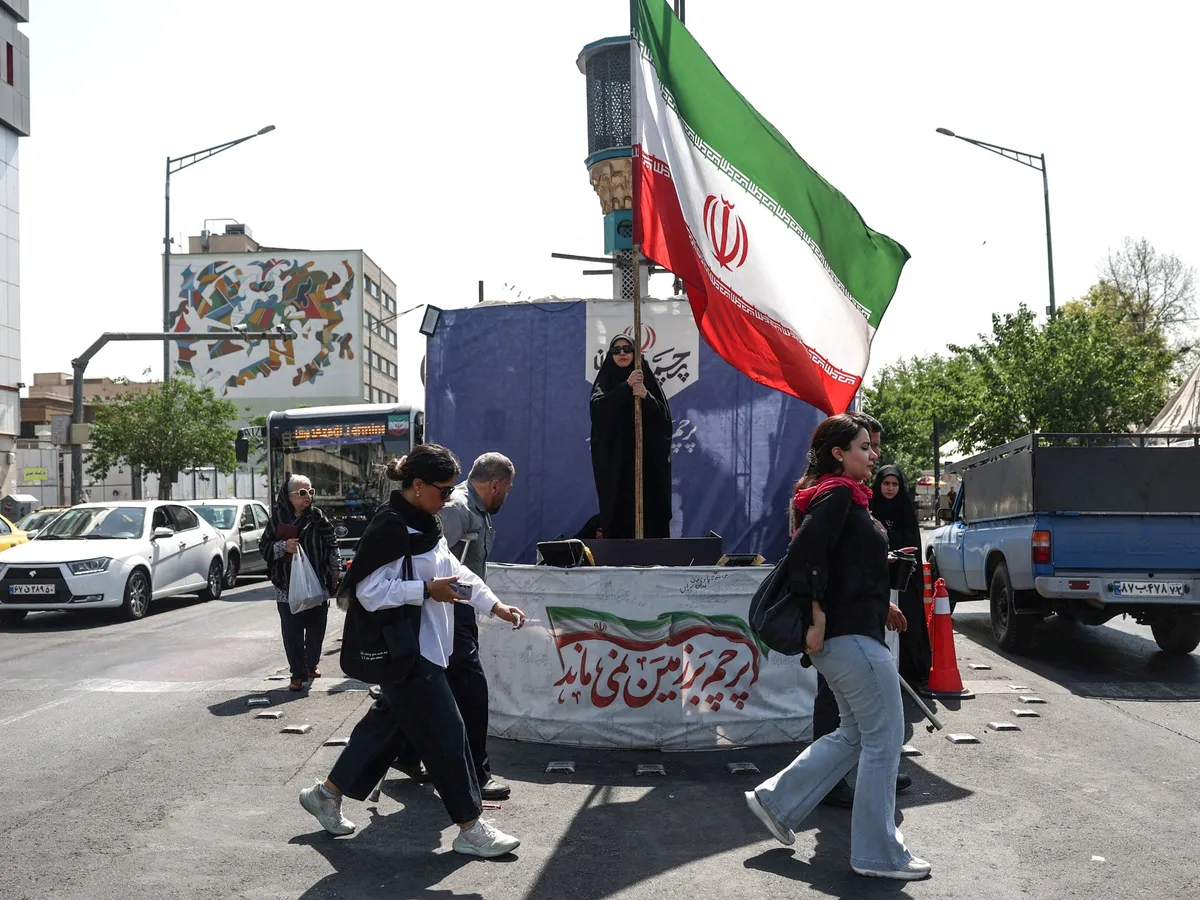
Al JazeeraFIG 01
Reading time
10min
Word count
2 359words
Sources cited
1cited
Entities identified
12entities
Quality score
100%
§ 01
Briefing Summary
AI-generatedNEWSAR · AI
The United States and Iran have agreed to a 60-day negotiation period to resolve key issues following a recent conflict. This agreement aims to end hostilities and has been welcomed for bringing regional stability, including the reopening of the Strait of Hormuz. However, the full text of the deal has not been released, and analysts note that substantive negotiations on critical matters like Iran's nuclear program, missile program, and support for proxy groups have been deferred. While a technical compromise on the nuclear issue is possible, the political challenges are significant, with differing views on uranium enrichment and inspections. The negotiations will focus on Iran's nuclear program, including enrichment levels and its uranium stockpile, with a wide gap existing between US demands for stringent restrictions and Iran's insistence on maintaining a peaceful enrichment program.
Confidence 0.90Sources 1Claims 5Entities 12
§ 02
Article analysis
Model · rule-basedFraming
Diplomatic
Political Strategy
Tone
Measured
AI-assessed
CalmNeutralAlarmist
Factuality
0.40 / 1.00
Mixed
LowHigh
Sources cited
1
Limited
FewMany
§ 03
Key claims
5 extracted01
The agreement aims to end hostilities and begin a 60-day negotiation process on pre-agreed key issues.
factual
Confidence
0.80
02
A breakthrough 'deal-to-do-a-deal' has been announced between the United States and Iran after over 100 days of war.
factual
Confidence
0.80
03
Discussions concerning Iran's missile program and support for proxy groups have been removed from the negotiating agenda.
factualMehr News Agency
Confidence
0.70
04
During the 60-day period, $24bn in frozen Iranian assets are set to be released.
factualMehr News Agency
Confidence
0.70
05
According to Mehr News Agency, the draft agreement allows 60 days for a final settlement on Iran's nuclear program and its uranium stockpile.
factualMehr News Agency
Confidence
0.70
§ 04
Full report
10 min read · 2 359 words§ 05
Entities
12 identifiedKey playerOppositionContextPositiveNeutralNegative
Locations8
§ 06
Keywords & salience
8 termsus-iran diplomacy
1.00
nuclear program
0.90
60-day negotiation
0.80
end of hostilities
0.70
frozen assets
0.60
proxy armed groups
0.50
strait of hormuz
0.50
missile program
0.40
§ 07
Topic connections
Interactive graph Network visualization showing 51 related topics
View Full Graph Person Organization Location Event|Click node to navigate|Edge numbers = shared articles