EXPLAINERThe memorandum of understanding covers 14 points but leaves many questions unanswered.Iran's President Masoud Pezeshkian showing the memorandum of understanding he signed to end the war, June 18, 2026 [AFP]Published On 18 Jun 2026The United States provided details of the 14-point memorandum of understanding it reached with Iran on Wednesday.Neither has released a physical copy, but a US official read out the text during a call with reporters on Wednesday. Iranian officials have yet to confirm the US version of the text.The account is the clearest yet from the administration of US President Donald Trump on the deal, which had been scheduled to be signed in a ceremony in Switzerland on Friday, but which Trump signed in Versailles on Wednesday. However, it leaves a large number of questions unanswered, experts say.We break down what the 14-point agreement says about issues that have emerged as major sticking points during peace negotiations between the US and Iran.What does the MoU say about Lebanon?The first clause of the MoU states that the US and Iran have agreed to the “immediate and permanent termination of military operations on all fronts, including in Lebanon”.Additionally, the memorandum adds that both sides will commit to ensuring the “territorial integrity and sovereignty of Lebanon”.However, it makes no mention of Israel, which currently occupies one-fifth of the country and has subjected Lebanon to near-daily strikes since early March, killing at least 3,000 people and displacing more than one million from their homes.Given that the agreement is solely between the US and Iran – Israel and the Lebanese group Hezbollah it is at war with are not signatories – it is unclear how a ceasefire in Lebanon would be implemented, or whether it means Iran must stop funding Hezbollah. In fact, Iran’s support for proxy groups around the region generally is not mentioned in the agreement.Israel has stated several times this week that it will not withdraw from Lebanon.On Monday, Defence Minister Israel-katz" class="entity-link entity-person" data-entity-id="4249" data-entity-type="person">Israel Katz said in a statement: “Prime Minister Benjamin Netanyahu and I are pursuing a clear policy under which the [military] will remain in the security zones in Lebanon, Syria and Gaza for an unlimited period of time in order to protect the border and Israeli communities from there against jihadist elements”.Lebanon has been a key sticking point during negotiations. Tehran has repeatedly signalled that an end to Israeli military operations in Lebanon is a prerequisite for any broader peace deal.The US and Iran met in Pakistan in April for the first direct talks between the two sides since the 1979 Islamic revolution in Iran. Ahead of these talks, Iranian Parliament Speaker, Mohammad Bagher Ghalibaf, publicly stated that for Iran, a ceasefire by Israel in Lebanon and the unfreezing of Iranian assets abroad were non-negotiables for Tehran. Iran has not wavered from this red line.On April 16, Trump announced that Israel and Lebanon had reached a 10-day ceasefire to allow negotiations for a more permanent security and peace agreement to continue. That came after six weeks of fighting between Israel and Hezbollah.Despite the ceasefire, Israel has continued attacks and advances in Lebanon even throughout this week, after Washington and Tehran signalled they were close to a deal.(Al Jazeera)What does it say about regime change in Iran?The MoU states in its second paragraph that the US and Iran will “undertake to respect each other’s sovereignty and territorial integrity, and to refrain from interfering in each other’s internal affairs”.This appears to suggest that the Trump administration has relinquished any hopes of forcing regime change in Iran. In recent weeks, Trump has made attempts to distance himself from this aim in an apparent face-saving exercise.At the G7 summit in France this week, Trump said that he “never cared about regime change” anyway, but also reiterated his claim that the assault on Iran has resulted in regime change, even though the clerical government is still firmly in place.“You talk about regime change. I never cared about regime change. It [was] never a part.”However, on February 28, when the US and Israel launched the first strikes on Tehran, Trump suggested that one of the aims was to force regime change. In a social media post addressed to the Iranian people, he wrote: “The hour of your freedom is at hand.”“When we are finished, take over your government. It will be yours to take. This will be probably your only chance for generations.”What will happen to ships transiting the Strait of Hormuz?The fourth paragraph of the agreement states that the US “will begin the removal of its naval blockade” and “will fully end the naval blockade within 30 days”. It also states that the US “undertakes to remove its forces within 30 days after the final deal”.The fifth point of the agreement states that Iran will make “its best efforts for the safe passage of commercial vessels with no charge for 60 days only from the Persian Gulf to the Sea of Oman, and vice versa … Iran will conduct dialogue with the Sultanate of Oman to define the future administration and maritime services in the Strait of Hormuz”.The issue about control of the strait has been another major sticking point in peace negotiations between the US and Iran, which sees it as its most important piece of leverage.Soon after US-Israeli strikes began, Iran closed the strait to shipping.In April, the US began a corresponding naval blockade on Iranian ports, further adding to the disruption of global oil and gas supplies.Iran has allowed the passage of a few vessels from select countries through the strait at times during the conflict, but shipping companies have been required to negotiate transit with the Islamic Revolutionary Guard Corps (IRGC) – with some understood to have paid tolls of as much as $2m per ship. In the meantime, insurance premiums for ships in the strait have soared or been withdrawn altogether and many shipping operators will be unwilling to risk the voyage before there are guarantees that mines have been removed.In its previous proposals to end the war, Iran has referred to charging transit tolls for vessels. Washington and other countries have repeatedly rejected the prospect.Under international maritime law, it is not permissible to charge tolls for passage in natural straits such as Hormuz, however, adjacent countries may charge fees for services such as insurance or docking.The 14-point agreement makes little reference to this, and on Wednesday Iran’s lead negotiator Ghalibaf said the “Strait of Hormuz will not return to pre-war conditions” and Iran will “receive a fee for services” to shipping.(Al Jazeera)What will happen to Iran’s enriched uranium stockpile?In the eighth clause of the agreement, Iran “reaffirms that it shall not procure or develop nuclear weapons”.It also states that the US and Iran “have agreed to resolve the disposition of stockpiled, enriched material pursuant to a mechanism that will be mutually agreed upon … with the minimum methodology to be down-blending on site under the supervision of the IAEA”.Iran’s uranium enrichment programme has also been a major bone of contention between the US and Iran.Although Iran has consistently stated in the past that it does not intend to build a nuclear weapon, it has insisted on the right to develop a nuclear power programme. However, Iran is believed to have an estimated 440kg (970lb) of uranium enriched to 60 percent, short of the 90 percent required for weapons-grade material, but at the point at which it becomes much quicker to reach 90 percent. This is far higher than the three to 5 percent required for generating nuclear power.The US and other Western countries say they believe Iran is preparing to have the capacity to build nuclear weapons.While the US has been calling for Iran to hand over its stockpile of enriched uranium to it, Iran has stated consistently that it will not do this – although it has, at times, appeared willing to consider the prospect of handing it over to a third country. Last week, it was reported that Iranian Supreme Leader Mojtaba Khamenei had issued a directive that Iran’s enriched uranium should not be sent abroad at all.
SRCAl Jazeera
LANGEN
LEANCenter
WORDS1 343
ENT12
THU · 2026-06-18 · 11:50 GMTBRIEF NSR-2026-0618-85463
NSR-2026-0618-85463Analysis·EN·Conflict
What the Trump-Iran 14-point plan says about Lebanon, Hormuz and uranium
The United States and Iran have reached a 14-point memorandum of understanding, details of which were read out by a US official. The agreement calls for the immediate and permanent termination of military operations in Lebanon and respect for its territorial integrity, though it does not mention Israel or Iran's support for Hezbollah.
Sarah ShamimAl JazeeraFiled 2026-06-18 · 11:50 GMTLean · CenterRead · 6 min
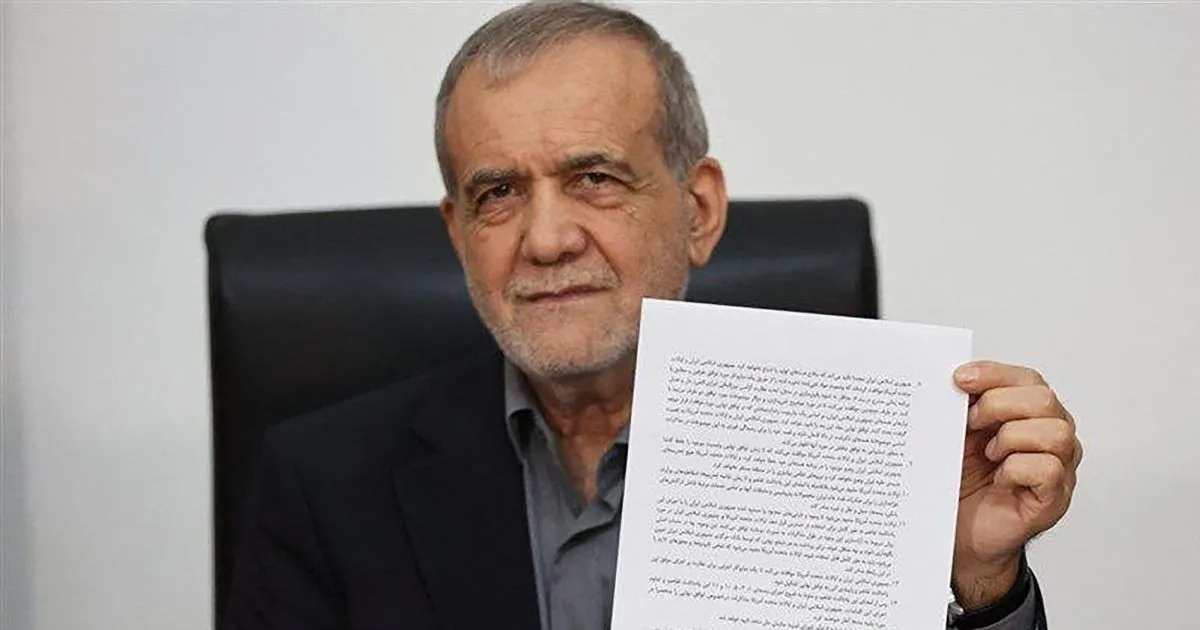
Al JazeeraFIG 01
Reading time
6min
Word count
1 343words
Sources cited
3cited
Entities identified
12entities
Quality score
100%
§ 01
Briefing Summary
AI-generatedNEWSAR · AI
The United States and Iran have reached a 14-point memorandum of understanding, details of which were read out by a US official. The agreement calls for the immediate and permanent termination of military operations in Lebanon and respect for its territorial integrity, though it does not mention Israel or Iran's support for Hezbollah. The MoU also states that both nations will respect each other's sovereignty and refrain from interfering in internal affairs, suggesting a shift away from US regime change aims in Iran. Regarding the Strait of Hormuz, the US will begin removing its naval blockade within 30 days, and Iran will facilitate safe passage for commercial vessels. Many crucial questions remain unanswered regarding the implementation and specifics of the deal.
Confidence 0.90Sources 3Claims 5Entities 12
§ 02
Article analysis
Model · rule-basedFraming
Conflict
Diplomatic
Tone
Measured
AI-assessed
CalmNeutralAlarmist
Factuality
0.60 / 1.00
Mixed
LowHigh
Sources cited
3
Well sourced
FewMany
§ 03
Key claims
5 extracted01
Iran's support for proxy groups around the region is not mentioned in the agreement.
factual
Confidence
0.90
02
Israel has stated it will not withdraw from Lebanon and will remain in security zones indefinitely.
factualIsrael Katz
Confidence
0.90
03
Both sides will commit to ensuring the territorial integrity and sovereignty of Lebanon.
factualUS official
Confidence
0.80
04
The US and Iran have agreed to the immediate and permanent termination of military operations on all fronts, including in Lebanon.
factualUS official
Confidence
0.80
05
It is unclear how a ceasefire in Lebanon would be implemented, or whether Iran must stop funding Hezbollah.
factualexperts
Confidence
0.70
§ 04
Full report
6 min read · 1 343 words§ 05
Entities
12 identifiedKey playerOppositionContextPositiveNeutralNegative
People4
Organizations2
§ 06
Keywords & salience
10 termstrump-iran agreement
1.00
memorandum of understanding
0.90
lebanon
0.80
iran
0.80
us
0.80
uranium
0.70
hormuz
0.60
hezbollah
0.50
israel
0.50
peace negotiations
0.40
§ 07
Topic connections
Interactive graph Network visualization showing 51 related topics
View Full Graph Person Organization Location Event|Click node to navigate|Edge numbers = shared articles