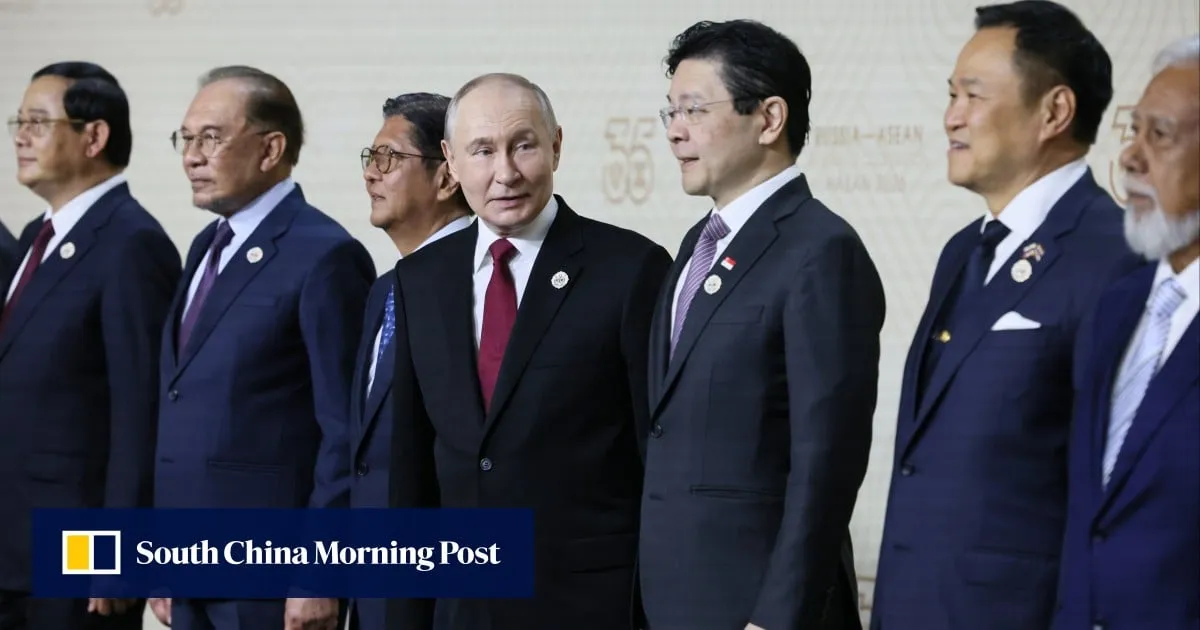
As Southeast Asia grapples with energy supply uncertainty, fallout from the Iran conflict and intensifying rivalry between the United States and China, Russia appears to be presenting itself as a viable “third power” option for the region, analysts say.Moscow’s pitch was on display at the Russia-commemorative-summit" class="entity-link entity-event" data-entity-id="143594" data-entity-type="event">Asean-Russia Commemorative Summit in Kazan on Thursday, where Russian leader Vladimir Putin met regional counterparts, and the two sides agreed to bolster political and economic ties, alongside several bilateral deals struck on the sidelines.The summit gave Russia another platform to court the Association of Southeast Asian Nations at a time when many regional governments are looking to diversify energy sources, keep their diplomatic options open and avoid being drawn too tightly into either Washington’s or Beijing’s orbit.Moscow struck multiple energy-related agreements this week, such as a framework for cooperation in the peaceful use of nuclear energy with Laos, which includes exploring a Russian-designed nuclear power plant in the Southeast Asian country as it works towards net-zero emissions in 2050.It also provided assurances to Malaysia on petrol, oil and gas supplies, with preparations made “to establish a long-term agreement”, Prime Minister Anwar Ibrahim told reporters.Officials from Laos and Russia sign a nuclear energy cooperation agreement in Moscow on Monday. Photo: EPAAlexey Likhachev, director general of Russian state-owned nuclear energy firm Rosatom, meanwhile confirmed that Indonesia “is showing tremendous interest in nuclear technologies” as it explored plans to develop floating nuclear power plants.
SRCSouth China Morning Post
LANGEN
LEANCenter-Right
WORDS236
ENT12
SAT · 2026-06-20 · 05:30 GMTBRIEF NSR-2026-0620-85897
NSR-2026-0620-85897News Report·EN·Political Strategy
Can Russia secure ‘third power’ status in Southeast Asia with energy push?
Russia is positioning itself as a "third power" option for Southeast Asia amidst regional energy uncertainty and geopolitical rivalries. At the Asean-Russia Commemorative Summit in Kazan, Russian President Vladimir Putin met with regional leaders to strengthen political and economic ties.
Sam BeltranSouth China Morning PostFiled 2026-06-20 · 05:30 GMTLean · Center-RightRead · 1 min
South China Morning PostFIG 01
Reading time
1min
Word count
236words
Sources cited
3cited
Entities identified
12entities
Quality score
100%
§ 01
Briefing Summary
AI-generatedNEWSAR · AI
Russia is positioning itself as a "third power" option for Southeast Asia amidst regional energy uncertainty and geopolitical rivalries. At the Asean-Russia Commemorative Summit in Kazan, Russian President Vladimir Putin met with regional leaders to strengthen political and economic ties. This summit provided Russia a platform to engage with ASEAN nations seeking to diversify energy sources and maintain diplomatic flexibility. Russia has signed energy-related agreements, including a nuclear energy cooperation framework with Laos and assurances of petrol, oil, and gas supplies to Malaysia. Indonesia has also expressed significant interest in Russian nuclear technologies, particularly floating nuclear power plants.
Confidence 0.90Sources 3Claims 5Entities 12
§ 02
Article analysis
Model · rule-basedFraming
Political Strategy
Diplomatic
Tone
Measured
AI-assessed
CalmNeutralAlarmist
Factuality
0.70 / 1.00
Factual
LowHigh
Sources cited
3
Well sourced
FewMany
§ 03
Key claims
5 extracted01
Malaysia received assurances from Russia on petrol, oil, and gas supplies, with preparations for a long-term agreement.
quotePrime Minister Anwar Ibrahim
Confidence
0.95
02
Indonesia is showing 'tremendous interest' in nuclear technologies, particularly floating nuclear power plants.
quoteAlexey Likhachev
Confidence
0.90
03
Russia and Laos agreed to a framework for cooperation in the peaceful use of nuclear energy, exploring a Russian-designed nuclear power plant.
factualarticle
Confidence
0.90
04
Russia and ASEAN leaders agreed to bolster political and economic ties at the Asean-Russia Commemorative Summit in Kazan.
factualarticle
Confidence
0.90
05
Russia is presenting itself as a viable 'third power' option for Southeast Asia amidst energy supply uncertainty and geopolitical rivalries.
factualanalysts
Confidence
0.80
§ 04
Full report
1 min read · 236 words§ 05
Entities
12 identifiedKey playerOppositionContextPositiveNeutralNegative
Locations7
§ 06
Keywords & salience
10 termsenergy supply
1.00
third power
0.90
southeast asia
0.90
russia
0.80
nuclear energy
0.70
energy push
0.70
us china rivalry
0.60
asean-russia commemorative summit
0.50
diversify energy sources
0.50
net-zero emissions
0.40
§ 07
Topic connections
Interactive graph Network visualization showing 51 related topics
View Full Graph Person Organization Location Event|Click node to navigate|Edge numbers = shared articles