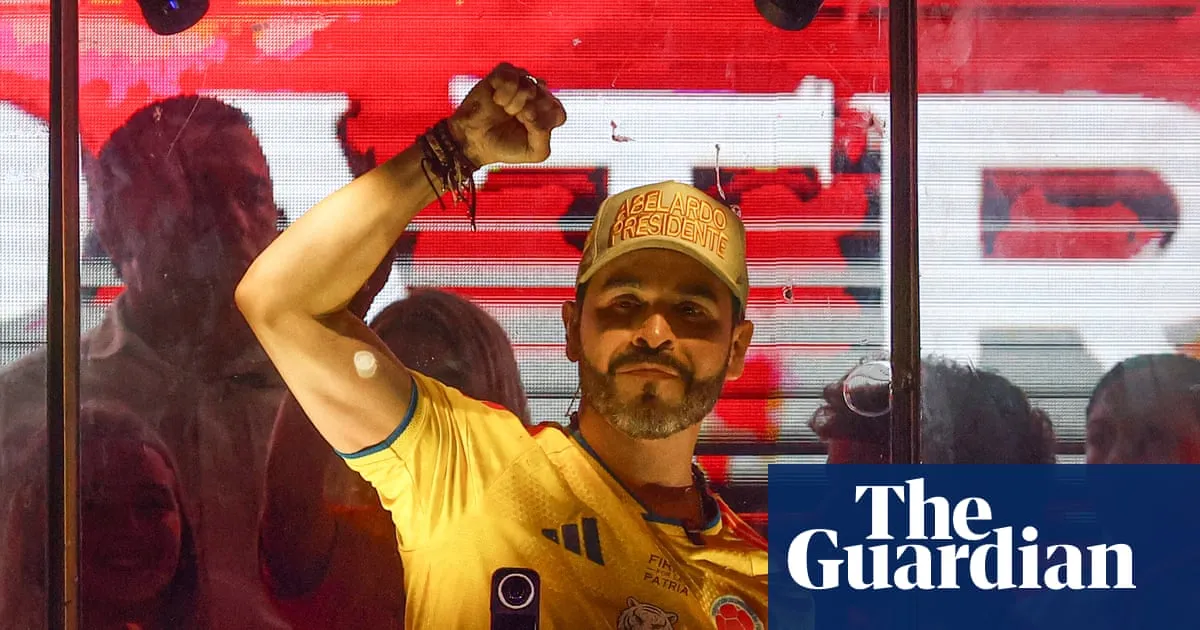
Colombians go to the polls on Sunday in a presidential runoff expected to trigger to a dramatic shift in the country’s decades-long armed conflict, now at its most violent point since the landmark 2016 peace agreement between the government and most of the Colombia" class="entity-link entity-organization" data-entity-id="6250" data-entity-type="organization">Revolutionary Armed Forces of Colombia (Farc).Polls show the frontrunner is the Trump-admiring far-right lawyer and millionaire businessman Abelardo de la Espriella, who has vowed to abandon President Gustavo Petro’s “total peace” plan of negotiating the disarmament of all criminal organisations and instead return to full-scale military confrontation with armed groups.De la Espriella’s opponent in the ballot will be Petro’s chosen successor and the main architect of “total peace”, the leftwing senator Iván Cepeda, who argues for the continuation of the plan, with “necessary changes”.Cepeda led the polls throughout most of the campaign but was defeated in the first round three weeks ago and has since struggled to attract centrist voters.The election, in which more than 41 million Colombians are eligible to vote, is expected to deliver another victory for a far-right candidate advocating an iron-fist approach to crime, after the examples of Keiko Fujimori, who is leading the vote count in Peru, and José Antonio Kast, who won last year’s election in Chile.Amid what many analysts see as a new wave of far-right victories across Latin America, a De la Espriella presidency would leave only Mexico, Brazil, Uruguay and Guatemala under leftwing governments.Sandra Borda Guzmán, an associate professor of political science at Los Andes University in Bogotá, said De la Espriella successfully tapped into two trends that have shaped recent elections around the world: presenting himself as an anti-establishment “outsider” and promising quick solutions to violence.He even promised that, if elected, he would restore state control over territories dominated by criminal groups within 90 days – although he later appeared to backtrack, telling Radio Caracol: “I never said I would solve the security problem in 90 days.”De la Espriella’s opponent, Iván Cepeda, was leading in the polls until a few weeks ago. Photograph: Sebastian Barros/NurPhoto/ShutterstockDe la Espriella, a lawyer who launched his legal career defending leaders of rightwing paramilitary militias, maintained that his goal during his first three months in office would be to “capture or kill” 10 major narcoterrorist and organised crime leaders.“Between the international trend favouring candidates who present themselves as anti-political figures and Colombia’s domestic security situation, that combination has helped him significantly,” said Guzmán.Although violence remains far below the extraordinarily high levels recorded in the decades before the peace deal with the Farc, the past year has been the most violent since the 2016 agreement.Miguel Bermúdez, a 40-year-old business administrator from the coastal city of Cartagena, said he would vote for De la Espriella largely because he is an “outsider” despite his long history as a lawyer for the rich and powerful.“For a long time, I’ve been looking for something that feels fresh. I’m tired of that same old political narrative,” said Bermúdez.Kátia Outten, a 57-year-old dentist from the island of San Andrés, said she would vote for Cepeda because “he understands the needs of ordinary people”.During his presidency, Cepeda’s backer Petro expanded social programmes and increased the minimum wage. The poverty rate has fallen to its lowest level since records began in 2012.Outten also decided not to vote for De la Espriella because of what she sees as his sexist views, including a radio interview in which he claimed to have won support among female voters because of the size of his penis.“Women make up just over 50% of the population. If we go out and vote with women’s empowerment in mind, we can show that all of that rhetoric has no basis,” she said.
SRCThe Guardian - World News
LANGEN
LEANCenter-Left
WORDS613
ENT12
SUN · 2026-06-21 · 05:00 GMTBRIEF NSR-2026-0621-86083
NSR-2026-0621-86083News Report·EN·Conflict
Colombia’s runoff election expected to trigger shift in decades-long armed conflict
Colombia is holding a presidential runoff election on Sunday, which is expected to significantly alter the country's approach to its ongoing armed conflict, currently at its most violent point since the 2016 Farc peace agreement. The frontrunner, far-right lawyer Abelardo de la Espriella, advocates for a return to full-scale military confrontation with armed groups, rejecting President Gustavo Petro's "total peace" plan of negotiation and disarmament.
Tiago Rogero in BogotáThe Guardian - World NewsFiled 2026-06-21 · 05:00 GMTLean · Center-LeftRead · 3 min
The Guardian - World NewsFIG 01
Reading time
3min
Word count
613words
Sources cited
2cited
Entities identified
12entities
Quality score
100%
§ 01
Briefing Summary
AI-generatedNEWSAR · AI
Colombia is holding a presidential runoff election on Sunday, which is expected to significantly alter the country's approach to its ongoing armed conflict, currently at its most violent point since the 2016 Farc peace agreement. The frontrunner, far-right lawyer Abelardo de la Espriella, advocates for a return to full-scale military confrontation with armed groups, rejecting President Gustavo Petro's "total peace" plan of negotiation and disarmament. His opponent is leftwing senator Iván Cepeda, who supports continuing the "total peace" plan with modifications. De la Espriella's campaign has resonated with voters seeking quick solutions to violence and an anti-establishment figure, while Cepeda's campaign has struggled to attract centrist voters.
Confidence 0.90Sources 2Claims 5Entities 12
§ 02
Article analysis
Model · rule-basedFraming
Conflict
Political Strategy
Tone
Mixed Tone
AI-assessed
CalmNeutralAlarmist
Factuality
0.60 / 1.00
Mixed
LowHigh
Sources cited
2
Limited
FewMany
§ 03
Key claims
5 extracted01
The past year has been the most violent in Colombia since the 2016 peace agreement with the Farc.
factual
Confidence
0.90
02
De la Espriella successfully tapped into trends of presenting himself as an anti-establishment 'outsider' and promising quick solutions to violence.
factualSandra Borda Guzmán
Confidence
0.80
03
Colombia's presidential runoff election is expected to trigger a dramatic shift in the country's decades-long armed conflict.
prediction
Confidence
0.80
04
De la Espriella promised to restore state control over territories dominated by criminal groups within 90 days, but later appeared to backtrack.
quoteAbelardo de la Espriella
Confidence
0.70
05
Polls show far-right lawyer Abelardo de la Espriella is the frontrunner, advocating a return to full-scale military confrontation.
factual
Confidence
0.70
§ 04
Full report
3 min read · 613 words§ 05
Entities
12 identifiedKey playerOppositionContextPositiveNeutralNegative
People6
§ 06
Keywords & salience
10 termsarmed conflict
1.00
peace agreement
0.90
total peace plan
0.90
presidential runoff
0.80
far-right
0.70
criminal organizations
0.60
disarmament
0.50
military confrontation
0.50
organized crime
0.40
political science
0.40
§ 07
Topic connections
Interactive graph Network visualization showing 51 related topics
View Full Graph Person Organization Location Event|Click node to navigate|Edge numbers = shared articles