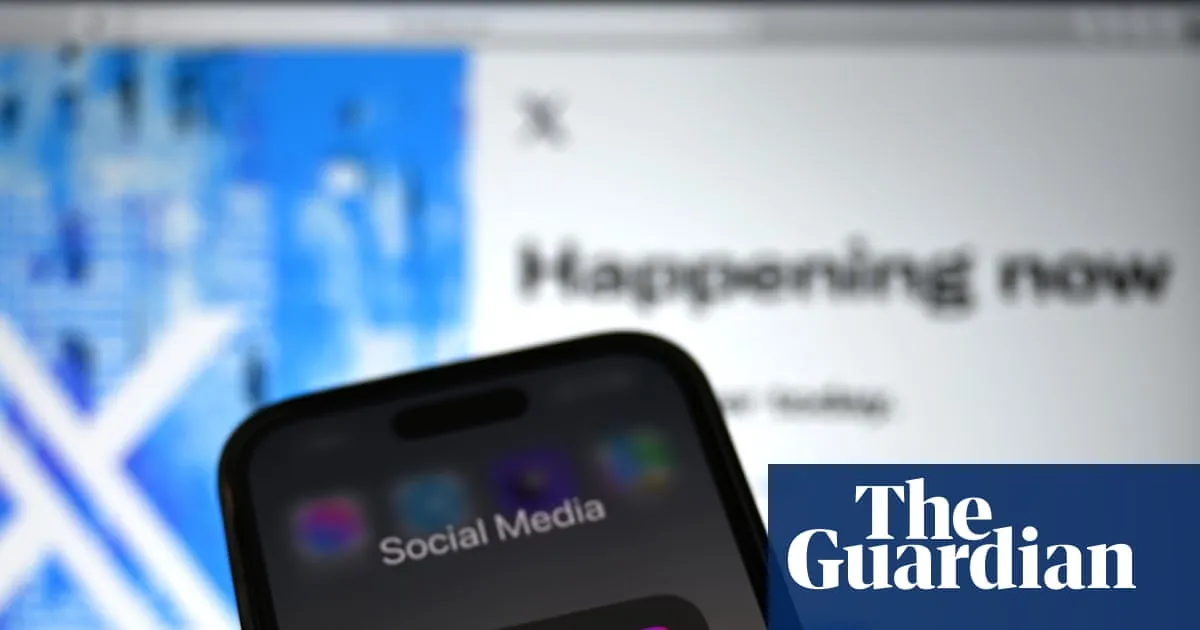
Plans to hand established broadcasters and media companies greater prominence on digital platforms such as YouTube and TikTok have been unveiled, as ministers warned online misinformation risked becoming “existential for our democracy”.In proposals that set up a new clash with global tech companies, content from the likes of the BBC, ITV and Channel 4 would have to be awarded more promotion by their algorithms – with special rules considered for times of social unrest or crisis.It comes after a concerted campaign by the UK’s public service broadcasters (PSBs), who have also been arguing their content needs to be safeguarded to protect the “shared social fabric of the UK”.They have long harboured concerns that their content is being drowned out by less reliable content, or demoted by the sheer weight of English-language material generated in the US.Ian Murray, the media minister, said he hoped the big tech companies would work with the government to put new prominence rules into place. However, he said legislation could be used if required. “The ball is in their court,” he said.Murray said the shift towards online platforms was “existential for media, but also existential for our democracy”, pointing to the amount of misinformation detected during last week’s Makerfield byelection.A government consultation on the issue, published on Tuesday, signals that greater prominence for news coverage could be extended to local and national newspapers, labelling them as “trustworthy providers”.It sets up the delicate task of defining which outlets count as trustworthy providers – a definition that is likely to be fought over fiercely by news outlets, broadcasters and content creators.Guy Black, deputy chair of the Telegraph Media Group and chair of the News Media Association, said: “The government is right to highlight the growing problem of misinformation online, but the solution must ensure that media diversity is protected, maintaining public access to diverse and plural sources of trusted information.”Social media companies have previously been sceptical about artificially boosting the prominence of traditional media, arguing that it goes against the principle of creator content.Prominent figures in the creator economy have also questioned the approach. In an interview with the Guardian last year, Jordan Schwarzenberger, the manager of the Sidemen, who have well over 100 million subscribers between them, said the demand from PSBs was a “defeatist mentality”.David Wheeldon, senior director of government affairs and public policy for YouTube, Europe, said: “The UK’s creator economy is a global success story because of one simple idea: on YouTube, viewers decide what they want to watch. “Prominence rules seek to distort that – forcing YouTube to prioritise government-picked channels over whatever viewers actually came to watch. That’s not fair on users, creators or the wider journalism ecosystem. We’ll continue to advocate for a level playing field.”It comes with more people now receiving news through digital platforms than from news sites and TV channels, according to a recent annual study by the Reuters Institute for the Study of Journalism.Other types of high-quality content from public service media could also be given prominence.The BBC, funded through the licence fee, as well as ITV and Channel 4 are now all trying to boost their presence on YouTube. However, the economics of YouTube remain challenging for them.“TV remains at the heart of our society,” said Lisa Nandy, the culture secretary. “It is key to supporting social cohesion and is a cornerstone of our democracy, which is why, as the technology underpinning it changes, we are making sure it is protected for generations to come.”The government’s green paper includes proposals to safeguard the biggest sporting events in the digital age, by ensuring streaming and catch-up rights to some of the world’s biggest fixtures – such as the World Cup, Olympics and Wimbledon – cannot be put behind a paywall.It also includes options for switching off terrestrial signals in favour of digital TV via internet connections. That could happen as early as 2034, which has prompted concerns about the impact on older viewers who do not have high-quality broadband connections.The consultation leaves open the possibility of delaying the switchover to 2044.
SRCThe Guardian - World News
LANGEN
LEANCenter-Left
WORDS674
ENT12
MON · 2026-06-22 · 21:30 GMTBRIEF NSR-2026-0622-86504
NSR-2026-0622-86504News Report·EN·Political Strategy
UK plans to give established media more visibility on YouTube and TikTok
The UK government plans to give established media outlets like the BBC, ITV, and Channel 4 greater prominence on platforms such as YouTube and TikTok. Ministers argue this is necessary to combat online misinformation, which they deem an "existential" threat to democracy.
Michael Savage Media editorThe Guardian - World NewsFiled 2026-06-22 · 21:30 GMTLean · Center-LeftRead · 3 min
The Guardian - World NewsFIG 01
Reading time
3min
Word count
674words
Sources cited
5cited
Entities identified
12entities
Quality score
100%
§ 01
Briefing Summary
AI-generatedNEWSAR · AI
The UK government plans to give established media outlets like the BBC, ITV, and Channel 4 greater prominence on platforms such as YouTube and TikTok. Ministers argue this is necessary to combat online misinformation, which they deem an "existential" threat to democracy. The proposals, part of a government consultation, aim to ensure algorithms promote content from these "trustworthy providers," with special consideration for times of crisis. This move stems from public service broadcasters' concerns about their content being overshadowed by less reliable sources. While the government hopes tech companies will cooperate, it has indicated legislation could be used if necessary. Social media companies and content creators have expressed skepticism, arguing it distorts viewer choice and creator economies.
Confidence 0.90Sources 5Claims 5Entities 12
§ 02
Article analysis
Model · rule-basedFraming
Political Strategy
Technology
Tone
Measured
AI-assessed
CalmNeutralAlarmist
Factuality
0.60 / 1.00
Mixed
LowHigh
Sources cited
5
Well sourced
FewMany
§ 03
Key claims
5 extracted01
YouTube argues prominence rules distort the platform by forcing prioritization over viewer choice.
quoteYouTube
Confidence
0.90
02
Ministers warned online misinformation risked becoming existential for our democracy.
quoteministers
Confidence
0.90
03
UK plans to give established media greater prominence on YouTube and TikTok.
factual
Confidence
0.90
04
The government may use legislation if tech companies do not cooperate on new prominence rules.
factualIan Murray
Confidence
0.80
05
Content from BBC, ITV, and Channel 4 would have to be promoted more by platform algorithms.
factual
Confidence
0.80
§ 04
Full report
3 min read · 674 words§ 05
Entities
12 identifiedKey playerOppositionContextPositiveNeutralNegative
Organizations8
Locations1
§ 06
Keywords & salience
10 termsonline misinformation
1.00
digital platforms
0.90
established media
0.90
youtube
0.80
tiktok
0.80
public service broadcasters
0.70
algorithm prominence
0.60
media diversity
0.50
creator economy
0.40
trustworthy providers
0.40
§ 07
Topic connections
Interactive graph Network visualization showing 51 related topics
View Full Graph Person Organization Location Event|Click node to navigate|Edge numbers = shared articles