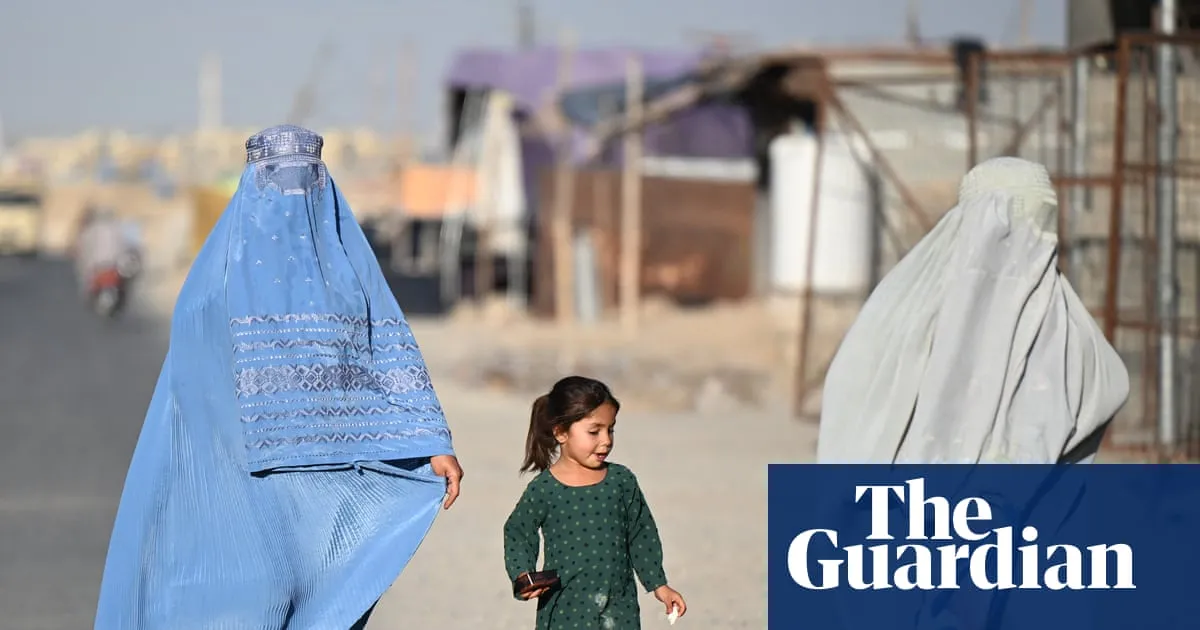
EU officials are facing fierce criticism over plans to host the Taliban in Brussels on Tuesday, with rights campaigners and MEPs warning that the meeting risks normalising a regime that has banned girls from school beyond the sixth grade and sought to erase women from public life, while its ranks include two leaders accused of Crimes against humanity.The Belgian foreign ministry said on Monday it had issued five single-day visas to a Taliban delegation to attend a meeting in Brussels. Sources told the Guardian the meeting was expected to take place on Tuesday.The meeting comes weeks after the commission confirmed that it has been in talks with the Taliban since January to discuss how to scale up the deportation of Afghan migrants.The willingness of EU officials to cooperate with the Taliban – who in 2024 banned women from speaking or showing their faces outside their home – contrasts sharply with the messaging of the European parliament, where MEPs have repeatedly backed resolutions condemning the regime, said the Socialist MEP Juan Fernando López Aguilar.“I’m appalled,” he said. “It’s absolutely an outrage and a total loss of faith and the credibility of the European Union that it can hold such a double standard.”Socialist MEP Juan Fernando López Aguilar said: ‘It’s absolutely an outrage and a total loss of faith and the credibility of the European Union that it can hold such a double standard.’ Photograph: Anadolu/Getty ImagesTwo senior Taliban leaders are subject to arrest warrants issued by the international criminal court, which has accused them of Crimes against humanity for the persecution of women and girls. The EU has imposed sanctions on several individuals associated with the regime.In May, a spokesperson for the European Commission said the meeting with the Taliban had been coordinated with Sweden after 20 member states had called for concrete pathways to deport Afghans without legal residence permits or who are deemed a security risk. The talks would be focused on how to return those who “pose a security threat” to the EU, said the spokesperson.The rationale was rejected by López Aguilar, who instead accused the EU of allowing the far right and its rhetoric around Immigration to set the agenda. “We’re 450 million people all together. There’s no reason to panic when you talk about a certain number of migrants fleeing from despair or from a lack of opportunities. Let alone persecution, which is grounds for them to seek international protection,” he said. “Migration is not a threat, not even a crisis. It’s a constant fact of the history of mankind.”Since the Taliban returned to power in 2021, hundreds of thousands of Afghans have sought asylum in Europe. Across the continent, the lives they have carved out have become increasingly precarious as the discourse on migration hardens, with many EU member states seemingly ready to overlook the risks of carrying out deportations to a country in the grips of a humanitarian and human rights crisis.About 40% of the population in Afghanistan is affected by hunger, according to the International Rescue Committee. The situation of women in the country is particularly precarious as they wrestle with systematic barriers to education, employment and health care.Lisa Owen, the organisation’s Afghanistan country director, said: “Deporting Afghans back to a country where almost half of the population cannot feed themselves is not a migration policy; it is a decision that could cost lives.”The message was echoed in an open letter, in which 83 Afghan and international human rights groups expressed grave concerns about the EU’s intentions. “Afghanistan is currently one of the most dangerous places in the world to be a woman, and forced return would expose many to persecution, violence and severe deprivation of rights,” it noted.A Taliban fighter stands guard as women wait to receive food rations distributed by a humanitarian aid group, in Kabul, Afghanistan. Photograph: Ebrahim Noroozi/APWhile the EU has said that the meeting in no way constitutes a recognition of the Taliban, what is playing out is something far worse, said Shagofah Ghafori, of the Brussels-based Centre for European Policy Studies.“What Brussels is offering instead is something more insidious: normalisation,” Ghafori wrote this month. “And normalisation doesn’t require a signed treaty. It happens incrementally, through granting visas, meeting rooms and the quiet replacement of principle with transaction.”A report published by the UN last year found that many Afghans who were returned to the country, most of them by Pakistan and Iran, experienced arbitrary arrest, detention, torture and ill treatment at the hands of the authorities. The finding suggests that deportations to Afghanistan could trample on the EU’s obligation, under international law, to refrain from sending people back who are at risk of facing persecution or torture.This risk was laid bare in a charter flight, coordinated with Qatar, that left Germany in August 2024 carrying 28 Afghan citizens, said Ghafori. “Once a plane lands, there’s no credible oversight and reports indicate that returnees were detained and interrogated, with at least one later killed,” she said. “If the EU proceeds with deportations, it would be doing so with full knowledge that many returnees will end up in torture cells or mass graves.”Germany is believed to have deported more than 100 since August 2024, while Austria has also begun deportations.While the European Commission has argued that cooperation with the Taliban is necessary to deport convicted criminals back to Afghanistan, Reshad Jalali, a senior policy analyst with the European Council on Refugees and Exiles, said this could just be the starting point. “The real risk is that once deportation is normalised and resumed between the EU and the Taliban de facto authorities, this would create a path for a wider deportation of Afghans without criminal convictions.”Earlier this year, an investigative report by the German broadcaster ZDF alleged that the deportations to Afghanistan, while prioritising those convicted of crime, had also targeted single Afghan men who had not broken any laws.Jalali called on the EU to instead work with the international community to hold the Taliban accountable. “The priority from the EU should be protecting Afghans and defending international law, rather than creating pathways that risk legitimising one of the world’s most abusive regimes.”The deportations to Afghanistan were not only a humanitarian failure but also a strategic mistake, Hannah Neumann, a German Green MEP, said on social media. “If Europe returns young Afghan men into poverty and hopelessness, many will end up dependent on the only structures still offering shelter and food: Taliban networks and madrassas.”Every return was a potential boon to the Taliban, she said. “This is how authoritarian systems hold power. Not only through violence, but through dependency, social control and enforced loyalty,” she said. “By deporting people into desperation, we are not weakening the Taliban. We risk strengthening the very structures that keep them in power.”
SRCThe Guardian - World News
LANGEN
LEANCenter-Left
WORDS1 127
ENT10
TUE · 2026-06-23 · 04:00 GMTBRIEF NSR-2026-0623-86579
NSR-2026-0623-86579News Report·EN·Human Rights
EU faces fierce criticism over plans to host Taliban in Brussels
EU officials are facing strong criticism for planning to host a Taliban delegation in Brussels on Tuesday. Rights campaigners and MEPs argue this meeting risks normalizing a regime that has severely restricted women's rights and banned girls from secondary education.
Ashifa Kassam European community affairs correspondentThe Guardian - World NewsFiled 2026-06-23 · 04:00 GMTLean · Center-LeftRead · 5 min
The Guardian - World NewsFIG 01
Reading time
5min
Word count
1 127words
Sources cited
3cited
Entities identified
10entities
Quality score
100%
§ 01
Briefing Summary
AI-generatedNEWSAR · AI
EU officials are facing strong criticism for planning to host a Taliban delegation in Brussels on Tuesday. Rights campaigners and MEPs argue this meeting risks normalizing a regime that has severely restricted women's rights and banned girls from secondary education. The Belgian foreign ministry confirmed issuing five single-day visas for the delegation. This engagement follows previous talks with the Taliban since January regarding the deportation of Afghan migrants deemed security risks or lacking legal residence. Critics, including MEP Juan Fernando López Aguilar, condemn the move as an "outrage" and a double standard, especially given that two Taliban leaders face international criminal court arrest warrants for crimes against humanity. Human rights groups warn that deporting Afghans to their country, which faces a humanitarian crisis and where women face severe persecution, violates international obligations.
Confidence 0.90Sources 3Claims 5Entities 10
§ 02
Article analysis
Model · rule-basedFraming
Human Rights
Diplomatic
Tone
Mixed Tone
AI-assessed
CalmNeutralAlarmist
Factuality
0.70 / 1.00
Factual
LowHigh
Sources cited
3
Well sourced
FewMany
§ 03
Key claims
5 extracted01
MEP Juan Fernando López Aguilar calls the meeting an 'outrage' and a 'total loss of faith and credibility' for the EU.
quoteJuan Fernando López Aguilar
Confidence
1.00
02
Two senior Taliban leaders are subject to arrest warrants from the international criminal court for crimes against humanity.
factualinternational criminal court
Confidence
1.00
03
EU officials are facing criticism over plans to host the Taliban in Brussels.
factual
Confidence
1.00
04
The EU has been in talks with the Taliban since January to discuss scaling up the deportation of Afghan migrants.
factualEuropean Commission
Confidence
0.90
05
The meeting risks normalizing a regime that has banned girls from school beyond sixth grade and sought to erase women from public life.
factualrights campaigners and MEPs
Confidence
0.90
§ 04
Full report
5 min read · 1 127 words§ 05
Entities
10 identifiedKey playerOppositionContextPositiveNeutralNegative
Organizations5
§ 06
Keywords & salience
9 termstaliban
1.00
eu criticism
0.90
human rights
0.80
women's rights
0.80
brussels meeting
0.70
migrant deportation
0.60
crimes against humanity
0.50
european union
0.50
double standard
0.40
§ 07
Topic connections
Interactive graph Network visualization showing 51 related topics
View Full Graph Person Organization Location Event|Click node to navigate|Edge numbers = shared articles