The morning of 24 June 2016, the day after Britain voted to leave the EU, dawned grey and overcast in Brussels, after a stormy night. As The Guardian’s correspondent in the city, after a few hours’ sleep, I hurried to a breakfast briefing with Conservative MEPs at a smart hotel in the EU quarter. Large trays of eggs, sausages and beans were barely touched, as MEPs fielded questions they couldn’t answer: What happens now? When would the UK leave? Would David Cameron resign? A few hours later he did.In the EU institutions officials broke down in tears. A few top British EU civil servants prepared to resign. Anti-EU populists were jubilant. European leaders feared a domino effect of withdrawals. Sadness, shock and anger swirled on that humid day. The then-president of the European parliament, Martin Schulz, told me that EU lawyers were studying whether it was possible to speed up the triggering of Article 50, the then-obscure and untested EU exit clause. Then European Commission president Jean-Claude Juncker declared he would like to get Brexit negotiations started “immediately”. The idea of hurrying Britain out the door was soon dropped, but those statements reflected the febrile mood.After the initial shock, the EU rallied. Meeting without the UK for the first time on 29 June 2016, the 27 member states set out their red lines: no negotiations without notification of Article 50, no cherrypicking and no splitting the four freedoms: free movement of goods, services, capital – and people. It was a playbook that stood the test of time.The dominos never fell. After three prime ministers, two elections and a long-running parliamentary crisis, the UK finalised its divorce and left. The EU carried on in the face of fundamental challenges: a global pandemic, the full-scale invasion of Ukraine, the return of Donald Trump, energy price shocks and fierce economic competition from China. Since the Brexit vote, the EU has embarked on common borrowing, along with joint purchases of weapons, gas and vaccines – decisions that would have been almost certainly more difficult with a British prime minister at the table. During its 47 years inside the European project, the UK was often a sceptical voice on deeper EU integration, negotiating opt outs or seeking to block decisions perceived as too federalist.A decade later Britain is heading for its seventh prime minister in 10 years, while its relationship with the EU remains contested. For the EU, by contrast, Brexit is a historical episode viewed with detachment.Jonathan Faull, the former head of the European Commission’s UK taskforce, said the EU has got used to Brexit. Faull, who resigned from the Commission after a 38-year career following the 2016 vote, said: “The final deal that was done is very much to the EU’s advantage. I think Frost and co negotiated badly,” he said referring to Lord Frost, the UK’s erstwhile chief negotiator on the post-Brexit agreement. “The trade and cooperation agreement leaves the EU pretty satisfied in economic terms. The status quo suits them. On the continent, there’s no great desire to reset relations with the UK. They seem to be broadly OK.”From Brexit to Breturn?The mood in the UK among younger voters is in favour of a return to the EU. Photograph: Vuk Valcic/Zuma Press Wire/ShutterstockIn the UK, Britain’s relationship with the EU remains disputed. A poll published this week found that 60% of those aged 18-28 would support rejoining the EU. Britain’s most-likely next prime minister, Andy Burnham, has said he sees a “long-term case” for rejoining, but would not be advocating for it immediately.The former president of the European Council, Charles Michel, told The Guardian this month he expected the EU would react with “a positive spirit” if the UK ever requested to rejoin. Michel, Belgium’s prime minister at the time of the referendum, stressed this was solely a question for UK politics “if and when there is the readiness for a serious domestic debate”.skip past newsletter promotionafter newsletter promotionMeanwhile, Poland’s prime minister, Donald Tusk, has said he dreams of “Breturn”, while Spain’s leader Pedro Sánchez told the New Statesman earlier this year “we miss the UK within the EU”. Two-thirds of EU citizens would also support Britain rejoining the bloc: a poll for the European Council on Foreign Relations found 66% of respondents across 15 countries either “strongly supported” or “tended to support” UK membership. Support for rejoin ranged from lows of 56% in Bulgaria and 59% in France and Italy to highs in the Netherlands and Denmark.In reality, rejoin is not on the table. Georg Riekeles, who worked for the EU chief Brexit negotiator Michel Barnier, thinks rejoining is a long-term prospect that ultimately depends on a British consensus. “The strategic, economic and geopolitical logic all point in one direction but rejoining is not a mood, it is a national choice requiring realism, discipline and trust. The EU would need to see a durable national consensus that the UK has really changed its mind.”Riekeles, now an associate director at the European Policy Centre, said Starmer’s departure “raises the question of stability” in the UK system. “What the EU will be looking for, I think, is a UK that has a stable and durable national consensus. Nobody wants to be on a rollercoaster ride.”To receive the complete version of This Is Europe in your inbox every Wednesday, please subscribe here.
SRCThe Guardian - World News
LANGEN
LEANCenter-Left
WORDS889
ENT12
WED · 2026-06-24 · 14:30 GMTBRIEF NSR-2026-0624-87074
NSR-2026-0624-87074Analysis·EN·Political Strategy
A decade after the Brexit vote, Europe has moved on even if Britain hasn’t
A decade after the UK voted to leave the EU, the bloc has moved on and consolidated, while Britain continues to debate its relationship with the continent. Following the 2016 vote, the EU rallied and set its terms for negotiations, successfully navigating challenges like the pandemic and the war in Ukraine.
Jennifer Rankin Brussels correspondentThe Guardian - World NewsFiled 2026-06-24 · 14:30 GMTLean · Center-LeftRead · 4 min
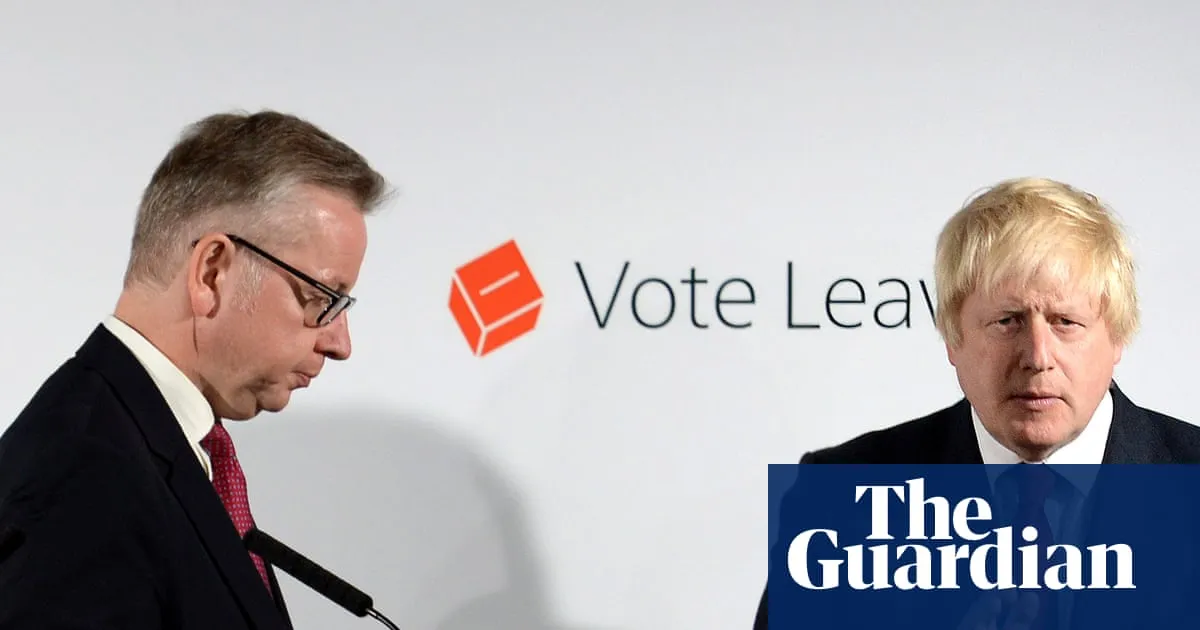
The Guardian - World NewsFIG 01
Reading time
4min
Word count
889words
Sources cited
2cited
Entities identified
12entities
Quality score
100%
§ 01
Briefing Summary
AI-generatedNEWSAR · AI
A decade after the UK voted to leave the EU, the bloc has moved on and consolidated, while Britain continues to debate its relationship with the continent. Following the 2016 vote, the EU rallied and set its terms for negotiations, successfully navigating challenges like the pandemic and the war in Ukraine. During its EU membership, the UK was often a voice against deeper integration. Now, the EU views Brexit as a historical episode, with former officials suggesting the final deal favors the EU. In contrast, the UK faces ongoing debate about its future ties, with significant support among younger voters for rejoining the EU, though this remains a long-term prospect dependent on British consensus.
Confidence 0.90Sources 2Claims 5Entities 12
§ 02
Article analysis
Model · rule-basedFraming
Political Strategy
Diplomatic
Tone
Measured
AI-assessed
CalmNeutralAlarmist
Factuality
0.60 / 1.00
Mixed
LowHigh
Sources cited
2
Limited
FewMany
§ 03
Key claims
5 extracted01
The final Brexit deal is very much to the EU's advantage, with the UK negotiating badly.
quoteJonathan Faull
Confidence
1.00
02
The EU has embarked on common borrowing, joint purchases of weapons, gas, and vaccines since Brexit.
factual
Confidence
0.95
03
Britain is heading for its seventh prime minister in 10 years, while its relationship with the EU remains contested.
factual
Confidence
0.90
04
The EU rallied after the initial shock of Brexit and set out red lines that stood the test of time.
factual
Confidence
0.90
05
A decade after the Brexit vote, the EU has moved on even if Britain hasn’t.
factual
Confidence
0.85
§ 04
Full report
4 min read · 889 words§ 05
Entities
12 identifiedKey playerOppositionContextPositiveNeutralNegative
People4
Locations4
Events1
§ 06
Keywords & salience
10 termsbrexit
1.00
european union
0.90
eu exit
0.80
article 50
0.70
eu integration
0.60
free movement
0.50
european commission
0.40
uk politics
0.40
geopolitics
0.40
european parliament
0.40
§ 07
Topic connections
Interactive graph Network visualization showing 51 related topics
View Full Graph Person Organization Location Event|Click node to navigate|Edge numbers = shared articles