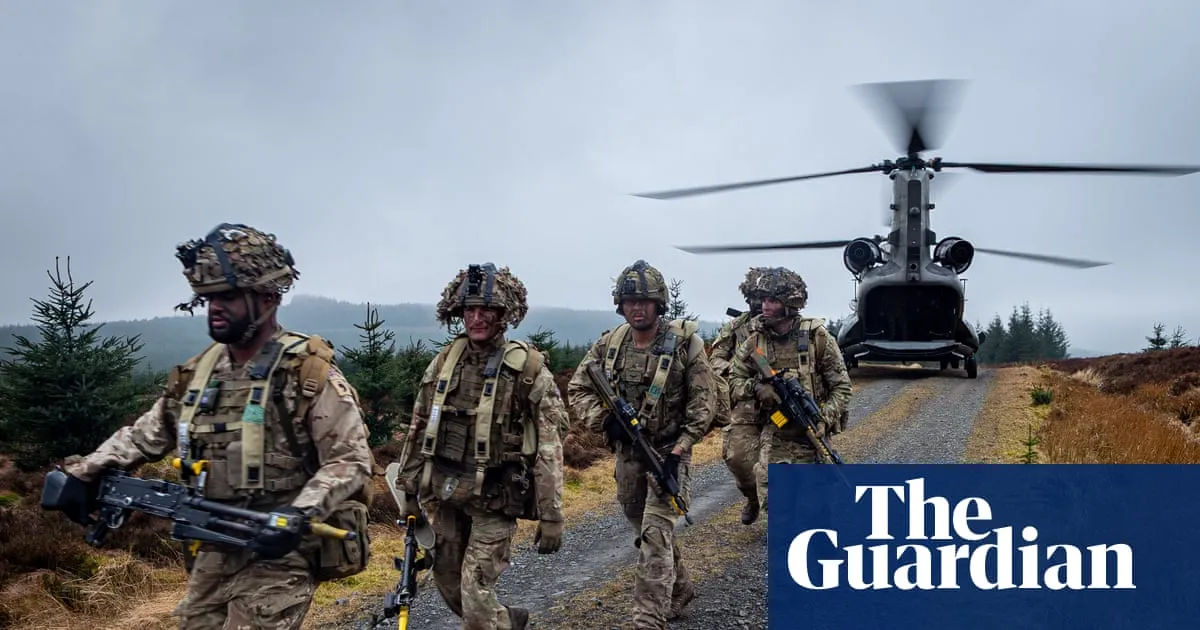
British defence spending ‘went from 2.9% in 1936, to 9% in 1939, to 52% of GDP in 1945,’ well beyond the 2.7% target spend next year. Photograph: Martin Pope/SOPA Images/Shutterstock View image in fullscreen British defence spending ‘went from 2.9% in 1936, to 9% in 1939, to 52% of GDP in 1945,’ well beyond the 2.7% target spend next year. Photograph: Martin Pope/SOPA Images/Shutterstock Government officials to lobby Andy Burnham to invest more than £13.5bn defence spend Senior figures plan to convince Burnham to revive ‘war bonds’ when he becomes prime minister Senior government officials are planning to lobby Andy Burnham during access talks to revive the idea of “war bonds” to pay for higher defence spending when he becomes prime minister, the Guardian understands. Senior figures want the Treasury to be allowed to borrow more for military spending and will try to convince Burnham to invest beyond the £13.5bn earmarked for the long-awaited Defence Investment Plan (Dip). Defence aides are also understood to have travelled to Makerfield during the byelection campaign to bring Burnham’s team up to speed on the state of the UK’s depleted defence capabilities. Although Burnham is now expected to enter Downing Street with the Dip already signed off, he will still come under heavy pressure from military leaders and others within the government to increase defence spending in the long term. Keir Starmer confirmed on Wednesday he would announce the Dip before the NATO summit in Ankara on 7 and 8 July even though he leaves the following week, with No 10 arguing that while it is a big spending commitment, it is an existing one. But he has faced criticism from some Labour MPs for pressing ahead with such an important policy issue, rather than leaving it to his likely successor who has told them he wants to give the Ministry of Defence (MoD) more than the £13.5bn on offer. Burnham’s allies say that if the row over defence spending has been resolved by the time he takes over – amid signs that a little extra money has been found and the settlement accepted by military leaders – then he would probably just move on. However, his team is reserving the right to reopen the Dip if that is not the case – with, for example, mismanaged programmes such as tanks investment left unaddressed and the concerns of the defence establishment unallayed. Burnham is believed to have held discussions with John Healey at the the likely next prime minister’s request, who pushed Starmer’s premiership to the brink when he quit as defence secretary earlier this week, arguing the Dip fell well short of what was required. On Wednesday the head of the armed forces, air chief marshal Sir Richard Knighton, said that Britain needs to fund capable armed forces that can go “toe to toe with Russia” and beyond, because if deterrence were to fail an all out war would be more costly. Emphasising the need for investment, Knighton said that the UK needed “armed forces that our adversaries are scared of” at a conference organised by the Royal United Services Institute. British defence spending “went from 2.9% in 1936, to 9% in 1939, to 52% of GDP in 1945,” Knighton said, dramatically beyond the target spend of 2.7% of GDP next year, even though few believe all out war is likely. With Starmer giving the green light to access talks, No 10 sources said they would use them to encourage Burnham to reconsider defence bonds, which have consistently been blocked by the Treasury amid warnings over the impact of higher borrowing. The government had come close to issuing war bonds to pay for higher defence spending before. The Guardian understands that Morgan McSweeney, Starmer’s former chief of staff, had started pushing for them before he quit. But the plan was rejected by the Treasury. Under the plans drawn up in No 10 and championed by Starmer’s business adviser Varun Chandra, the government would have issued up to £20bn of bonds which would have been exempt from inheritance tax. The money raised would only be used to pay for defence spending – a limitation the Treasury has always resisted in the past. Because there would be a tax benefit to owning them, advocates of the idea believe the government would have had to pay a lower interest rate, helping bring down its overall cost of borrowing. They also say it would have encouraged domestic individual investors to buy bonds, something that has faded in recent years as large hedge funds have become an increasingly important source of credit. Some in government believe the UK would be paying less for public borrowing if more domestic investors owned bonds, as they believe hedge funds are more likely to sell gilts because of small fluctuations in the market. Alex Baker, a member of the defence select committee, said in a recent article the bank, which would specialise in lending to small defence companies would “turn political commitments into industrial output” and that it would “create the conditions for more factories, jobs, exports, innovation and resilient supply chains”. Proponents argue that for a UK subscription of £900m, the UK would gain access to a bank with €100bn (£86bn) of lending capability. Earlier this week, Rachel Reeves, the chancellor, said she was talking to Canada – but also developing a “multilateral defence mechanism” of off balance sheet financing with Finland and the Netherlands. During a cabinet meeting on Tuesday, Starmer told his ministers he wanted to “resolve difficult issues” in his remaining weeks in office to help with the transition, including publishing the Dip which has been delayed over funding disputes between No 10, the Treasury and the MoD. Dan Jarvis, the new defence secretary, has signalled he is already looking for more funding and said he was involved in “very good and constructive” discussions. Other departments have been asked to make cuts to their budgets to allow Starmer to reallocate funds. Explore more on these topics Defence policy Andy Burnham John Healey Military news Share Reuse this content
SRCThe Guardian - World News
LANGEN
LeanCenter-Left
WORDS1,010
ENT10
WED · 2026-06-24 · 18:44 GMTBRIEF NSR-2026-0624-87123
NSR-2026-0624-87123News Report·EN·National Security
Senior No 10 aides to lobby Andy Burnham to invest more than £13.5bn defence spend
Senior Downing Street figures plan to lobby Andy Burnham to increase defense spending beyond the £13.5 billion outlined in the Defence Investment Plan (Dip). They aim to convince him to revive the concept of "war bonds" to fund higher military expenditure, allowing the Treasury to borrow more for defense.
Kiran Stacey Pippa Crerarand Dan SabbaghThe Guardian - World NewsFiled 2026-06-24 · 18:44 GMTLean · Center-LeftRead · 5 min
The Guardian - World NewsFIG 01
Reading time
5min
Word count
1,010words
Sources cited
3cited
Entities identified
10entities
NEWSAR · AI
Senior Downing Street figures plan to lobby Andy Burnham to increase defense spending beyond the £13.5 billion outlined in the Defence Investment Plan (Dip). They aim to convince him to revive the concept of "war bonds" to fund higher military expenditure, allowing the Treasury to borrow more for defense. Defense aides have briefed Burnham's team on the UK's defense capabilities. While Burnham is expected to inherit a signed Dip, he will face pressure to boost spending long-term. The head of the armed forces has emphasized the need for robust funding to counter adversaries like Russia. Downing Street intends to use access talks to promote war bonds, which would be tax-exempt and specifically for defense spending, a proposal previously blocked by the Treasury.
Confidence 0.90Sources 3Claims 5Entities 10
Framing
National Security
Political Strategy
Tone
Measured
AI-assessed
CalmNeutralAlarmist
Factuality
0.60 / 1.00
Mixed
LowHigh
Sources cited
3
Well sourced
FewMany
01
The head of the armed forces stated Britain needs to fund capable armed forces to 'go toe to toe with Russia'.
quoteair chief marshal Sir Richard Knighton
Confidence
1.00
02
The UK's target defence spend for next year is 2.7% of GDP.
statistic
Confidence
0.95
03
British defence spending historically rose significantly during wartime: 2.9% in 1936, 9% in 1939, 52% of GDP in 1945.
statistic
Confidence
0.95
04
Senior government officials plan to lobby Andy Burnham to revive 'war bonds' for higher defence spending.
factualThe Guardian
Confidence
0.90
05
Andy Burnham may reopen the Defence Investment Plan if issues like unaddressed tank investment are not resolved.
factualBurnham's allies
Confidence
0.85
§ 04
Full report
5 min read · 1,010 wordsKey playerOppositionContextPositiveNeutralNegative
Organizations3
defence spending
1.00
andy burnham
0.90
war bonds
0.80
defence investment plan
0.70
military spending
0.60
government officials
0.50
keir starmer
0.40
ministry of defence
0.40
nato summit
0.40
§ 07
Connections
Who appears together in the newsIn this articleWider coverageLine weight = articles in common
Laying out network…
Strongest ties articles in common
- 783
- 626
- 504
- 201
- 141
- 131
Recurring context not named in this article
- TDefence Spendinglinks 10
- PDonald Trumplinks 10
- LGreater Manchesterlinks 10
- LIranlinks 10
- LRussialinks 10
- LUnited Stateslinks 10
- LUkrainelinks 10
- OLabourlinks 9