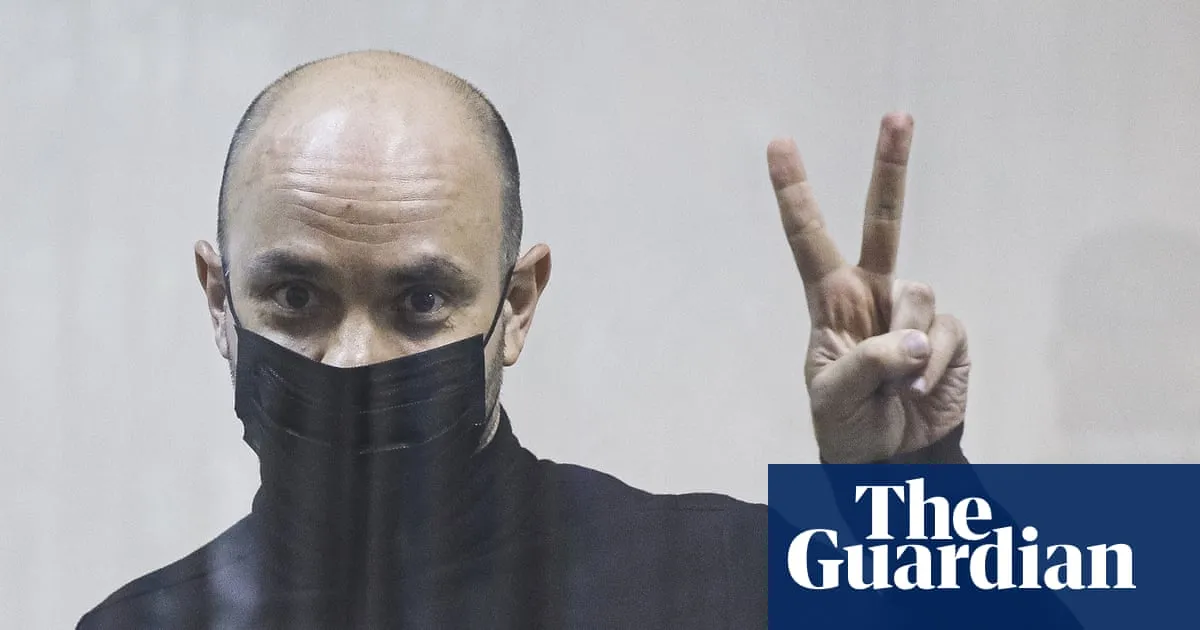
Russian authorities used tools from the Israeli company Cellebrite to break into the phone of a political prisoner, months after the company said it cancelled its contracts with Russia, an investigation by the University of Toronto’s Citizen Lab research unit has found.The case raises questions about how much control Cellebrite has over its own software, which allows users to easily break into phones and examine their contents. The tools are sold worldwide and widely used by police forces in the UK and the US.Andrei Pivovarov, the director of the organisation Russia" class="entity-link entity-organization" data-entity-id="152610" data-entity-type="organization">Open Russia, was arrested in May 2021 and released more than three years later as part of the high-profile exchange that also involved the US journalist Evan Gershkovich.While he was imprisoned, Russian authorities used forensic tools to break into his phone, extracting information about his contacts and his personal and professional life in what Pivovarov said was a “violation of his privacy” that put many of his colleagues at risk.“They tried to find my messages to other colleagues from my organisation and other politicians and may use these in criminal cases against them. After my arrest, several of my colleagues left Russia immediately,” he said.This information was used in building a criminal case against Pivovarov. Authorities were able to gather extensive information about his contacts, including the content of his messages on apps such as WhatsApp and Viber, according to documents provided to Pivovarov in the course of his prosecution. Some of his contacts were later targeted by Coldriver, a Russia-linked group – a link the Citizen Lab has said warrants further investigation.The Citizen Lab said a forensic investigation had found “with high confidence” that Cellebrite tools were used, and that this was confirmed by a document prepared by the Russian authorities and given to Pivovarov in the course of his criminal prosecution.Cellebrite claims it is “totally on the good side”, and has attempted to differentiate itself from other companies such as the NSO Group, whose signature spyware – known as Pegasus – is alleged to have been deployed by foreign governments against dissidents, journalists, diplomats and members of the clergy. NSO says that clients are obligated not to abuse its spyware.Pivovarov was hacked in May 2021, months after Cellebrite said it would stop selling its solutions and services to customers in Russia and Belarus. That announcement followed media pressure in Israel after a group of investigators, led by the human rights lawyer Eitay Mack, revealed that Cellebrite’s tools had been used against tens of thousands of people in Russia, including Alexei Navalny.A Cellebrite device used for data extraction from mobile devices, in 2016. Photograph: Issei Kato/ReutersMack said that while Cellebrite announced it would stop sales, it never dismantled the tools it had already sold to Russia – even though some of its public documents suggest it has the ability to do so. “In contracts with American authorities, they, Cellebrite, keep the right to dismantle the equipment. But the fact is that their equipment is everywhere.”Mack said there were other instances in which Cellebrite’s tools appeared to be used even after the company said it had cancelled contracts, and that investigations he had done indicated the software could be used even with a dated licence.Pivovarov said the use of Cellebrite was a violation of his privacy, and enabled authorities to leverage his personal information against him.In an open letter to the company, he wrote: “The body of investigations that has been carried out demonstrates that the Russian Federation and other authoritarian states continue to operate your devices long after the formal termination of contracts. I submit that your company ought to end the practice of effectively shielding clients who abuse your technology.”Cellebrite has sold technologies to autocratic and repressive countries including Russia, Belarus, China, Jordan, Kenya, Myanmar and Serbia. It has terminated contracts in Serbia, Russia, Belarus, Bangladesh, Hong Kong and China. It has not terminated contracts with Kenya or Jordan, even though the Citizen Lab has found evidence of authorities in both countries using Cellebrite to surveil activists’ phones.“If Cellebrite wants to stop equipping political prosecutions, the path is clear: stop selling to autocrats, remotely disable their tech after credible reports of abuse, and end the era of plausible deniability by implementing cryptographically signed watermarks on all imaged devices,” said John Scott-Railton, a senior researcher at the Citizen Lab.Approached for comment, Cellebrite sent a mass email to a list of journalists and the Citizen Lab, saying: “It is impossible to respond to a report that is about us when Cellebrite was denied the opportunity to review it prior to publication.“Cellebrite technology is provided exclusively under licence and for legally authorised uses, there are no exceptions … Any use of legacy Cellebrite hardware in Russia after March 2021 is entirely unauthorised.”It said the hardware it had sold before March 2021 would be “incompatible with modern devices and would operate without our technical support”.
SRCThe Guardian - World News
LANGEN
LEANCenter-Left
WORDS813
ENT12
THU · 2026-06-25 · 13:25 GMTBRIEF NSR-2026-0625-87342
NSR-2026-0625-87342News Report·EN·Technology
Russia used Israeli firm’s tool to crack phone months after ties severed, report finds
Russian authorities used tools from Israeli company Cellebrite to access the phone of political prisoner Andrei Pivovarov months after Cellebrite stated it canceled contracts with Russia. An investigation by the University of Toronto's Citizen Lab found "high confidence" that Cellebrite tools were used to extract information from Pivovarov's phone, which was then used in his criminal prosecution.
Aisha DownThe Guardian - World NewsFiled 2026-06-25 · 13:25 GMTLean · Center-LeftRead · 4 min
The Guardian - World NewsFIG 01
Reading time
4min
Word count
813words
Sources cited
4cited
Entities identified
12entities
Quality score
100%
§ 01
Briefing Summary
AI-generatedNEWSAR · AI
Russian authorities used tools from Israeli company Cellebrite to access the phone of political prisoner Andrei Pivovarov months after Cellebrite stated it canceled contracts with Russia. An investigation by the University of Toronto's Citizen Lab found "high confidence" that Cellebrite tools were used to extract information from Pivovarov's phone, which was then used in his criminal prosecution. This case raises questions about Cellebrite's control over its software, which is sold globally and used by law enforcement in the UK and US. Pivovarov stated the use of his phone's data violated his privacy and endangered colleagues. Citizen Lab researchers suggest Cellebrite should remotely disable technology after credible reports of abuse and implement watermarks on imaged devices. Cellebrite stated it was denied the opportunity to review the report prior to publication and that its technology is provided under license for legally authorized uses.
Confidence 0.90Sources 4Claims 5Entities 12
§ 02
Article analysis
Model · rule-basedFraming
Technology
Human Rights
Tone
Measured
AI-assessed
CalmNeutralAlarmist
Factuality
0.80 / 1.00
Factual
LowHigh
Sources cited
4
Well sourced
FewMany
§ 03
Key claims
5 extracted01
Cellebrite claims it is 'totally on the good side' and differentiates itself from companies like NSO Group.
quoteCellebrite
Confidence
1.00
02
Citizen Lab found 'with high confidence' that Cellebrite tools were used, confirmed by Russian authorities' documents provided to Pivovarov.
factualCitizen Lab
Confidence
0.95
03
Russian authorities used Cellebrite tools to access a political prisoner's phone months after Cellebrite claimed to cancel contracts with Russia.
factualCitizen Lab
Confidence
0.95
04
Eitay Mack stated Cellebrite never dismantled tools sold to Russia, despite public documents suggesting they could.
factualEitay Mack
Confidence
0.90
05
Andrei Pivovarov's phone was accessed while he was imprisoned, with information used in a criminal case against him and potentially his colleagues.
factualAndrei Pivovarov
Confidence
0.90
§ 04
Full report
4 min read · 813 words§ 05
Entities
12 identifiedKey playerOppositionContextPositiveNeutralNegative
Organizations6
§ 06
Keywords & salience
10 termscellebrite
1.00
phone forensics
0.90
russia
0.80
political prisoner
0.70
citizen lab
0.70
privacy violation
0.60
data extraction
0.60
software control
0.50
criminal case
0.40
nso group
0.40
§ 07
Topic connections
Interactive graph No topic relationship data available yet. This graph will appear once topic relationships have been computed.