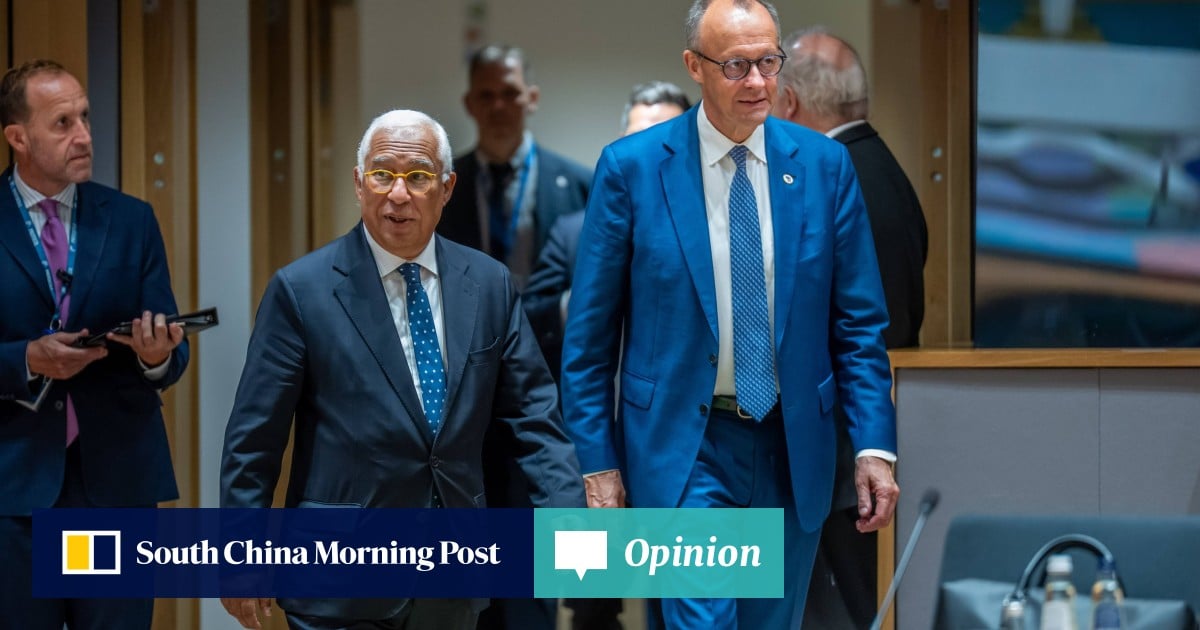
Leaders of the G7 rich nations might have gone into this month’s summit in France hoping for a united front against China. But, overshadowed by the conflicts in Iran and Ukraine and alienated by a mercurial US President Donald Trump, the lacklustre gathering came up short.There was no public agreement on how to address the so-called China-shock-20" class="entity-link entity-topic" data-entity-id="135575" data-entity-type="topic">China shock 2.0, the supposed overcapacity issues and currency manipulation that is considered to be the cause of Chinese exports flooding into Europe.Instead of declaring a joint plan, as the French hosts had initially hoped, milder summit statements called for Group of Seven cooperation to reduce dependence on foreign supply of critical minerals and to support “balanced, durable and resilient growth’’ against “global imbalances”. China was not named, though it was clearly the target.
SRCSouth China Morning Post
LANGEN
LEANCenter-Right
WORDS130
ENT12
FRI · 2026-06-26 · 12:30 GMTBRIEF NSR-2026-0626-87656
NSR-2026-0626-87656Opinion·EN·Diplomatic
Europe wants a new Plaza Accord for China – seriously?
At a recent G7 summit in France, leaders aimed for a united stance against China's economic practices, but the gathering was overshadowed by other global conflicts and US President Trump's actions. Consequently, no public agreement was reached on how to address perceived overcapacity and currency manipulation by China, which is seen as contributing to a surge in Chinese exports to Europe.
Alex LoSouth China Morning PostFiled 2026-06-26 · 12:30 GMTLean · Center-RightRead · 1 min
South China Morning PostFIG 01
Reading time
1min
Word count
130words
Sources cited
0cited
Entities identified
12entities
Quality score
100%
§ 01
Briefing Summary
AI-generatedNEWSAR · AI
At a recent G7 summit in France, leaders aimed for a united stance against China's economic practices, but the gathering was overshadowed by other global conflicts and US President Trump's actions. Consequently, no public agreement was reached on how to address perceived overcapacity and currency manipulation by China, which is seen as contributing to a surge in Chinese exports to Europe. Instead of a concrete plan, the summit statements called for G7 cooperation to lessen reliance on foreign critical mineral supplies and promote balanced global growth, implicitly targeting China without naming it.
Confidence 0.85Claims 4Entities 12
§ 02
Article analysis
Model · rule-basedFraming
Diplomatic
Economic Impact
Tone
Mixed Tone
AI-assessed
CalmNeutralAlarmist
Factuality
0.30 / 1.00
Opinion-Heavy
LowHigh
Sources cited
0
No named sources
FewMany
§ 03
Key claims
4 extracted01
Summit statements called for cooperation to reduce dependence on foreign supply of critical minerals.
factual
Confidence
0.90
02
The G7 summit lacked a public agreement on addressing the 'China shock 2.0'.
factual
Confidence
0.90
03
China was the clear target of the G7 summit statements, though not explicitly named.
factual
Confidence
0.80
04
G7 leaders hoped for a united front against China at the summit.
factual
Confidence
0.80
§ 04
Full report
1 min read · 130 words§ 05
Entities
12 identifiedKey playerOppositionContextPositiveNeutralNegative
Organizations1
Locations5
§ 06
Keywords & salience
8 termschina shock 2.0
1.00
overcapacity issues
0.90
currency manipulation
0.90
g7 summit
0.80
plaza accord
0.70
critical minerals
0.60
global imbalances
0.50
foreign supply
0.40
§ 07
Topic connections
Interactive graph Network visualization showing 51 related topics
View Full Graph Person Organization Location Event|Click node to navigate|Edge numbers = shared articles