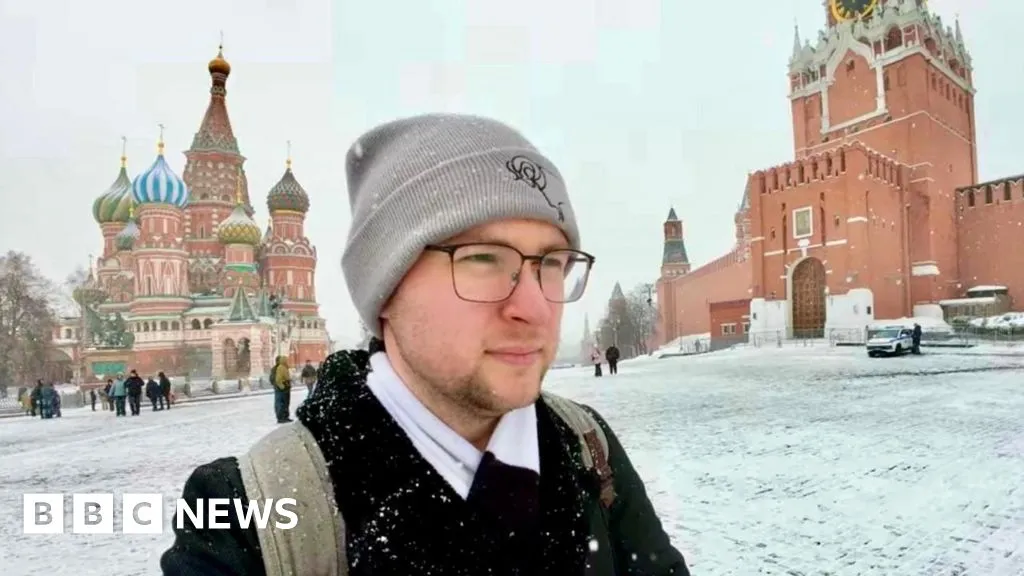
They quit the West for Russia's traditional values, but it wasn't what they expected 3 hours ago Share Save Add as preferred on Google Dan HardoonBBC World Service Ben/ BBC Ben, from Derby, moved to Russia in 2023 on a private family visa and says he feels safer living there When Leo Hare moved to Russia from Texas in late 2023, after being granted asylum, he was convinced he was building a better future for his family. The father of three threw himself into his new life: sampling dumplings , milking goats on a farm and filming videos about life in Russia for his online followers. Leo is a devout Christian who had become increasingly disillusioned with everything from political division in the US, to genetically modified food and what he sees as the rise of the LGBTQ movement. But over time he has also become increasingly concerned about elements such as restrictions on access to information. He is part of an unlikely migration. As Russia faces international isolation, a few thousand people from countries including Canada, Britain, the United States and parts of Europe are choosing to move there. Their view of Russia differs sharply from the one many in the West might be familiar with: a country that invaded Ukraine and occupies large parts of it, jails political opponents, places heavy restrictions on civil liberties and faces a raft of international sanctions. Many of the would-be migrants are attracted by Russia's Shared Values visa, sometimes called the "anti-woke" visa, which was introduced a month after Leo was granted asylum. Introduced by President Vladimir Putin in 2024, the visa offers temporary residency for up to three years to citizens of 47 countries Russia considers "unfriendly". There is no limit to the number of people who can apply and applicants do not need to pass the usual Russian language, history or law tests. Instead, they must declare that they share Russia's traditional spiritual and moral values and reject what the Russian government describes as the "destructive neoliberal ideology" of their home countries. After three years, those on the Shared Values visa must either convert it into a Permanent Residence Permit (PRP) or leave the country. The PRP requires people to sit a language and history exam and more thorough documentation. Unlike some immigration programmes, the Shared Values visa does not come with housing or financial assistance from the Russian government. Applicants must pay an administrative fee of 1,600 roubles (£17 or $22) and pass medical and criminal records checks. Russian Ministry of Internal Affairs Leo Hare (right) at a ceremony granting his asylum which was covered on state TV Russia says nearly 3,400 people have applied under the scheme as of spring 2026. However, these figures are difficult to verify independently, and do not reveal how many applications were approved. The visa reflects a broader effort by the Kremlin to present Russia as a defender of traditional values in opposition to what it sees as the moral decline of the West. In a 2022 decree, Putin warned that Western ideological influence threatened Russian values including marriage and the traditional family and called for Russia to promote a more positive image of itself abroad. Two years later, the Shared Values visa offered a practical expression of that vision. An online ecosystem of relocation agencies and influencers promote Russia as a place where family values remain strong and everyday life feels safer. Ilja Belobragin, whose company helps foreigners relocate to Russia, says something he frequently hears from his clients is that they "don't recognise the community around me anymore". Some prospective migrants complain about high immigration in their own countries or what they see as declining living standards, he says. Russia's war in Ukraine, which has dominated international perceptions of the country since 2022, does not appear to be a decisive factor for many of those making the move. Some openly support Russia, while others insist their decision is driven by cultural values rather than geopolitics. Philip Hutchinson Philip Hutchinson helps other people relocate to Russia after moving to Moscow Philip Hutchinson, a Moscow-based former Conservative Party candidate from the UK who now helps other Westerners relocate to Russia, says he avoids discussing the war. "What are my thoughts on it? Look, I don't really get involved in that," he says. "I'm not here as a politician. I'm here to live a nice quiet life with my family." When asked whether helping Westerners relocate to Russia under the Shared Values visa is itself a political act, Philip disagrees. "We guide a lot of people towards the Shared Values visa because it's the easiest way to become a full resident here right now. It's not political helping people move to Russia." Following their move to Russia, Leo's family became one of the most visible examples of Western migration. Russian state media filmed their asylum ceremony and Leo publicly thanked President Putin for welcoming them. At the time, Leo believed he was helping to pioneer what he calls "an unprecedented piece of immigration legislation". But the reality proved more difficult than he'd anticipated. Within weeks of arriving, Leo says they were defrauded of 5 million roubles – about £52,000 ($66,000) – by a contact they trusted, leaving them homeless. When I spoke to Leo earlier this year, he was living separately from his wife in the city of Ivanovo, and his older children had returned to the United States. Asked whether Russia had lived up to his expectations, Leo describes the last two years as the best and worst of his life. He says he has experienced many sides of Russia: working in an Orthodox monastery, staying in a high-rise apartment and later moving into a small Soviet-era flat. He eventually found work as an English tutor. He still speaks fondly about ordinary Russians, describing them as generous and welcoming. He praises members of his church community who helped the family survive after they lost their savings and recalls one woman who invited his youngest son into her home and taught him Russian free of charge. "My heart is just full of love for these people," he says. But he has also become increasingly concerned about the state of Russia's economy and restrictions on access to information. Leo is now reconsidering the role he played in promoting Western immigration to Russia. "I believed in the propaganda," he tells me, admitting that previously he was "the guy who would've written the script". Although he is committed to staying in Russia out of a sense of "destiny", he now says he misses the freedoms that have shaped the American personality. "[In] Russia you don't have these human rights values." Ben/ BBC Ben doesn't believe Russia is a conservative paradise Other Westerners who have moved to Russia take issue with how the Shared Values visa itself is being promoted. Ben, who spoke to the BBC on the condition his surname was not published, moved to Russia from Derby in the UK in 2023 after falling in love with a Russian woman he met through a language exchange website. The couple live in Kursk, near the Ukrainian border. His family thought he was "a bit insane" for moving to a war zone. Ben's view of Russia is more nuanced than the one its supporters often portray. He praises the friendliness of Russians and says he feels safer day to day. At the same time, he rejects the idea that Russia is some kind of conservative paradise. Ben cites the prevalence of single-parent households, abortion - which he describes as "very widely accepted" - and "extremely high" divorce rates. He moved to Russia on a private family visa rather than under the Shared Values scheme, but on his YouTube channel he has challenged what he sees as exaggerated claims by some Western influencers who portray Russia as a perfect alternative to the West. "There are some people with some kind of agenda that they want to push," he says. Nearly two years after the Shared Values visa was launched, Russia's experiment in attracting ideological migrants remains small in scale. While it has failed to attract a large wave of "anti-woke" immigration, it has made it easier for some Westerners to build new lives in the country - whether for love, faith or simply a change of direction. More weekend picks Young US men are joining Russian churches promising 'absurd levels of manliness' I escaped North Korea with my mum. Now I'm terrified she might be sent back An eccentric new friend entered her life. Then things took a strange, expensive turn Russia Vladimir Putin Immigration
SRCBBC News - World
LANGEN
LEANCenter
WORDS1 436
ENT12
FRI · 2026-06-26 · 23:02 GMTBRIEF NSR-2026-0627-87810
NSR-2026-0627-87810News Report·EN·Human Interest
They quit the West for Russia's traditional values, but it wasn't what they expected
A growing number of Westerners are relocating to Russia, attracted by the country's promotion of traditional values and a new "Shared Values" visa. Introduced in 2024, this visa allows citizens from 47 "unfriendly" countries to gain temporary residency by declaring adherence to Russia's spiritual and moral values and rejecting Western "neoliberal ideology." Migrants, like Leo Hare from Texas, cite disillusionment with political division, GMOs, and LGBTQ+ movements in their home countries as motivations.
BBC News - WorldFiled 2026-06-26 · 23:02 GMTLean · CenterRead · 6 min
BBC News - WorldFIG 01
Reading time
6min
Word count
1 436words
Sources cited
2cited
Entities identified
12entities
Quality score
100%
§ 01
Briefing Summary
AI-generatedNEWSAR · AI
A growing number of Westerners are relocating to Russia, attracted by the country's promotion of traditional values and a new "Shared Values" visa. Introduced in 2024, this visa allows citizens from 47 "unfriendly" countries to gain temporary residency by declaring adherence to Russia's spiritual and moral values and rejecting Western "neoliberal ideology." Migrants, like Leo Hare from Texas, cite disillusionment with political division, GMOs, and LGBTQ+ movements in their home countries as motivations. While Russia presents itself as a defender of traditional values, some migrants are encountering unexpected challenges, such as restrictions on information access. The visa, which does not offer financial or housing assistance, reflects a Kremlin effort to counter Western influence.
Confidence 0.90Sources 2Claims 5Entities 12
§ 02
Article analysis
Model · rule-basedFraming
Human Interest
Political Strategy
Tone
Measured
AI-assessed
CalmNeutralAlarmist
Factuality
0.70 / 1.00
Factual
LowHigh
Sources cited
2
Limited
FewMany
§ 03
Key claims
5 extracted01
Leo Hare, from Texas, moved to Russia in late 2023, was granted asylum, and is now concerned about restrictions on access to information.
quoteLeo Hare
Confidence
0.90
02
Applicants for the Shared Values visa must declare they share Russia's traditional spiritual and moral values and reject 'destructive neoliberal ideology'.
factual
Confidence
0.90
03
Russia introduced the Shared Values visa, sometimes called the 'anti-woke' visa, in 2024, offering temporary residency to citizens of 47 'unfriendly' countries.
factual
Confidence
0.90
04
A few thousand people from countries including Canada, Britain, the United States and parts of Europe are choosing to move to Russia.
factual
Confidence
0.80
05
Russia says nearly 3,400 people have applied under the Shared Values scheme as of spring 2026, but these figures are difficult to verify independently.
statisticRussian Ministry of Internal Affairs
Confidence
0.70
§ 04
Full report
6 min read · 1 436 words§ 05
Entities
12 identifiedKey playerOppositionContextPositiveNeutralNegative
People3
Organizations1
Locations6
§ 06
Keywords & salience
8 termsrussia traditional values
1.00
shared values visa
0.90
anti-woke visa
0.80
neoliberal ideology
0.70
western disillusionment
0.60
migration to russia
0.50
political division
0.40
restrictions on information
0.40
§ 07
Topic connections
Interactive graph Network visualization showing 51 related topics
View Full Graph Person Organization Location Event|Click node to navigate|Edge numbers = shared articles